The 6 Best Epiphone Guitars (2026)

Epiphone makes solidbody, semi-hollow, hollowbody, and acoustic guitars with different strengths. These six choices compare familiar designs for rock, blues, cleaner playing, and songwriting.
My top recommendation is the Epiphone Les Paul Standard 50s Goldtop for traditional rock and blues, with a mahogany body, maple cap, and two humbuckers.
My budget recommendation is the Epiphone SG Standard for an affordable solidbody with two humbuckers, separate volume and tone controls, and easy upper-fret access.
Contents
- The Best Epiphone Guitars (2026)
- 1. Epiphone Les Paul Standard 50s Goldtop
- 2. Epiphone SG Standard
- 3. Epiphone ES-335 Figured
- 4. Epiphone Casino
- 5. Epiphone Explorer 80s EMG
- 6. Epiphone J-45 Standard
- How to Choose an Epiphone Guitar
- Pay Attention to the Exact Model and Edition
- Humbuckers or P-90s?
- Should You Buy Used or New?
- Verdict
The Best Epiphone Guitars (2026)
1. Epiphone Les Paul Standard 50s Goldtop
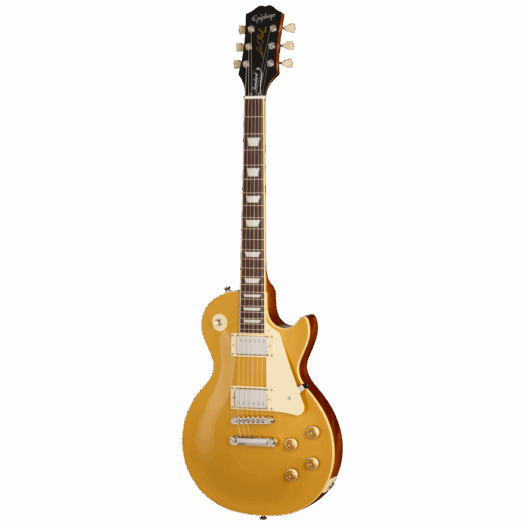
The Epiphone Les Paul Standard 50s Goldtop is my first recommendation for someone who wants the traditional two-humbucker Les Paul layout. It combines a mahogany body and maple cap with a set mahogany neck, giving you the familiar single-cutaway format for blues, rock rhythm, and lead playing.
Pros
- ProBucker 1 and 2 humbuckers with separate volume and tone controls
- Mahogany body and maple cap with a rosewood fingerboard
Cons
- Fuller 50s-style neck may not suit players who prefer a SlimTaper profile
The updated rosewood-fingerboard version is the one described here. It has a 1959 Rounded Medium C neck profile, 22 medium-jumbo frets, and ProBucker 1 and 2 pickups. The fuller neck is a substantial part of the choice, rather than a cosmetic difference from a 60s-style model.
Separate volume and tone controls let you prepare contrasting pickup sounds or adjust a blended setting. This is useful if you switch from a softer neck-pickup passage to a bridge-led chorus. Spend time with the guitar controls before assuming you need an extra pedal for every level or tone change.
Try the guitar on a strap as well as seated, because body weight and neck shape affect the decision over a long session. Choose it for the traditional layout and neck feel. If upper-fret access and a thinner body matter more, compare the SG before choosing the Goldtop purely for its appearance.

The Epiphone SG Standard is the alternative for someone who likes a two-humbucker electric but wants a thinner body and a different upper-fret playing position. Its double cutaways make it worth comparing with a Les Paul if lead access is a priority.
Pros
- Thin double-cutaway body for upper-fret access
- ProBucker 2 and 3 pickups with four-knob controls
Cons
- SlimTaper neck may feel too thin if you prefer a fuller grip
The Standard specification linked here uses a mahogany body and neck, a SlimTaper C profile, and ProBucker 2 and 3 pickups. A three-way selector and separate volume and tone controls retain the familiar four-knob workflow. Choose the exact Standard listing rather than assuming a Standard 60s or a Maestro-equipped version has identical hardware.
Try the SG standing up with a strap. The relationship between the body, neck, and strap position can feel different from a single-cutaway guitar, and balance varies between individual instruments. Make sure your fretting hand is free to move rather than spending the whole song supporting the neck.
The SG is a useful shortlist choice for rock and blues players who prefer this physical layout. It is less compelling if you already know you like a substantial 50s-style neck. As with the Les Paul, audition cleaner settings and pickup blends as well as the loud bridge-pickup sound that often dominates shop demonstrations.

3. Epiphone ES-335 Figured
The ES-335 Figured is the Epiphone I would shortlist for a player moving among cleaner rhythm, blues, and moderately driven rock. Its semi-hollow body includes a solid maple center block, which makes it a different tool from the fully hollow Casino below.
Pros
- Semi-hollow body with a solid maple center block
- Alnico Classic PRO humbuckers with independent controls
Cons
- Large body can feel bulky compared with a solidbody
The Alnico Classic PRO humbuckers have independent volume and tone controls, with a three-way pickup selector. The Rounded C neck and set-neck construction give you a conventional Gibson-style playing platform. The figured veneer and finish are visual choices, so compare them separately from the body design and electronics.
The center block helps with feedback resistance, making this a sensible alternative to a fully hollow guitar for louder band use. You still need to consider amplifier placement and gain. Its larger double-cutaway body also changes where the picking arm rests compared with an SG or Les Paul.
Choose the ES-335 when versatility and the semi-hollow format are the reason for buying. The Casino is more focused on P-90 pickups and hollow construction. If jazz is your main use, our clean guitar amp guide covers the amplification side of keeping chord voices distinct.
4. Epiphone Casino
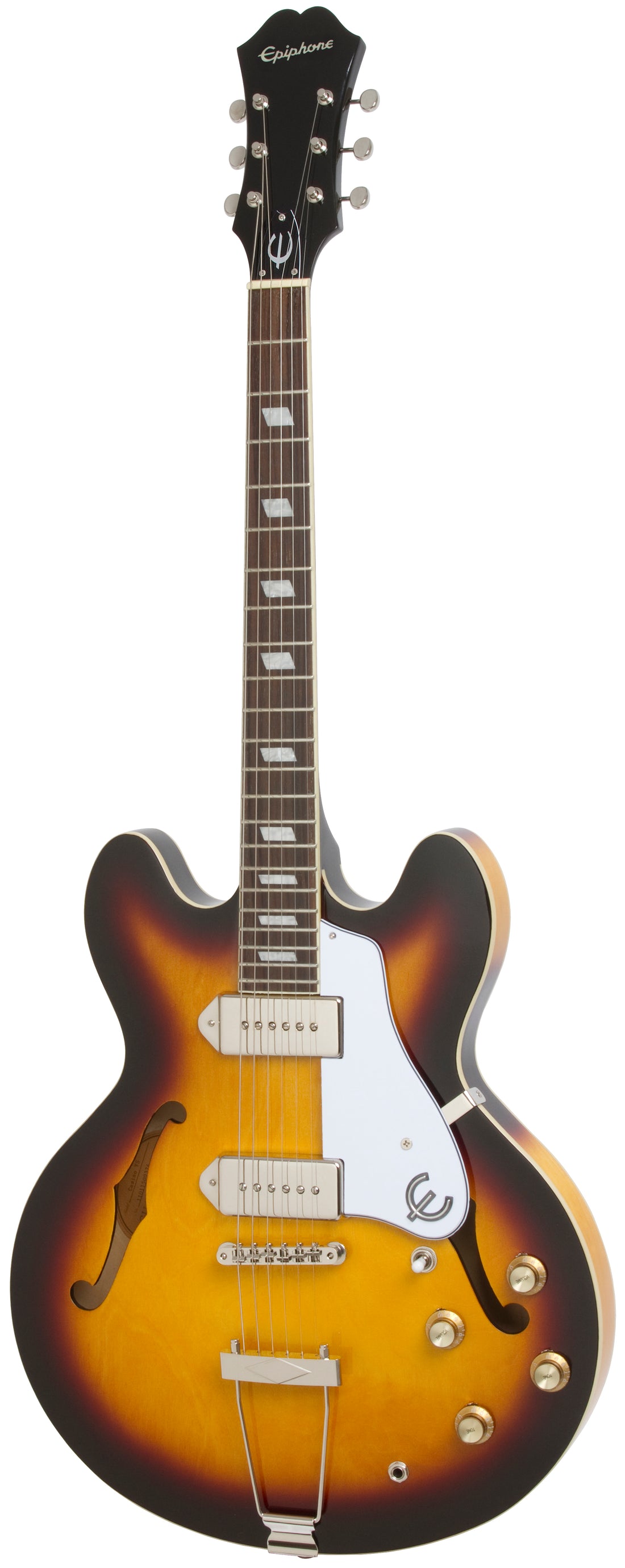
The Epiphone Casino is the most distinctive choice here for a player who wants a thinline hollowbody with P-90 pickups. It shares a broad family resemblance with other double-cutaway archtops, but its hollow construction and single-coil pickups make it a separate purchase from the ES-335.
Pros
- Thinline hollow construction
- Dogear P-90 pickups with independent controls
Cons
- Single-coil hum and feedback require more care at high gain
The standard Casino uses a layered maple body, dogear P-90 pickups, a trapeze tailpiece, and separate volume and tone controls. Those controls let you work with the neck pickup, bridge pickup, or their combined sound. It suits someone who wants to explore cleaner chord textures and more exposed electric-guitar parts.
The buying caveats follow the design. P-90s are single-coil pickups, so electrical hum can be audible. A fully hollow body also needs more care with loud amplification and gain than a center-block design. Those tradeoffs are reasonable if the guitar’s response is what you want, but worth discovering before your first rehearsal.
Specify the standard Casino when comparing listings. USA-made Casinos, Casino Coupe models, and limited editions are different offers. Choose this instrument for its own layout and sound rather than assuming a famous player’s association means it is the right solution for every style.
5. Epiphone Explorer 80s EMG
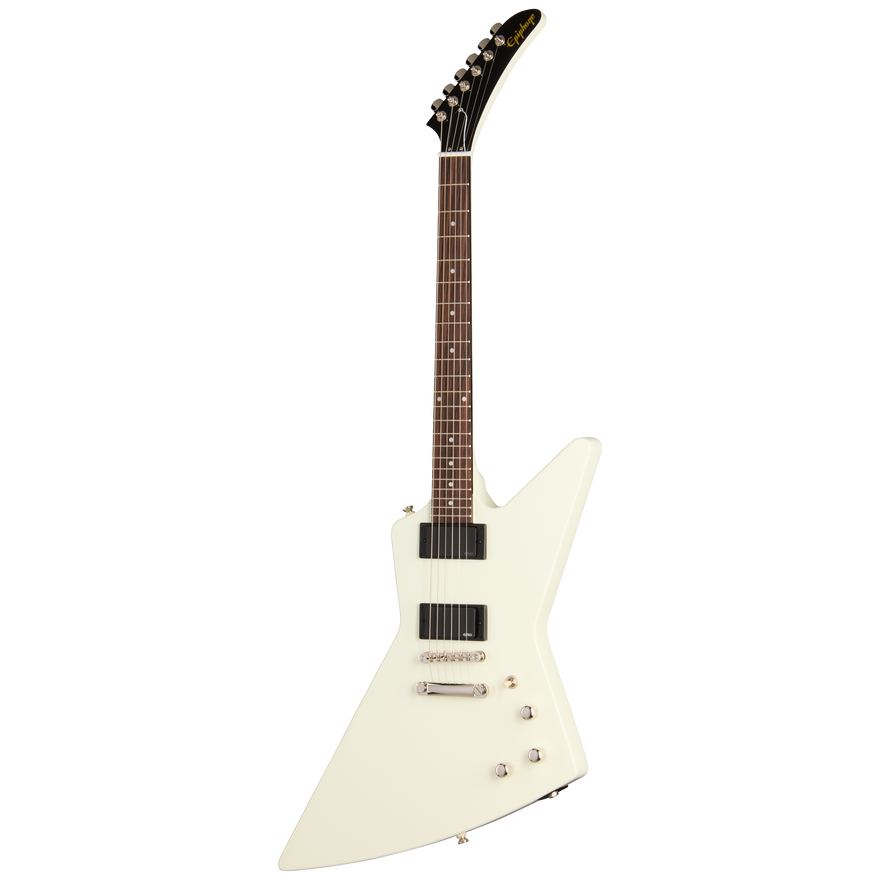
The Explorer 80s EMG is the targeted option for heavy rhythm and lead players who want active pickups and the Explorer body format. Its EMG 81 bridge and EMG 60 neck pickups distinguish it from passive-pickup Explorers elsewhere in the Epiphone range.
Pros
- EMG 81 bridge and EMG 60 neck pickups
- Fixed Tune-O-Matic and stopbar layout
Cons
- Large angular body can be awkward to transport
The specification includes a mahogany body and neck, a rosewood fingerboard, and a 60s SlimTaper profile. It uses the familiar Tune-O-Matic and stopbar arrangement, so the buying decision centers on the shape, neck, and pickup system rather than a tremolo.
The large angular body deserves a practical trial. Check your sitting position, strap height, and whether your usual gig bag or case is suitable. The outline takes up more room than a compact electric, which matters when transporting it or playing a crowded stage.
Active pickups need a working battery, so include that in your setup routine. Choose the Explorer because you want its configuration, rather than assuming a high-output pickup eliminates the need to manage amplifier gain. If you prefer a more conventional shape and passive electronics, the Les Paul or SG is the more direct comparison.
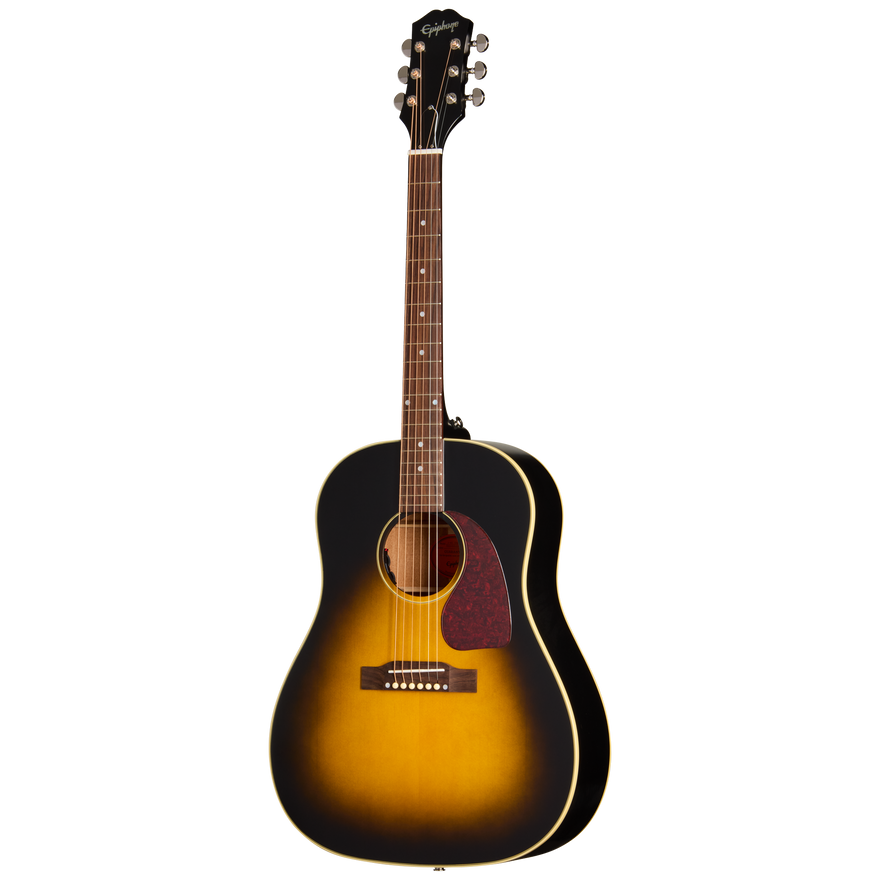
6. Epiphone J-45 Standard
The Epiphone J-45 Standard is the acoustic choice in this selection. It makes sense for someone writing songs, accompanying a voice, or playing acoustic sets who wants a round-shoulder dreadnought with built-in electronics.
Pros
- Solid spruce top with solid mahogany back and sides
- Fishman Presys VT electronics and an included premium gig bag
Cons
- No cutaway, so upper frets are harder to reach
The current Standard has a solid spruce top, solid mahogany back and sides, and a Rounded C mahogany neck with a rosewood fingerboard. Fishman Presys VT electronics provide soundhole-mounted volume and tone controls for amplified use. A premium gig bag is included in the official specification.
The important distinction is Standard versus Studio, EC, and Inspired by Gibson Custom versions. They do not all share the same construction, pickup system, or neck. The Standard described here is all solid wood and does not have the cutaway or side-mounted preamp of the Standard EC.
Play it acoustically before concentrating on the pickup. Listen to a few chord progressions and single-note passages, and check how the body sits under your picking arm. For live work, try the pickup through an acoustic amp or PA rather than assuming the amplified result will match a microphone placed in front of the guitar.
How to Choose an Epiphone Guitar
Decide whether you need an electric or an acoustic before comparing product ranges. An electric requires a suitable amplifier or recording setup to hear its intended sound. An acoustic can be played on its own, while an acoustic-electric adds a pickup system for amplification. Neither category is automatically easier to play; the individual neck and setup matter.
For electric guitars, body format should be an early decision. The Les Paul is a solid single-cutaway, the SG is a thinner double-cutaway, the ES-335 is semi-hollow with a center block, and the Casino is fully hollow. Those are practical differences in feel and amplification behavior, not just styling details.
Compare neck shapes directly when possible. A fuller Rounded Medium C and a SlimTaper profile can suit different hands or playing positions. You do not have to choose the thinnest neck to play quickly, and you should not force your hand around a large neck simply because a vintage specification sounds desirable.
Pay Attention to the Exact Model and Edition
Epiphone model names often include similar terms across several product generations. Standard, Studio, Custom, Inspired by Gibson, and Inspired by Gibson Custom identify different offers. A familiar finish and body shape are not enough to confirm that a retailer is selling the same pickup set or neck specification you have been reading about.
The updated Les Paul Standard 50s Goldtop linked above has a rosewood fingerboard. Older stock and used examples may carry different specifications. The same caution applies to other models: read the exact product description and ask the seller about the instrument being supplied if the listing is unclear.
Do not assume every Inspired by Gibson model includes Gibson USA pickups or identical hardware to a Gibson instrument. Look at the named components. The practical question is whether the complete guitar suits your playing and equipment, not whether each part can be described as an upgrade over another brand.
Humbuckers or P-90s?
Humbuckers are the straightforward starting point if you want the two-pickup Les Paul, SG, or ES-335 configuration. P-90s are single-coil pickups with a different response and a greater possibility of electrical hum. Try both through the kind of clean and driven sounds you actually use before assigning them to genres.
Active EMGs are a more specific choice in the Explorer. They require power and respond differently from the passive sets elsewhere in this list. You may need to adjust amp settings when changing guitars. A clean signal chain and sensible gain staging are still necessary, whatever pickup system you buy.
Should You Buy Used or New?
A used Epiphone can make sense when you know the exact model and can inspect it. Check fret wear, the neck, the nut, the electronics, and any previous modifications. Ask whether original parts and a case are included. A low asking price is less attractive if the instrument needs substantial repair.
For a hollowbody or semi-hollow, inspect the bridge, tailpiece, and jack area, and listen for rattles through an amp. For an acoustic, check playability and structural condition rather than judging only the finish. If you are unsure what you are seeing, an experienced technician can make the purchase easier to assess.
Budget for a setup that matches your string gauge and preferred action. The intermediate acoustic guitar guide is another comparison point if the J-45 is the type of instrument you need.
Verdict
Start with the Les Paul Standard 50s for a conventional rock and blues purchase, or the ES-335 for a broader semi-hollow role. Choose the Casino when its fully hollow construction and P-90s are the attraction. The Explorer is a deliberate active-pickup choice, while the J-45 Standard fills the acoustic role that the electric models cannot replace.