A jazz guitar should suit your chord work, playing position, and stage volume. These six electrics compare traditional hollowbodies, center-block semi-hollows, and a solidbody, with pickup controls and feedback management as important as the shape.
My top pick is the Epiphone ES-335 Figured, whose maple center block adds feedback resistance for jazz, blues, and louder ensemble work.
My budget pick is the Ibanez Artcore AF75, a lower-cost traditional hollowbody with two humbuckers and separate volume and tone controls.
Contents
- The Best Electric Guitars for Jazz (2026)
- 1. Epiphone ES-335 Figured
- 2. Ibanez Artcore AF75
- 3. Eastman AR372CE
- 4. Fender Player II Telecaster
- 5. D’Angelico Excel EXL-1 Amber
- 6. Gretsch G2420 Streamliner
- Hollowbody, Semi-Hollow, or Solidbody?
- Pickups and Controls for Jazz
- Do You Need Flatwound Strings?
- How to Try a Jazz Guitar Before Buying
- Verdict
The Best Electric Guitars for Jazz (2026)

1. Epiphone ES-335 Figured
The Epiphone ES-335 Figured is the more versatile purchase if the same guitar needs to cover jazz, blues, and louder ensemble work. Its semi-hollow construction includes a solid maple center block, giving you a different response and more feedback resistance than a fully hollow archtop.
Pros
- Center block improves feedback resistance
- Familiar two-humbucker controls for several styles
Cons
- Pricey compared with the Ibanez Artcore AF75
Alnico Classic PRO humbuckers, separate volume and tone controls, and a three-way selector give you a familiar two-pickup layout. The Rounded C neck and shorter Gibson-style scale are worth comparing directly with a Telecaster. The figured finish changes the appearance; it does not make this a fundamentally different type of instrument from an ES-335.
For a jazz set, the neck pickup provides a practical starting point, while the middle position gives you another blend to explore. The center block is useful if a set moves from cleaner accompaniment into driven solos, although it does not make the guitar immune to feedback in every stage position.
Choose this for a broad electric-guitar role with jazz as part of the job. Choose the AF75 or Eastman if you specifically want the deeper hollowbody format. Confirm the exact ES-335 Figured version when buying, since the wider Epiphone range includes different pickup sets and hardware configurations.
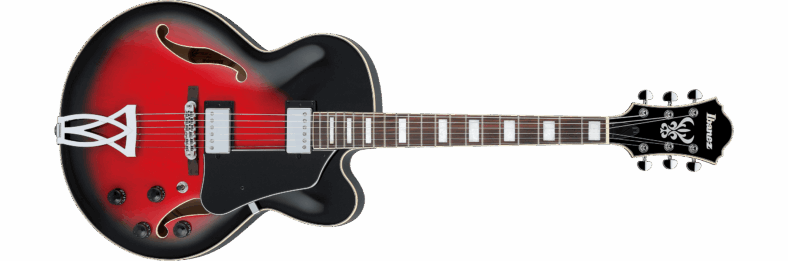
The Ibanez Artcore AF75 is my budget recommendation for a player who wants a traditional hollowbody electric guitar for jazz. It has the deeper body and neck-pickup layout many players associate with that sound, without a complicated switching system or vibrato tailpiece to distract from the basic instrument.
Pros
- Traditional hollowbody with two humbuckers
- Separate pickup volume and tone controls
Cons
- More prone to feedback than a center-block guitar at high volume
The current specification includes a linden body, a set-in nyatoh neck, a rosewood fingerboard, and two Classic Elite humbuckers. Its 20 medium frets and 628mm scale provide a useful contrast with the longer-scale D’Angelico below. Individual volume and tone controls let you adjust the pickups separately.
For clean chord work, begin with the neck pickup and a clear amp setting, then reduce the tone control only as much as the arrangement needs. Making every note darker can hide the upper voices of a chord. The bridge pickup is worth keeping available for a more pointed melody or a different ensemble setting.
The AF75 is a full hollowbody, so audition it at the volume you expect to use. If your jazz work includes loud drums and overdrive, a center-block semi-hollow or solidbody can be easier to manage. Body depth is another practical consideration if you are used to a slim electric.

The Eastman AR372CE belongs on the shortlist for a player committed to a conventional jazz archtop. Its 16-inch body and Florentine cutaway provide the full hollowbody format, while two humbuckers give you more pickup choices than a single-pickup jazzbox.
Pros
- Full hollowbody with two humbuckers
- Ebony fingerboard and adjustable ebony bridge
Cons
- High-volume playing still requires feedback control
Eastman lists laminated maple for the top, back, and sides, with an ebony fingerboard and adjustable ebony bridge. The current specification names Tonerider AC2 pickups and a 24.75-inch scale. Check the instrument you are ordering if comparing older stock, since a familiar model number does not guarantee every component stayed the same across production runs.
The Traditional Even C neck and 1.72-inch nut width give you a useful alternative to narrower or slimmer necks. Play the chord grips you use most, including inner-string voicings, and check whether the body lets your picking arm rest naturally. Comfort through a whole set matters more than decorative binding.
This is a focused jazz purchase with a hardshell case listed in the specification. It still needs the normal care you would give an archtop, including attention to bridge position when changing strings. For frequent high-volume work, compare the ES-335 before deciding that a fully hollow body is essential.

4. Fender Player II Telecaster
The Fender Player II Telecaster is the solidbody alternative for someone who wants clear jazz lines without buying a large archtop. A Telecaster can be a practical choice for a guitarist covering several styles, especially when feedback control and a familiar body shape matter.
Pros
- Practical solidbody with individual bridge saddles
- Modern C neck and 22 medium-jumbo frets
Cons
- Single-coil pickups can hum in electrically noisy venues
The standard single-coil version has Player Series Alnico V Tele pickups, a three-way selector, and master volume and tone controls. Its Modern C neck, 9.5-inch fingerboard radius, and 22 medium-jumbo frets are a contemporary playing platform. Choose the precise finish and fingerboard you want; Player II variations do not all use the same body wood.
Start with the neck pickup for a rounder jazz sound, but keep enough treble to hear the attack of each note. Adjusting picking position and the guitar’s tone control gives you more range than judging it from an exaggerated bridge-pickup setting. The fixed six-saddle bridge also makes individual-string intonation adjustment straightforward.
The compromise is that you will not get the acoustic body response of a full archtop. Single-coil noise can also matter in electrically noisy venues. Choose the Tele because its direct response and practical format suit you, rather than trying to make it behave exactly like a hollowbody.

5. D’Angelico Excel EXL-1 Amber
The D’Angelico Excel EXL-1 in Amber is a specialist choice for players who want a large archtop built around one neck pickup. This version uses a floating Seymour Duncan Johnny Smith mini-humbucker, with the volume and tone controls mounted on the pickguard.
Pros
- Floating Johnny Smith mini-humbucker
- Traditional large archtop with pickguard-mounted controls
Cons
- Single neck pickup rules out bridge and blended-pickup sounds
Its 17-inch-wide, 3-inch-deep body makes it the guitar here that most needs a seated and standing comfort check. The 25.5-inch scale is another difference from the shorter-scale Ibanez and Eastman. A laminated spruce top, ebony fingerboard, and floating ebony bridge complete the traditional layout.
One pickup keeps the electrical sound focused, which can be appealing for chord melody or a clean jazz-group role. You give up the bridge-pickup and blended settings of a two-pickup guitar, so make sure that focus fits the work you do. The acoustic response is also part of the attraction, rather than merely something the pickup replaces.
Specify the Amber floating-pickup version when ordering. D’Angelico also offers an EXL-1 configuration with a full-sized Seymour Duncan 59, and older discontinued EXL-1 listings can show different specifications. This is an instrument to choose deliberately for its size and configuration, not just its Art Deco styling.

6. Gretsch G2420 Streamliner
The Gretsch G2420 Streamliner is worth comparing if you want a hollowbody that will also cover brighter rhythm work and styles outside jazz. The version with the Chromatic II tailpiece avoids a Bigsby, keeping the basic hardware simpler for players who do not need vibrato.
Pros
- BT-3S humbuckers with coil splitting
- Fixed Chromatic II tailpiece avoids vibrato setup
Cons
- Feedback can be harder to control at high volume
The current G2420 uses Broad’Tron BT-3S humbuckers, a soft C-shaped neck, and a 22-fret laurel fingerboard. A push/pull master volume provides coil splitting. Individual pickup volumes, a master volume, and master tone give you several ways to balance the sound, although that is a different workflow from four independent Gibson-style controls.
For jazz, listen to the neck pickup with the tone opened enough to retain the top note of a chord. Then try the middle position for comping. The pickup options are useful if your set also needs a cleaner, sharper rhythm sound, but they do not remove the feedback considerations of the fully hollow body.
Make sure the listing identifies the BT-3S version. Earlier G2420 examples have different pickups and neck details, and the G2420T adds a Bigsby. Choose this model for the particular combination of hollow construction, switching, and fixed tailpiece rather than assuming every Streamliner is interchangeable.
Hollowbody, Semi-Hollow, or Solidbody?
A full hollowbody is the natural starting point if you specifically want the physical response and format of a traditional jazz archtop. Body depth, bridge design, and pickup mounting all contribute to the experience. Try one unplugged as well as through an amplifier, while remembering that the amplified sound is what an audience will usually hear.
A semi-hollow with a center block is a useful middle ground for someone who plays jazz and other amplified styles. The center block helps reduce feedback susceptibility while retaining a larger body format. It is still important to check the guitar at realistic volume and in a sensible position relative to the speaker.
A solidbody is often the practical choice for louder stages or players who dislike a deep body under the picking arm. You can get a rounded clean sound from a neck pickup without adopting an archtop. Choose the instrument that works for your music and posture; the visual tradition of jazz guitar does not dictate your equipment.
Pickups and Controls for Jazz
A neck humbucker is a useful starting point for a rounded electric jazz sound, but listen for definition rather than darkness alone. If low chords become indistinct, open the tone control or reduce bass at the amplifier. A guitar that sounds warm by itself still needs to leave space for the bass player.
A floating pickup and a body-mounted pickup are different construction choices. The EXL-1 Amber uses a floating mini-humbucker, while several other models here use conventional body-mounted humbuckers. Neither arrangement guarantees your preferred sound, so compare clean single notes and chords at a similar level.
A second pickup adds possibilities for brighter sounds and blends, which is useful on mixed-genre gigs. If you only use a neck pickup and want a focused instrument, a single-pickup archtop can make sense. Avoid paying for switching you will never use, but do not rule out useful alternatives before hearing them.
Do You Need Flatwound Strings?
Flatwounds are an option, not a requirement for jazz. They have a smoother surface feel and can help create the darker, more restrained sound some players want. Roundwounds remain useful when you want more upper-frequency detail or cover styles that rely on that attack.
Choose gauge for your hands and the instrument’s setup. Installing substantially heavier strings can require nut, relief, action, and intonation adjustments. If you are new to archtops, have a technician help establish a comfortable setup before deciding that the guitar needs different pickups. Changing several things at once makes it harder to identify what helped.
How to Try a Jazz Guitar Before Buying
Play the same short passage on each candidate: a chord progression, a melody across several strings, and a few notes high on the neck. Use a clean amp setting and keep the level similar. This reveals more than trying a different impressive phrase on every guitar.
Check the width and depth of the body while seated, then use a strap. A large archtop can push the picking arm farther forward than a solidbody. Also check the cutaway and neck joint with the voicings you actually use. A guitar that feels comfortable for five minutes should still make sense for a rehearsal.
For live work, test the guitar at an appropriate stage volume and change your position relative to the amplifier. If feedback is a persistent issue, a different body design can be a better purchase than trying to solve everything with EQ. Our clean guitar amp guide covers another part of the sound.
Verdict
Choose the ES-335 Figured for versatility and louder band work, or the AF75 as the budget choice for an uncomplicated traditional hollowbody. The Eastman and D’Angelico deserve attention when you know you want a dedicated archtop. The Telecaster remains the sensible alternative when comfort, feedback control, and a wider musical role matter more than a jazzbox shape.
Featured image, top right: Tom Marcello (CC BY-SA 2.0).