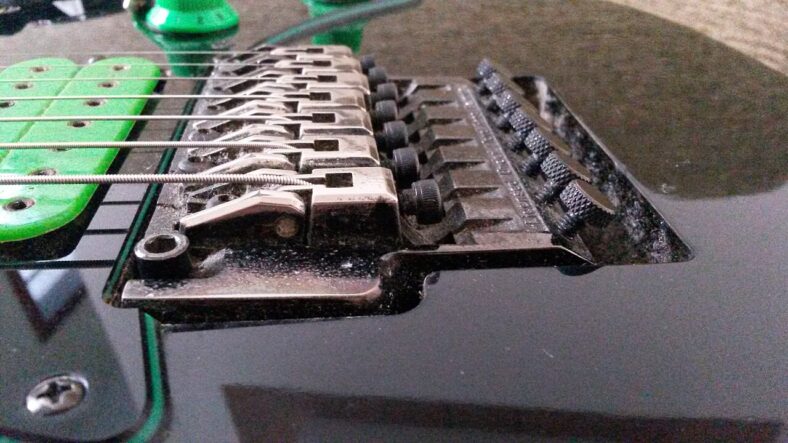
A seven-string guitar needs to suit your tuning, preferred neck feel and playing style. These six choices cover conventional and multiscale designs, fixed bridges and a tremolo option, with different routes into extended-range playing.
My top pick is the PRS SE Mark Holcomb SVN for its 26.5-inch scale, fixed bridge and Scarlet and Scourge pickups with coil switching.
My budget pick is the Jackson JS Series Dinky Arch Top JS22-7 DKA HT, an affordable hardtail seven-string with a 26.5-inch scale and two humbuckers.
Contents
- The Best 7-String Guitars (2026)
- 1. PRS SE Mark Holcomb SVN
- 2. Jackson JS Series Dinky Arch Top JS22-7 DKA HT
- 3. Ibanez RG7421
- 4. Ibanez RGD71ALMS
- 5. Sterling by Music Man JP70
- 6. Schecter Omen Elite-7
- How to Choose a 7-String Guitar
- Getting Clear Low Notes
- Can a Beginner Start on a Seven-String?
- Do I Need Active Pickups for a Seven-String?
- Verdict
The Best 7-String Guitars (2026)
1. PRS SE Mark Holcomb SVN
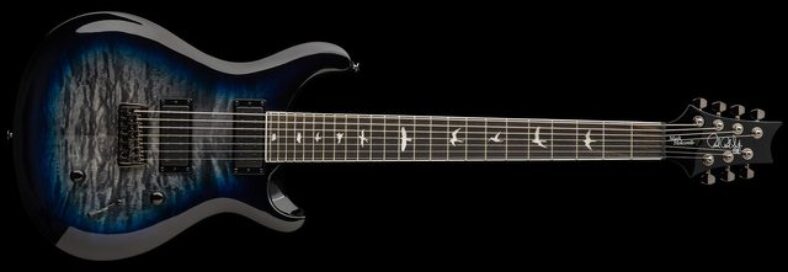
The PRS SE Mark Holcomb SVN is my first recommendation for a player who wants a fixed-bridge seven-string for heavy rhythm work and detailed lead parts. Its 26.5-inch scale and 24-fret neck give you an extended-range instrument without adding fanned frets or a floating bridge to learn.
Pros
- 26.5-inch scale with conventional parallel frets
- Scarlet and Scourge pickups with coil switching
Cons
- Flat fingerboard may feel unfamiliar if you prefer a rounder radius.
The current model uses Seymour Duncan Scarlet and Scourge pickups, with a push/pull tone control for single-coil operation. That matters when comparing older examples: do not assume every used Holcomb SVN has this pickup set. The switching gives you alternatives for cleaner passages without making this a traditional single-coil guitar.
A 20-inch fingerboard radius is very flat, and the Wide Thin SVN neck is a specific feel worth trying. Players used to wrapping a thumb around a rounded six-string neck may need time to adjust. The string-through bridge keeps the hardware straightforward when you change strings or set up a different tuning.
Choose the Holcomb SVN for its longer straight scale and focused specification. If you want a tremolo for pitch effects, the Sterling JP70 below is a more appropriate starting point. If you specifically want a longer bass side with a shorter treble side, compare the multiscale Ibanez.
2. Jackson JS Series Dinky Arch Top JS22-7 DKA HT
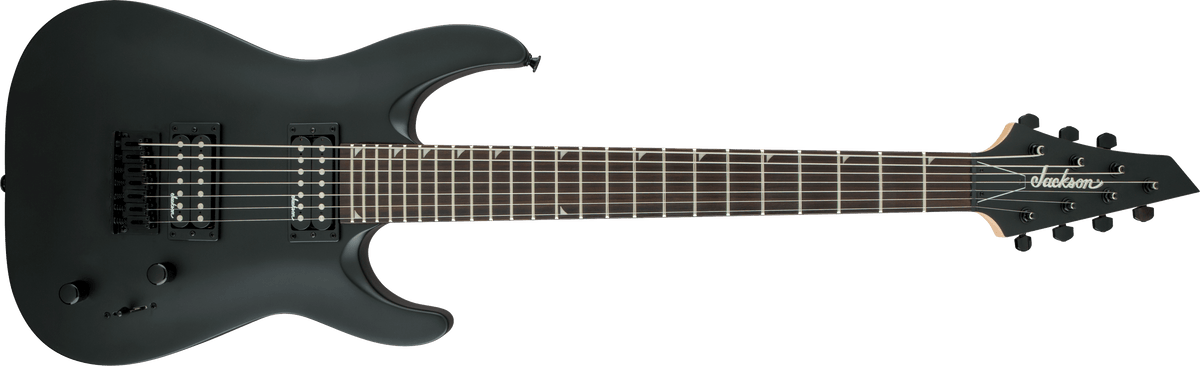
The Jackson JS22-7 DKA HT is worth considering when you want a 26.5-inch scale and a hardtail bridge in a relatively straightforward instrument. It gives you the extra length without requiring a multiscale neck, and the Dinky body shape will feel less unfamiliar than a more radical extended-range design.
Pros
- 26.5-inch scale without fanned frets
- Straightforward hardtail and three-way switching
Cons
- No gig bag or case included.
Its specification includes a bolt-on maple neck, 24 jumbo frets, an amaranth fingerboard, and two Jackson high-output humbuckers. The 12-to-16-inch compound radius becomes flatter toward the upper frets. A three-way selector and single volume and tone controls keep the electronics easy to understand.
This is a sensible rhythm-focused shortlist choice, but high-output pickups do not guarantee clear low notes on their own. Use a controlled gain setting and check how evenly the low and high strings respond. Too much bass before a distorted amp can obscure a part even when the guitar itself is set up well.
Pick the Dinky for its longer conventional scale and uncomplicated hardware. Compare the actual instrument for fretwork, action, and nut setup before buying. A good setup is more useful than an accessory bundle if the low string feels loose or the notes pull sharp under your fretting hand.

The Ibanez RG7421 is the simple option for a six-string player moving into seven-string territory. Its 25.5-inch scale is familiar to many electric guitarists, and the fixed F107 bridge avoids the extra setup work of a floating tremolo.
Pros
- Familiar 25.5-inch scale and fixed bridge
- Five-way switching with passive humbuckers
Cons
- Shorter scale needs more attention to string tension in very low tunings.
The specification includes a Wizard II-7 maple neck, 24 jumbo frets, a jatoba fingerboard, and passive Quantum humbuckers. A five-way selector provides more combinations than a basic three-position humbucker layout. The important attraction is the usable core layout, rather than an expectation that an introductory seven-string needs every premium feature.
A shorter scale can feel comfortable for bends on the upper strings, but it also asks you to think carefully about the low string. For substantially lower tunings, the right string gauge and a proper setup become especially important. A 27-inch bass-side instrument may be the better tool if very low tuning is the main reason you are buying.
I would shortlist the RG7421 for standard seven-string tuning, learning extended chord shapes, and discovering how much you actually use the low B. Spend time on muting and pickup height before assuming a different set of pickups will solve every unclear low note.

4. Ibanez RGD71ALMS
The Ibanez RGD71ALMS is the specialist choice here for players who want active Fishman Fluence pickups and a multiscale neck. Its scale runs from 27 inches on the bass side to 25.5 inches on the treble side, giving the low string a longer speaking length while keeping the higher strings shorter.
Pros
- 27- to 25.5-inch multiscale layout
- Fishman Fluence pickups and locking tuners
Cons
- Active pickups require a battery.
The guitar has a five-piece Wizard III-7 neck, 24 frets, and individual Mono-rail bridge units. The push/pull volume control changes the Fluence voicing, while Gotoh MG-T locking tuners make string changes more convenient. Locking tuners do not turn it into a locking-nut tremolo system.
The fanned frets deserve a proper playing trial. Test first-position chords, wide stretches, and the riffs you actually use; a quick run high up the neck will not tell you everything about the adjustment. Active electronics also mean checking battery condition as part of your normal gig preparation.
Choose this over the RG7421 when multiscale geometry and the Fluence system are features you specifically need. It is a more involved purchase for someone who simply wants to try an extra string. The PRS provides a longer low-string scale with conventional parallel frets if that is your preferred compromise.
5. Sterling by Music Man JP70
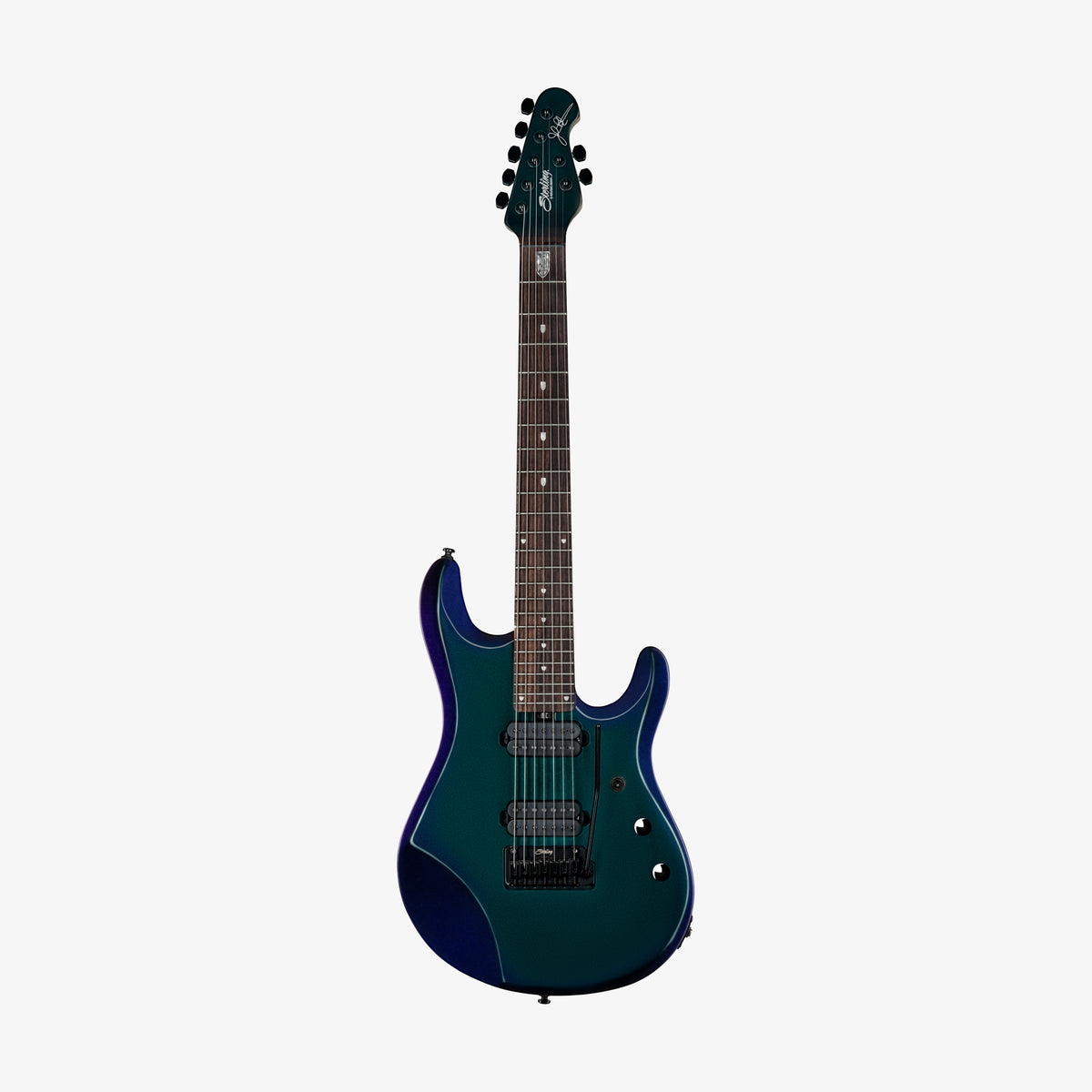
The Sterling by Music Man JP70 is the option to look at if tremolo expression is part of your playing. Its floating Modern Tremolo distinguishes it from the hardtail guitars above, while the scooped forearm contour and double-cutaway body suit a lead-oriented playing position.
Pros
- Floating tremolo for expressive lead work
- Locking tuners and a scooped forearm contour
Cons
- Tuning and string-gauge changes require bridge rebalancing
The JP70 has a 25.5-inch scale, 24 medium-jumbo frets, a rosewood fingerboard, locking tuners, and two ceramic humbuckers. The controls are simple: volume, tone, and a three-way pickup selector. This is the Sterling JP70, so do not assume it includes the electronics or hardware of a more expensive Ernie Ball Music Man JP model.
A floating bridge changes the buying decision. Changing string gauge or tuning alters the balance between the strings and springs, and a broken string can affect the tuning of the others. If you regularly switch between standard B and several dropped tunings, a hardtail is usually the easier instrument to manage.
Choose the JP70 because you will use its tremolo and like its playing feel. For repeated low-tuned rhythm recording with quick tuning changes, the PRS or Jackson is a more practical starting point. Test the tremolo return and the low-string response together rather than judging either feature in isolation.

6. Schecter Omen Elite-7
The Schecter Omen Elite-7 is another useful route to a 26.5-inch seven-string with a conventional fret layout. It combines a fixed string-through bridge with Schecter Diamond Heretic pickups and a five-way selector, making it a candidate for players who need more than one heavy rhythm sound.
Pros
- 26.5-inch scale with a fixed bridge
- Five-way pickup selection
Cons
- Hard case costs extra.
The neck has a Thin C shape, a 16-inch-radius rosewood fingerboard, and 24 extra-jumbo frets. Those dimensions give you a different comparison point from the flatter PRS and the compound-radius Jackson. The right choice will depend on how the neck fills your hand and how easily you can mute the extra string.
A five-way selector is useful for moving between fuller humbucker sounds and alternative combinations, but audition those positions through your own kind of amp. A setting that works for a clean introduction may need a different level or gain arrangement for the next heavy section.
Shortlist the Omen Elite-7 when you want a long straight scale and varied pickup selection without a tremolo. Check the exact Omen Elite-7 listing, since Omen, Omen Extreme, and multiscale Schecter models have different specifications. The hard case is a separate consideration rather than an automatic part of the guitar purchase.
How to Choose a 7-String Guitar
Choose your tuning before choosing the guitar. Standard seven-string tuning is B, E, A, D, G, B, E from low to high. The upper six strings retain normal guitar tuning, which lets you use familiar chord shapes while learning how the additional low string changes muting and bass movement. Drop A lowers only the lowest string from standard seven-string tuning.
Scale length affects string tension at a given pitch and gauge. A longer scale generally gives a firmer feel with the same strings, but also increases the distance between frets. A shorter scale can suit a player who values familiar stretches and bends. There is no single length that makes every low tuning work; string construction, gauge, action, and playing pressure all contribute.
Multiscale guitars assign different scale lengths across the strings, with the frets angled to suit. That can give the low side extra length while keeping the treble side more familiar. It does not guarantee comfort for every hand. Try open chords and stretches near the nut, not only fast runs in the middle of the neck.
For a first seven-string, a fixed bridge removes one setup variable. Floating tremolos are useful musical tools, but changing the tuning or string gauge also changes their balance. If you want a guitar for several tunings during one rehearsal, a fixed bridge and an appropriate setup are a more convenient starting point.
Neck shape and width need attention together. A thin neck can still feel wide, and a flat fingerboard is not automatically comfortable for every chord. Sit down and stand up with the guitar, check access to the lowest string, and make sure your fretting thumb can move without forcing your wrist into an awkward angle.
Getting Clear Low Notes
Start with accurate tuning and a setup for the strings you intend to use. Check intonation on the lowest string and listen to fretted notes under your normal picking attack. If a note jumps sharp when you hit it hard, consider playing pressure and string choice before adding more distortion.
Muting becomes more important when an extra low string can ring beneath your usual six-string shapes. Practice stopping unused strings with both hands. For distorted parts, compare a moderate gain setting with your usual setting at similar volume; reducing gain can make layered rhythm tracks easier to distinguish.
Listen to the guitar inside an arrangement. A low-tuned guitar still shares space with the bass and kick drum, so adding low end everywhere can make the whole part harder to hear. Our guide to guitar and bass EQ pedals covers one way to shape that balance before the amplifier.
Can a Beginner Start on a Seven-String?
Yes, although a six-string is simpler if your lessons and favorite songs all use six strings. A seven-string makes sense when the music you want to play actually uses the lower range. Begin by learning familiar shapes on the upper six strings, then work on adding the low B without letting it ring unintentionally.
You do not have to use the extra string in every passage. Treat it as another register rather than a requirement to move every riff downward. It can support bass movement beneath chords, extend a melody, or let you keep a familiar position while reaching a lower note.
Do I Need Active Pickups for a Seven-String?
No. Passive and active pickup systems can both work well in a seven-string. The choice is about the response, output, switching, and sound you want through your amp. Active pickups require a power source, while passive pickups avoid that battery requirement. Neither type replaces accurate setup or clean muting.
Verdict
Start with the Holcomb SVN if you want a longer straight scale and fixed bridge for modern heavy playing. Choose the RG7421 for a familiar 25.5-inch scale, or the RGD71ALMS if multiscale geometry is central to your requirements. The JP70 is the clear alternative when a floating tremolo matters more than quick tuning changes.
Featured image: Rachmaninoff (CC BY-SA 3.0).