Squier guitars cover several playing styles, so start with the pickups, scale length, and bridge you need. These six models range from familiar Telecaster and Stratocaster layouts to a short-scale Mustang, with setup tradeoffs explained alongside each choice.
My top pick is the Squier Classic Vibe ’50s Telecaster for its alnico single-coil pickups, simple controls, and fixed string-through bridge.
My budget pick is the Squier Sonic Mustang HH, an affordable short-scale guitar with two humbuckers and a straightforward six-saddle hardtail.
Contents
- The Best Squier Electric Guitars (2026)
- 1. Squier Classic Vibe ’50s Telecaster
- 2. Squier Sonic Mustang HH
- 3. Squier Affinity Series Stratocaster HSS
- 4. Squier Classic Vibe ’60s Jazzmaster
- 5. Squier Classic Vibe ’70s Telecaster Thinline
- 6. Squier Classic Vibe ’60s Stratocaster
- Which Squier Series Should You Choose?
- Single Coils, HSS, or Humbuckers?
- Should a Beginner Choose a Hardtail?
- Is a Squier Worth Upgrading?
- Verdict
The Best Squier Electric Guitars (2026)

A semi-hollow Tele with two humbuckers

Traditional three-single-coil Strat sounds
1. Squier Classic Vibe ’50s Telecaster
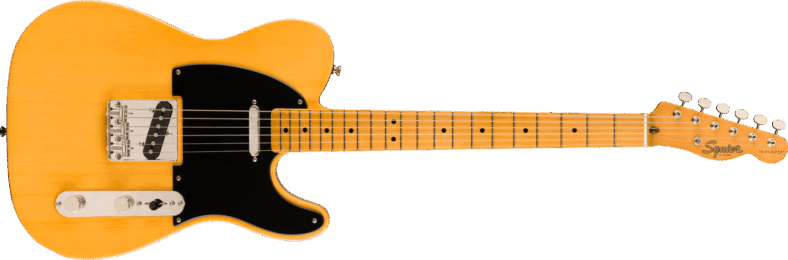
The Classic Vibe ’50s Telecaster is my first recommendation for someone who wants a recognizable Squier electric with simple controls and a fixed bridge. Two single-coil pickups, a three-way selector, and master volume and tone keep the choices manageable while covering contrasting rhythm and lead sounds.
Pros
- Two alnico single-coil pickups with simple controls
- Fixed string-through bridge
Cons
- Three shared saddles offer less independent intonation adjustment
Its specification includes Fender-Designed alnico pickups, a C-shaped maple neck, a 9.5-inch fingerboard radius, and narrow-tall frets. The traditional three-saddle string-through bridge is part of the appeal. It also means each saddle supports a pair of strings, so intonation adjustment is less independent than on a six-saddle bridge.
This is a useful country, blues, and general rhythm-guitar starting point. The neck pickup gives you a different texture from the sharper bridge pickup, and the middle position deserves attention for chord parts. Single-coil noise is a practical consideration in noisy rooms or with higher gain.
Choose it because you like the Telecaster layout and response. If you want a humbucker for heavier bridge sounds, the Affinity HSS or Thinline below is a more direct choice. The vintage-tinted gloss neck finish also feels different from a satin neck, so try both before deciding by appearance.

2. Squier Sonic Mustang HH
The Sonic Mustang HH is the short-scale option for someone who wants two humbuckers and uncomplicated hardware. Its 24-inch scale brings the frets closer together than the 25.5-inch models here, which can make certain stretches more comfortable.
Pros
- 24-inch scale for closer fret spacing
- Two humbuckers and a six-saddle hardtail
Cons
- Shorter scale can feel loose when tuning down
A six-saddle hardtail bridge, three-way pickup selector, and master volume and tone keep the layout easy to manage. The C-shaped neck and smaller-scale format make it worth trying for younger players or adults who find longer stretches tiring. Short scale does not automatically mean a toy-sized guitar, and hand comfort still needs a personal check.
The HH version is the important detail. It gives you two humbuckers rather than the single-coil configuration of the other Sonic Mustang. That makes it the model to compare for driven rhythm parts, while the simple bridge avoids the balancing work of a floating vibrato system.
At the same tuning and gauge, a shorter scale generally feels looser. If you plan to tune down substantially, discuss string choice and setup rather than assuming the short scale is the best fit. Choose the Mustang for its compact playing geometry and straightforward layout, not because every beginner needs the shortest possible guitar.

3. Squier Affinity Series Stratocaster HSS
The Affinity Series Stratocaster HSS is the practical pick for a player whose songs move between single-coil cleans and a fuller bridge sound. HSS means one humbucker at the bridge with single-coil pickups in the middle and neck positions, so this is a different purchase from an all-single-coil Strat.
Pros
- Bridge humbucker alongside neck and middle single coils
- Five-way switching and a two-point tremolo
Cons
- Floating the tremolo adds setup work when changing tuning
Fender lists a slim C-shaped neck, a two-point tremolo, and sealed tuners with split shafts. The five-way selector gives you several combinations without extra mini switches. You can use the neck and middle sounds for cleaner parts, then move to the bridge humbucker when the arrangement needs a different attack and output.
The tremolo is useful if you want vibrato effects, but it adds a setup consideration compared with a hardtail. A nut that binds or an incorrectly balanced bridge can create tuning problems that a pickup upgrade will not solve. Have the guitar adjusted for your string gauge and tuning first.
Make sure you are comparing the standalone HSS guitar with the exact product you intend to buy. An Affinity HSS Pack includes an amp and accessories, while the guitar on its own does not. If you already have an amp, compare the instrument directly with the Classic Vibe Strat instead of judging it by bundle contents.

4. Squier Classic Vibe ’60s Jazzmaster
The Classic Vibe ’60s Jazzmaster is the Squier to consider when the offset body, wide single-coil pickups, and traditional vibrato system are the features you want. It is a more specific choice than buying a Stratocaster simply because you need a versatile first electric.
Pros
- Separate rhythm and lead circuits
- Traditional Jazzmaster pickups and vibrato
Cons
- Floating bridge needs careful setup, especially with heavy picking
The guitar has Fender-Designed alnico single-coil pickups and separate rhythm and lead circuits. The rhythm circuit uses the neck pickup with its own controls; the lead circuit provides the normal pickup selection. That lets you prepare contrasting settings, although the extra switches take a little longer to learn than a Telecaster layout.
A 25.5-inch scale, 9.5-inch fingerboard radius, and narrow-tall frets keep the neck specification fairly familiar. The floating bridge and vintage-style vibrato are the bigger adjustment. A careful setup is worthwhile, particularly if your playing includes heavy picking or you change string gauge.
Choose this model for the actual Jazzmaster configuration, not merely the body outline. Other Squier offsets can have humbuckers, simpler controls, or different bridges. If you only want an offset shape and a hardtail, the Sonic Mustang HH is a much simpler alternative, but its shorter scale and pickups make it a different instrument.
5. Squier Classic Vibe ’70s Telecaster Thinline
The Classic Vibe ’70s Telecaster Thinline is the alternative when you like the Tele shape but want a semi-hollow body and two humbuckers. It is a different configuration from the ’50s Telecaster, with Fender-Designed Wide Range humbucking pickups instead of the familiar two single coils.
Pros
- Semi-hollow body with two Wide Range humbuckers
- Six-saddle fixed bridge with individual string adjustment
Cons
- Shared volume control limits independent blending of the two pickups
A fixed six-saddle bridge provides individual string adjustment, while the controls remain straightforward: master volume, master tone, and a three-way selector. The C-shaped neck, 9.5-inch radius, and narrow-tall frets keep the playing specification close to the other Classic Vibe models here.
For cleaner rhythm work, compare both pickups and their combined setting at the same amp level. The semi-hollow construction is part of the experience, but the pickup configuration is just as important to the buying decision. Do not expect a traditional Tele bridge-pickup sound merely because the silhouette is familiar.
The Wide Range name also should not be read as a promise that these pickups share every construction detail with vintage Fender units or later CuNiFe versions. Buy this specific guitar for the sound you hear and the layout you want. A full hollowbody jazz archtop is a separate kind of purchase.
6. Squier Classic Vibe ’60s Stratocaster
The Classic Vibe ’60s Stratocaster is the focused option for a player who knows they want a traditional three-single-coil Strat. Its Fender-Designed alnico pickups and five-way switching cover the familiar individual-pickup and combined sounds, without adding a bridge humbucker.
Pros
- Three alnico single coils and five-way switching
- Vintage-style synchronized tremolo
Cons
- Single-coil pickups can hum in electrically noisy venues
The specification includes a 25.5-inch scale, a C-shaped maple neck, a laurel fingerboard, and 21 narrow-tall frets. A vintage-style synchronized tremolo provides pitch effects, while the tinted gloss neck finish follows the retro appearance of the series. The feel is worth comparing with the more contemporary Affinity neck finish.
Choose this over the Affinity HSS if the all-single-coil layout is central to the music you play. Neck and middle combinations can suit cleaner rhythm work, while the bridge pickup gives you a more direct attack. Those differences are useful, but they do not mean every position needs to be used in every song.
The limitations follow the design: single-coil noise can be audible, and a floating tremolo needs a sensible setup. If you mostly play heavy bridge-pickup rhythm, an HSS or HH guitar is a more targeted purchase. If you never use a tremolo, also compare the fixed-bridge Tele before settling on a Strat by habit.
Which Squier Series Should You Choose?
Sonic is worth considering when you want a straightforward first instrument and can identify the configuration you need. The Mustang HH here is a useful example: the shorter scale and fixed bridge are concrete reasons to choose it, beyond its place in the range. Budget for an appropriate setup and the equipment needed to hear it properly.
Affinity is a useful middle choice for players who want familiar Fender-style shapes with practical specifications. The HSS Strat adds a bridge humbucker and two-point tremolo. Check the exact model rather than assuming every Affinity has identical pickups or hardware.
Classic Vibe concentrates on retro designs and details such as vintage-style hardware, tinted neck finishes, and specific pickup configurations. That does not make every Classic Vibe the best match for a beginner. A Jazzmaster’s traditional bridge and switching are more involved than a hardtail Mustang, even if you prefer its appearance.
Single Coils, HSS, or Humbuckers?
Three single coils are the direct choice when traditional Strat sounds are your priority. Two Tele single coils provide a different layout with simpler switching. Both can pick up electrical hum, especially with distortion, so try them with the gain level and lighting conditions you expect to use.
HSS gives you a humbucker at the bridge while retaining single coils elsewhere. It is a useful compromise for players who want cleaner neck sounds and driven bridge parts from the same instrument. There can be a level difference between positions, which you can manage with technique, pickup adjustment, or your effects.
Two humbuckers make sense when that thicker pickup configuration is what you actually want. The Sonic Mustang HH and Thinline each offer it in a different body and scale format. Pickup type alone does not determine the genre a guitar can play, but it is a more useful buying distinction than the finish color.
Should a Beginner Choose a Hardtail?
A hardtail is a convenient starting point because changing strings and tuning does not involve balancing tremolo springs. That is one reason the Telecaster and Mustang are sensible first-guitar candidates. A tremolo is still worthwhile if vibrato effects are part of the music you want to learn.
If you choose a tremolo-equipped Strat or Jazzmaster, have it set up for the strings and tuning you intend to use. A well-adjusted instrument is easier to judge than one with binding nut slots or an unstable bridge. Avoid diagnosing every tuning problem as a faulty tuner.
Is a Squier Worth Upgrading?
Upgrade a specific limitation after you have lived with the guitar. A comfortable neck, usable frets, and a stable setup are a good foundation. New pickups will not correct an uncomfortable neck shape, and an expensive bridge is not a substitute for checking basic adjustment.
Keep compatibility in mind. Squier bodies, bridges, pickguards, and electronic parts do not all share the same dimensions as every Fender model. Check actual measurements and mounting patterns before ordering. If a proposed modification needs routing or permanent changes, compare the cost with buying a guitar that already has the layout you want.
For a first electric, leave room for an amplifier or headphone practice solution, a tuner, and basic accessories. Our electric guitar starter-pack guide covers bundles, while this shortlist focuses on choosing the guitar itself.
Verdict
Choose the Classic Vibe Telecaster for a direct traditional layout, the Affinity HSS for mixed clean and driven work, or the Sonic Mustang HH for short-scale rock playing. The Jazzmaster is the deliberate offset choice, while the Thinline and ’60s Strat suit players who already know which pickup configuration they prefer.