The 5 Best Acoustic Pianos for Home and Studio (2026)

An acoustic piano needs to suit the player and the room it will live in. These five uprights and grands make a practical showroom shortlist, with delivery, tuning, and the condition of the individual instrument part of the decision.
My top pick is the Yamaha U1, an upright for regular home practice with a practice mute and soft-close fallboard.
My budget pick is the Yamaha b1, a compact upright from Yamaha’s economy-focused b Series for homes with less space.
Contents
The Best Acoustic Pianos for Home and Studio (2026)
1. Yamaha U1
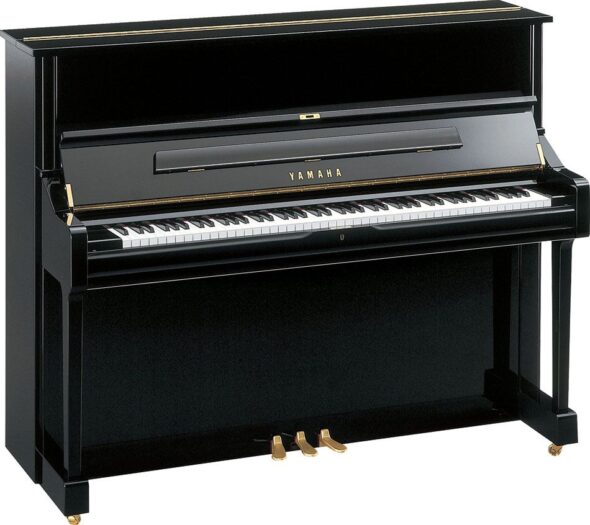
The Yamaha U1 is a useful starting point for an upright piano that will be played regularly. It combines a conventional upright footprint with an established design, making it a sensible model to include in a teacher’s studio or a serious student’s shortlist.
Pros
- Established upright format for regular practice
- Practice mute and soft-close fallboard
Cons
- No sostenuto pedal to hold selected notes while playing others
The current U1 has a spruce soundboard, an aluminum action rail, and a soft-close fallboard. Its middle pedal provides a practice mute, which reduces the sound mechanically. That is different from a silent system that lets you play through headphones, so check the exact version if quiet practice is essential.
During an audition, pay attention to how easily you can repeat a quiet note and control the transition from a soft phrase to a louder accent. Try passages in the bass and upper register instead of choosing only from the first full chord. Ask the dealer what regulation and voicing work is included before delivery.
A U1 badge is not a substitute for assessing condition, especially on a used instrument. Age, servicing, environment, and previous rebuilding affect the purchase. Choose a well-prepared example you enjoy playing, rather than assuming that every used U1 will behave like the new piano in a showroom. The Kawai K-300 below is the obvious upright to audition alongside it.

The Yamaha b1 is the model to investigate when you want a conventional acoustic upright in a smaller room. It sits below the U Series in Yamaha’s range and provides a simpler route into new acoustic-piano ownership.
Pros
- Compact conventional upright format
- Soft, Mute and Damper pedals
Cons
- Less depth and volume than Yamaha’s larger b-Series uprights
Yamaha specifies a laminated-spruce soundboard for the b1, while the larger b2 and b3 use solid spruce. Avoid applying a feature from the wider b Series to every model. The b1 has Soft, Mute, and Damper pedals, and its compact scale should be judged against the larger uprights using the same playing material.
Listen carefully to the bass and to sustained chords. A small upright can be a good fit for lessons, but it should still encourage you to practice. If you expect to work on more demanding repertoire, compare the b1 with a larger new upright and a technician-checked used instrument before deciding.
The b1 makes most sense when its size and straightforward acoustic design fit the room and routine. If you need unrestricted late-night practice, a standard acoustic model may be the wrong starting point. Compare an appropriately equipped silent version or a digital piano instead. The quieter middle-pedal setting remains audible and changes the tone, which can be unsuitable for detailed listening practice.

The Kawai K-300 is a strong alternative to the U1 for home practice and teaching. Its 122cm cabinet contains Kawai’s Millennium III upright action, which uses ABS-Carbon components, and a tapered solid-spruce soundboard.
Pros
- Millennium III action with ABS-Carbon components
- Tapered solid-spruce soundboard
Cons
- No sostenuto pedal to hold selected notes while playing others
The action construction is a real design difference, but it does not tell you which instrument you will prefer. Try a slow passage with several dynamic levels, repeated notes, and playing near the backs of the keys. The important question is whether you can control the result comfortably across the keyboard.
Kawai lists Soft, Muffler, and Damper pedals on this model. As with the Yamaha practice mute, the muffler changes acoustic volume and tone; it does not provide headphone playing. A standard K-300 and an equipped hybrid or silent version are different purchases, so get the complete model and installed options in writing.
The K-300 is still a substantial acoustic instrument requiring professional delivery, tuning, and an appropriate position in the room. It is not a portable alternative because the cabinet looks compact. Its strongest role in this comparison is as a close competitor to the U1, giving you another action and instrument to evaluate at a similar practical scale. Let the actual playing response settle the decision.

The Yamaha C3X is a grand to audition for an established pianist, a dedicated music room, or a studio that regularly records acoustic piano. At approximately 186cm long, it occupies a different practical category from the uprights above.
Pros
- Grand action with a sostenuto pedal
- 186cm length for a dedicated home or studio room
Cons
- Requires substantially more room than an upright
The CX design includes a spruce soundboard and a grand action, with Shift, Sostenuto, and Damper pedals. That middle-pedal function is different from the practice mute on the upright models. If your repertoire uses sostenuto, check the pedal behavior during the audition rather than assuming the same three pedals always perform the same jobs.
For recording, listen to the piano with the lid at the setting you expect to use. A grand can fill a room very differently from an upright against a wall. Plan where microphones, a bench, and other musicians would go, and consider whether the room’s reflections make the instrument harder to record.
The C3X is not automatically the right upgrade for every room simply because it is a grand. A well-prepared upright may suit a confined space better. Also distinguish the standard C3X from silent, TransAcoustic, Disklavier, and other named variants; those features should not be assumed from the basic model name. Buy the exact instrument and specification you have auditioned.
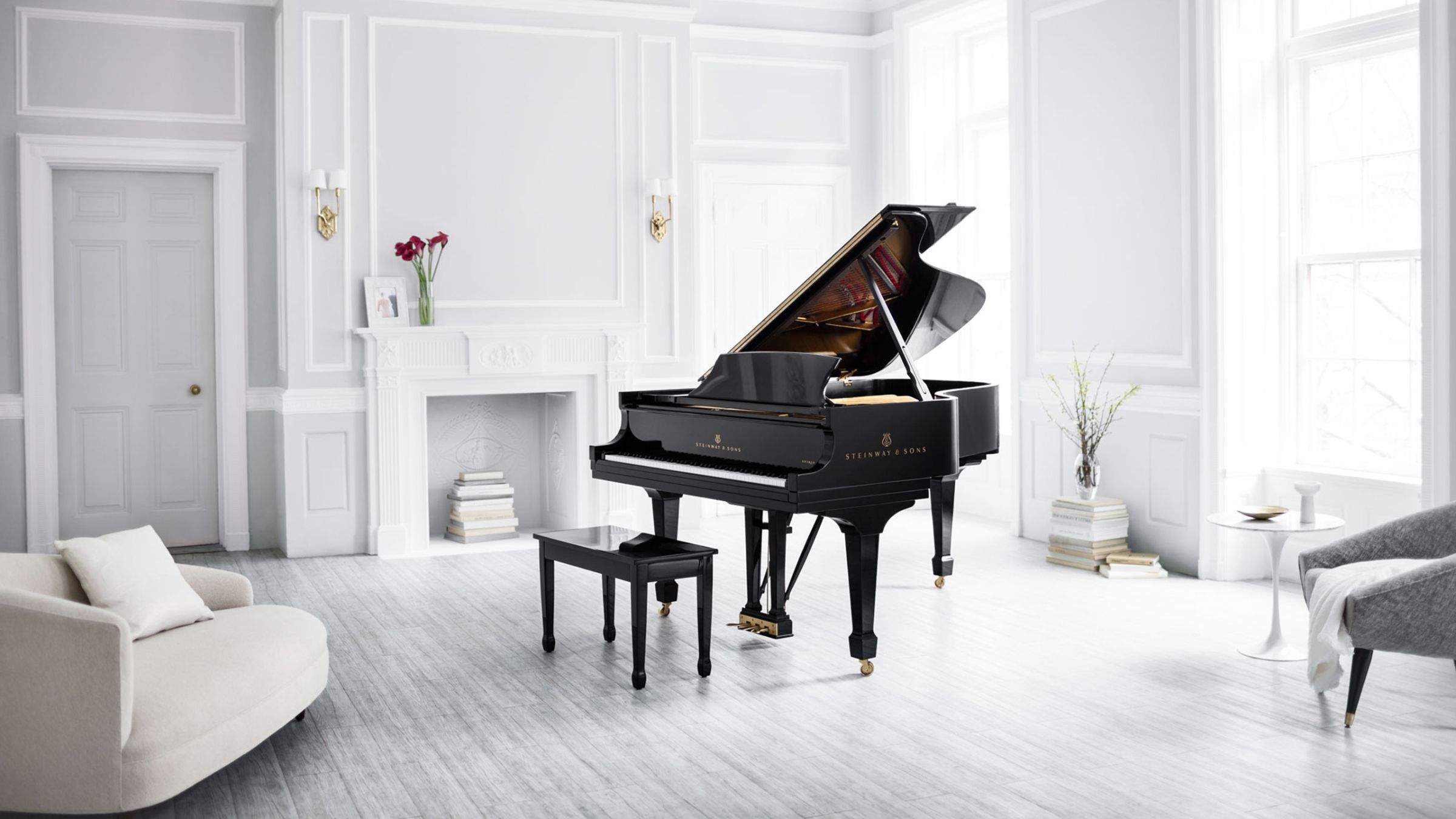
The Steinway Model B is the premium grand to compare when you have room for a larger instrument and want to select a piano around your own playing. Its length is about 211cm, so it demands more planning than the smaller C3X.
Pros
- 211cm grand format for a dedicated piano room
- Suited to selecting an individual premium instrument
Cons
- Its 211cm body needs a large dedicated piano space
The useful reason to audition it is the musical response of the particular instrument. Take repertoire that exposes quiet control, register changes, repeated notes, and long sustained phrases. Spend time listening from elsewhere in the room while another pianist plays, because the sound at the bench is only one perspective.
Individual selection is especially important at this level. Ask about preparation, delivery, aftercare, and which work the dealer will complete after the piano has settled into its new room. A showroom comparison should give you enough time to play more than one example where possible.
Its reputation does not remove the need to assess the room or a used piano’s condition. A rebuilt instrument requires questions about who performed the work, which components were replaced, and what documentation is available. The Model B belongs on the shortlist when you specifically want this size and type of grand. For ordinary lessons or a small living room, the upright options remain more proportionate purchases.
How to Choose an Acoustic Piano
Measure the Room and the Delivery Route
Measure the piano’s dimensions, the bench area, and the space needed for a player to sit comfortably. A grand also needs appropriate clearance around the instrument and consideration of the open lid. An outline on the floor is more useful than judging scale from a product photograph.
Ask the mover to assess doors, stairs, lifts, tight corners, and floor access before agreeing to delivery. An instrument that fits the final room may still be difficult to bring into it. Get delivery responsibilities and any special access arrangements clear with the seller.
Compare Uprights and Grands on Musical Grounds
A grand’s action and horizontal string layout create a different playing and listening experience from an upright. A larger instrument may offer more of the sound you want, but its output also interacts with the room. Try both types if space allows and compare the repertoire you actually play.
Choose an upright without treating it as a temporary failure to buy a grand. A good upright can support years of serious practice. Choose a grand when its response, tone, size, and room suitability justify the extra commitment.
Include Preparation and Aftercare
Tuning adjusts pitch, regulation concerns the action’s mechanical behavior, and voicing changes aspects of tone. They are different services. Ask what has been done to the piano you are trying and what is included after delivery. A showroom label alone does not describe how carefully the instrument has been prepared.
Follow the manufacturer’s care advice and discuss placement and humidity with a qualified technician. Avoid planning around direct heat, strong sun, or unstable conditions without advice. Your local environment and the instrument’s response determine the service routine; a generic promise that all pianos need the same amount of attention is unhelpful.
Check a Used Piano Independently
Have an independent piano technician inspect a used instrument before committing, especially when there is little service history. The inspection should address the action, tuning stability, structural condition, and likely work. A finish can look attractive while the instrument needs extensive attention internally.
Ask for the serial number, service records, and details of any restoration. Decide who pays for an inspection and whether a satisfactory result is a condition of purchase. A teacher can help you assess playing suitability; a technician answers different questions about condition and work.
Frequently Asked Questions
Which Acoustic Piano Is Best for a Beginner?
A well-prepared upright is often the practical starting point. The Yamaha b1 is a compact new option, while the U1 and K-300 are worth comparing if regular long-term practice is the plan. The best purchase is an instrument in suitable condition that fits the home and encourages consistent playing.
Can an Acoustic Piano Be Played Through Headphones?
A standard acoustic piano cannot. A specifically equipped silent or hybrid model can stop the hammers from sounding the strings and provide an electronic headphone sound. Check the exact fitted system. If headphone practice is a daily requirement, also compare our digital piano recommendations.
Is a Used Acoustic Piano Better Than a New One?
It can be a better individual purchase, but age or brand alone cannot answer the question. Compare condition, preparation, service needs, warranty terms, and delivery. A technician’s report can reveal whether the used option leaves you with substantial work after it arrives.
Should I Buy the Piano I Auditioned?
Where possible, agree which exact instrument will be delivered and how it will be prepared. If the seller will supply another example, ask how you can approve it. This matters because regulation, voicing, condition, and individual variation influence what you hear and feel.
Conclusion
Start with the U1 and K-300 for a serious upright comparison, and the b1 where a compact acoustic is the priority. Audition the C3X and Model B when a grand fits the playing needs and room. Finish the decision with the actual instrument, a clear delivery plan, and appropriate aftercare.