The 6 Best Stage Pianos for Live Performance of 2026

A stage piano needs a comfortable action and controls you can use during a set. These six instruments compare live piano sounds, splits and layers, output routing, and transport needs, from focused keyboards to instruments that manage a larger rig.
My top pick is the Yamaha CP88 for its full 88-note weighted keyboard and direct access to separate piano and electric-piano sections.
My budget pick is the Studiologic Numa X Piano 73, a more affordable weighted stage piano with four zones and an audio mixer.
Contents
The Best Stage Pianos for Live Performance (2026)

1. Yamaha CP88
The CP88 is a focused choice for musicians who mostly need acoustic piano, electric piano, and supporting keyboard sounds during a set. Its panel separates the main sound sections and keeps the essential performance controls close to hand.
Pros
- Direct access to the main sound sections
- 88-note weighted keyboard
Cons
- Weighs 18.6kg before adding a case for transport
That layout matters when you need to add a layer or change an effect between songs. You can spend less time navigating a large workstation structure, provided the sounds you need are within the CP’s scope. Before buying, recreate a typical set: piano alone, electric piano with effects, then a split or layer.
The 88-note weighted keyboard suits players who need the full piano range. Do not assume the CP73 is simply the same instrument with fewer notes; the action choice is part of that comparison. Try the exact keyboard you intend to transport and play.
The CP88 is less suitable if your role requires elaborate onboard sequencing, deep synth editing, or a large arrangement running from one instrument. Those are reasons to consider a workstation or an expanded rig. Buy it for an accessible live piano workflow and test your patch changes with held notes, pedals, and the actual output arrangement you expect to use.

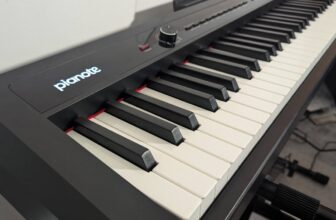
2. Studiologic Numa X Piano 73
The Numa X Piano 73 is a useful choice for a compact weighted setup that also needs to bring other audio sources together. It has four sound or external-MIDI zones and a built-in mixer with four programmable audio inputs.
Pros
- Four sound or MIDI zones
- Mixer with four programmable audio inputs
Cons
- 73-note range can restrict full piano repertoire
That mixer can be practical when a small rig includes another keyboard or an external sound source. USB audio provides a connection to compatible computer and mobile software, while the zone controls keep the instrument’s own sounds and external MIDI assignments accessible.
The 73-note model uses the TP/110 weighted action. Do not assume it has the same action as the Numa X Piano GT simply because both belong to the same family. Audition the key response with acoustic and electric piano sounds and check whether the shorter range covers the set.
The mixer is a reason to investigate the Studiologic, but it does not mean every performance can dispense with a separate mixer. Count the inputs, outputs, monitoring needs, and control you actually require. It makes most sense when its routing matches a modest keyboard rig and the smaller cabinet makes transport easier. For full piano repertoire without octave switching, choose an 88-note model or another full-range instrument.
3. Roland RD-2000 EX
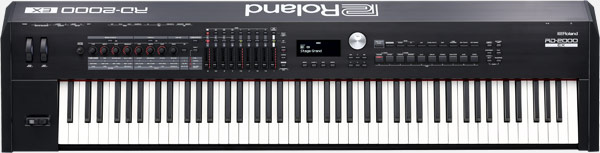
The RD-2000 EX is the option to consider when the stage piano also needs to manage a larger setup. Eight assignable zones can combine internal sounds with external hardware or software, and its sliders and encoders provide direct control.
Pros
- Eight assignable zones and hands-on controls
- XLR outputs, sub output and USB audio/MIDI
Cons
- At 21.7kg, it is a substantial lift before adding a case
Roland combines its V-Piano modeling engine with SuperNATURAL sounds. The EX includes German Concert and Essential Upright V-Piano expansions, giving it a clear distinction from an unexpanded original RD-2000. Check the exact model and installed content when comparing listings.
Its PHA-50 keyboard uses a wood-and-plastic hybrid construction. XLR main outputs, an assignable sub output, and USB audio/MIDI give you useful routing choices. For example, you can build a setup that treats the house feed and other destinations separately instead of sending every sound through one stereo pair.
The cost of that flexibility is preparation. Zones, controller assignments, scenes, and software connections should be rehearsed before the first show. A simpler CP88 may be easier if the set only needs a handful of piano sounds. Choose the Roland when you can name the extra routing or controller job it needs to perform, then save and back up your finished live setups.

4. Nord Piano 6 88
The Nord Piano 6 88 is a good fit for players who want accessible control over acoustic pianos, electric pianos, and sample-based supporting sounds. It has two Piano layers and two Sample Synth layers, with dedicated layer faders.
Pros
- Two Piano and two Sample Synth layers
- Dedicated faders and Triple Pedal 2 included
Cons
- No dedicated organ engine or drawbars for organ-heavy sets
You can split or combine those layers, making it suitable for piano with a string pad, a second keyboard texture, or another accompanying sound. Independent effects help keep a layer from dictating the processing of the whole setup. The piano library also allows a more personal selection of instruments than a permanently fixed preset set.
The included Nord Triple Pedal 2 and triple-sensor hammer-action keyboard make this a complete piano-focused performance package. Audition the pedal and keyboard together, especially if you use half-pedaling or want detailed control of quiet notes.
Do not confuse Piano 6 with a Nord Stage simply because both are red stage keyboards. Its Sample Synth section is not the same purchase as the Stage’s broader synth and organ performance architecture. If organ drawbars or detailed synthesis are central to every gig, compare the appropriate models directly. Piano 6 is strongest when piano and sampled layers cover the actual set without requiring those extra sections.
5. Kawai MP11SE
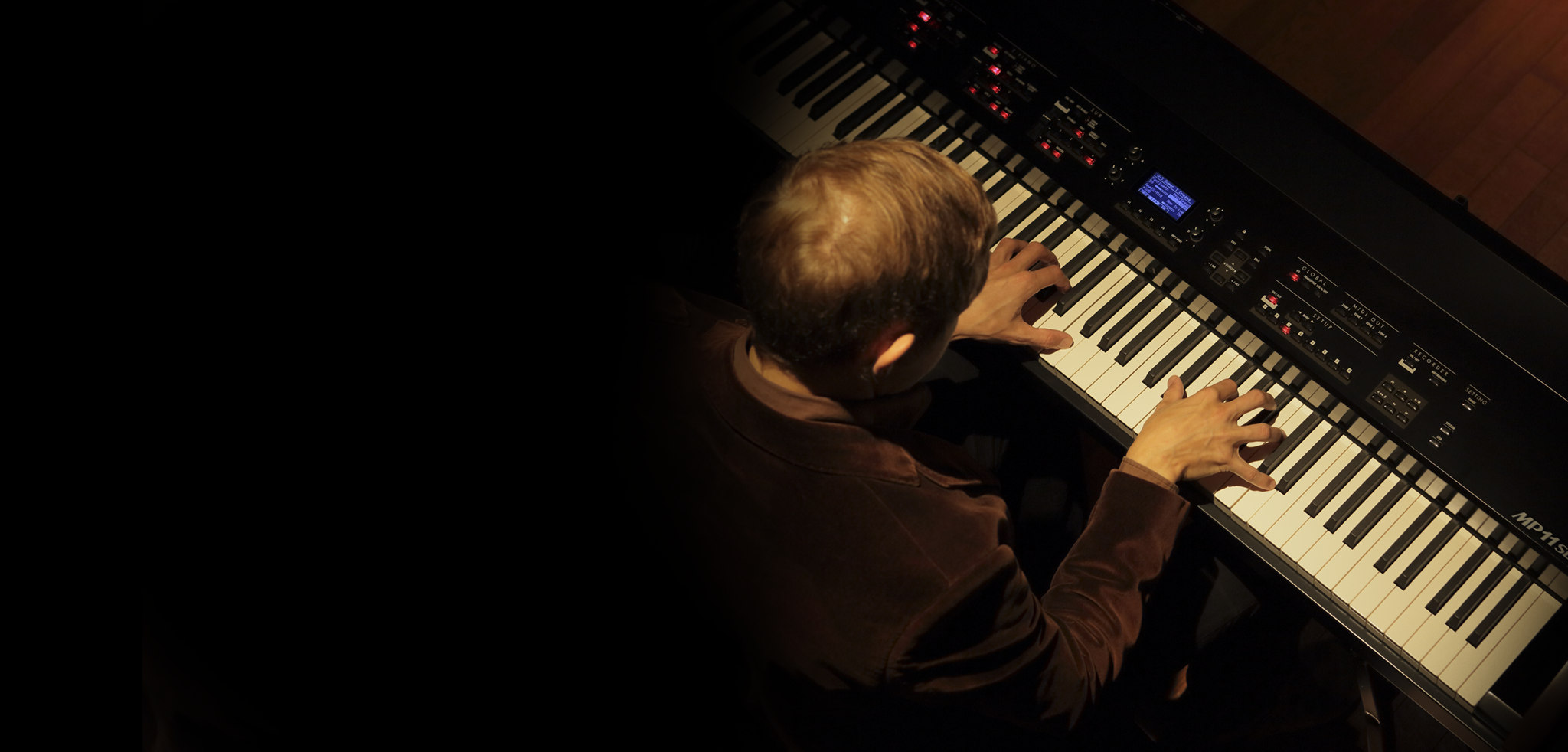
The MP11SE is the pianist-focused choice for someone who prioritizes the keyboard over easy one-person transport. Its Grand Feel action has 88 wooden keys, grade-weighted hammers, counterweights, and triple-sensor detection.
Pros
- 88 wooden keys with Grand Feel action
- Progressive pedal unit and XLR outputs
Cons
- 34kg before adding a protective case
Kawai includes SK-EX, SK-5, and EX grand-piano sounds, with Virtual Technician adjustments for the playing response and piano behavior. A supplied three-pedal unit supports progressive pedaling. This makes it particularly relevant for a pianist who rehearses or performs repertoire that depends on dynamic and pedal control.
It also provides electric pianos and other sounds, four-channel MIDI controller functions, and both XLR and quarter-inch outputs. Those are useful live facilities, although the sound selection is more focused than a broad workstation’s. Try the exact performance layers you need instead of buying on the acoustic piano alone.
The limiting specification is its 34kg weight before adding a protective case. Check the route from storage to vehicle to stage, the stand’s suitability, and who will lift it. The MP11SE makes more sense for a venue, rehearsal space, studio, or transport arrangement that can accommodate it. A player carrying equipment upstairs alone should compare the lighter alternatives even if the Kawai action is attractive.

6. Korg SV-2 73
The SV-2 73 is for a player whose set revolves around electric pianos, organs, clavs, and acoustic piano. Its rotary controls and dedicated effects sections put the emphasis on selecting a sound and shaping it immediately.
Pros
- Dedicated effects controls for vintage keyboard sounds
- RH3 weighted action across 73 notes
Cons
- Custom splits and layers require a computer editor
The RH3 graded hammer keyboard provides a weighted playing surface across 73 notes. The vintage effects chain includes amp processing and Korg’s Valve Reactor circuit, so it suits a workflow where drive, tremolo, modulation, and other effects are part of the performance.
A practical limitation is that custom split and layer programs are created in the SV-2 Editor. You can save them as Favorites and adjust the split point on the instrument, but it is not the same as building every combination entirely from the front panel. Prepare your required bass splits and layered sounds before rehearsals.
Check the suffix carefully: SV-2S models have an internal speaker system, while this selection is the standard SV-2 73. The standard instrument is a good fit when you already use stage monitoring or amplification. Its 73-note range is convenient for a smaller rig but may be restrictive for wide piano parts; the 88-note version is the one to compare if that is common in your music.
How to Choose a Stage Piano
For a gigging pianist, the purchase is about more than the grand-piano preset. Sound changes, usable outputs, pedal control, splits, and carrying the instrument into the venue can matter just as much. These six stage pianos focus on those jobs. For a fixed home instrument with built-in speakers or furniture, see our separate digital piano buying guide.
Build a Typical Set Before Comparing Features
List the sounds and transitions used in a normal performance. Include sustained notes during a patch change, the loudest electric-piano sound, and the quietest solo introduction. Add any bass split, pad layer, organ part, or external plugin. A stage piano should handle those jobs without making basic changes difficult.
Use that list in a shop demonstration. A beautiful solo grand preset is useful, but it does not reveal whether you can reach the next sound with one hand while the band keeps playing. Check program organization, pedal behavior, and what happens to effects when you change programs.
Choose the Action for Your Playing
Weighted actions vary in resistance, return behavior, and how they respond to different sounds. A mechanism that suits delicate acoustic piano may feel less comfortable for fast repeated organ parts. Play the styles you actually cover and test several velocity settings before rejecting a sound.
Check the available range as well. A 73-note instrument may cover a band gig comfortably, while two-handed solo repertoire may need 88 notes. Octave buttons are useful, but they are not always convenient in the middle of a phrase.
Check Audio Outputs and Monitoring
Decide whether the venue needs a mono or stereo feed and whether you need an independent monitor destination. Balanced connections can be useful in a live rig, but understand the house system and any DI requirement. Set up a representative connection before the show instead of assuming every output behaves identically.
Most instruments here expect headphones or external monitoring. Built-in speakers are a model-specific feature, not something the phrase “digital piano” guarantees. Include amplification, pedals, a stable stand, and appropriate cables in your practical buying plan.
Weigh the Complete Rig
Add the case, stand, bench, pedals, and any amplifier to the instrument’s transport requirements. Measure the car and storage route. A heavier keyboard may be manageable with help and level access, yet unsuitable for an upstairs solo load-in. The case also changes how easily the instrument fits through doors and into a vehicle.
Frequently Asked Questions
What Makes a Stage Piano Different From a Home Digital Piano?
A stage piano emphasizes live control, outputs, patch management, and transport. A home digital piano may emphasize speakers, furniture, lessons, or a fixed pedal assembly. The categories overlap, so choose from the functions you need. A stage instrument can work at home with suitable monitoring.
Do I Need a Workstation Instead?
Consider a workstation when onboard sequencing, detailed production, or a very broad arrangement is central to the performance. A focused stage piano is often simpler when the job is playing pianos and a few layers. The RD-2000 EX adds extensive controller functions, but those should still be matched to the intended rig.
Can I Use Piano Plugins on Stage?
Yes, with a suitable computer or host, controller, audio connection, and reliable setup. USB MIDI alone does not guarantee audio routing. Rehearse with the complete rig, save backups, and decide what sound you will use if the computer is unavailable. Our 88-key MIDI controller guide covers controller-focused alternatives.
Conclusion
Choose CP88 for a focused live piano workflow, RD-2000 EX for more demanding control and routing, and Piano 6 for accessible piano/sample layers. MP11SE suits players who can accommodate its weight, SV-2 emphasizes vintage keyboard performance, and Numa X Piano 73 offers a compact weighted rig with useful audio integration.