12 Types of Indian Music

Indian music includes classical raga performances, regional folk songs, devotional singing, film soundtracks, and independent pop and rock. Each offers a different way into the country’s musical life.
Some traditions are closely associated with a region or language; others travel across India and beyond its borders. A song can also fit more than one category. A devotional text might receive a classical treatment, while a film soundtrack might borrow a folk rhythm.
These 12 types offer a starting point, with artists to try and sounds to listen for. India’s traditions extend well beyond this list, and each category includes a range of sounds.
Contents
1. Hindustani Classical Music
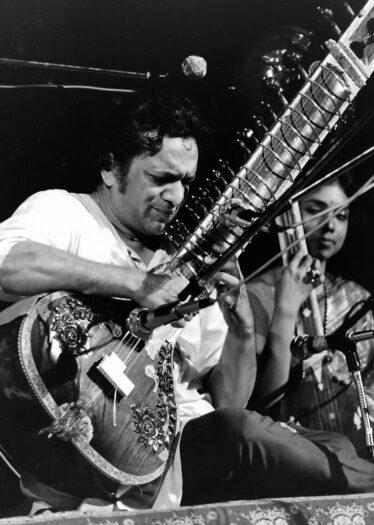
Hindustani classical music is associated with northern India and neighboring parts of South Asia. Its performances explore a raga, a melodic framework with characteristic phrases and expressive possibilities, together with tala, a repeating rhythmic cycle.
A performance may begin with an alap, where a musician introduces the raga without a regular drum pulse. Later sections bring in a composition, a rhythmic cycle, and improvisation. Listen for sustained notes, slides, and the way a phrase returns to an important point in the cycle.
Ravi Shankar’s sitar recordings provide an instrumental starting point, while Kishori Amonkar offers a vocal perspective. Khayal and dhrupad are distinct vocal forms within this tradition, so hearing one recording does not tell you how every Hindustani concert will sound.
2. Carnatic Music
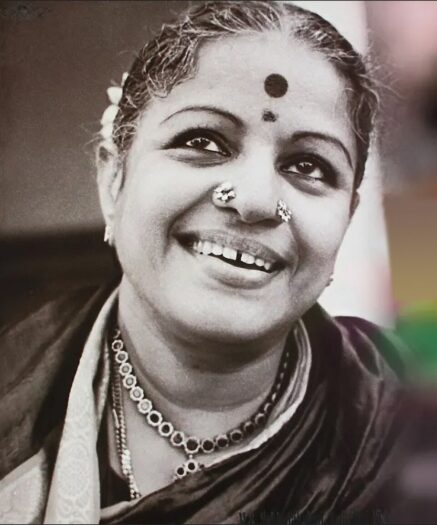
Carnatic music is the major classical tradition associated with southern India. Like Hindustani music, it works with raga and tala, but it has its own repertoire, performance conventions, and approaches to ornamentation and improvisation.
Composed songs play an important role, alongside sections that develop melodic or rhythmic ideas. Listen for detailed vocal ornamentation and the exchange between a lead musician, violin accompaniment, and percussion. The mridangam often supplies the central rhythmic accompaniment in a concert.
M. S. Subbulakshmi is an accessible starting point for vocal listening. For more detail, read our introduction to Carnatic music and guide to Carnatic instruments. Both guides cover the tradition and its instruments in depth.
3. Bhangra
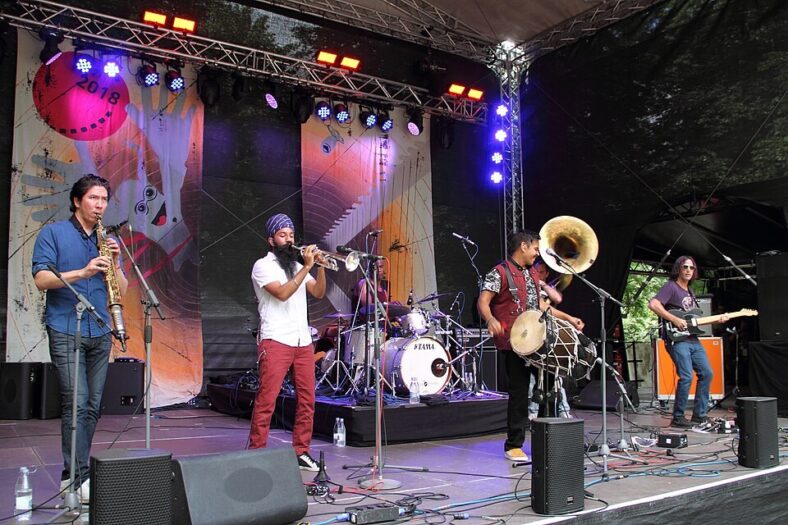
Bhangra is associated with Punjab and Punjabi communities around the world. The word refers to a dance tradition as well as modern popular music drawing on Punjabi musical elements. Contemporary bhangra developed through both South Asian and diaspora music scenes.
Listen for the powerful dhol, a double-sided drum, energetic singing, and a rhythm built for dancing. The bright plucked sound of the tumbi may appear beside synthesizers, electric instruments, and programmed beats. A modern studio recording can therefore sound very different from a folk dance performance.
Malkit Singh and the band Alaap are useful introductions to British Punjabi bhangra. Comparing their recordings with a live dhol-led performance helps separate the traditional rhythmic foundation from the many pop, rock, and electronic production choices musicians add to it.
4. Baul Music
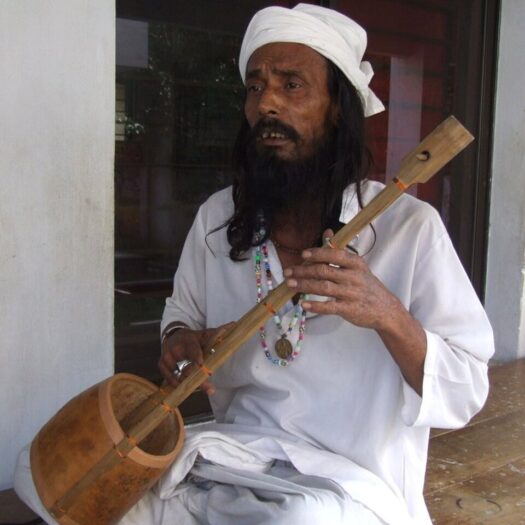
Baul songs belong to a Bengali tradition shared by West Bengal in India and Bangladesh. Baul musicians are associated with spiritual searching and a way of life that challenges conventional religious and social boundaries.
The singing often has an intimate, direct quality, supported by a small group of instruments rather than a large orchestra. These can include the one-string ektara, the plucked dotara, and percussion. The lyrics are central, addressing the human body, inner experience, and the search for spiritual understanding.
Explore Purna Das Baul or Parvathy Baul, and look for performances of songs associated with Lalon. Translations help explain the poetry, but watching a musician sing while playing also reveals the close relationship between rhythm, movement, and the delivery of the words.
5. Rajasthani Folk Music
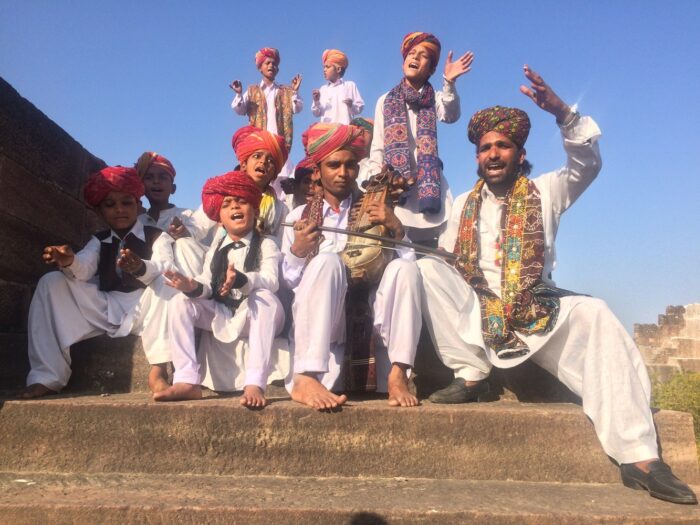
Rajasthan has several folk traditions rather than one uniform style. Manganiyar and Langa communities have maintained varied repertoires through generations of professional performers.
Expect expressive singing, intricate percussion, and instruments such as the bowed kamaicha or sarangi in particular ensembles. The khartal, a set of wooden clappers, can create remarkably detailed rhythmic patterns. Some performances feel spacious and lyrical, while others gather energy through a singer’s exchanges with the instrumentalists.
“Kesariya Balam” is a familiar song to seek out in different performances. Try recordings by Rajasthani ensembles rather than assuming a film arrangement captures the whole tradition. Compare versions to hear how a recognizable melody changes with the voice, ornamentation, and instrumental accompaniment.
6. Bihu Songs
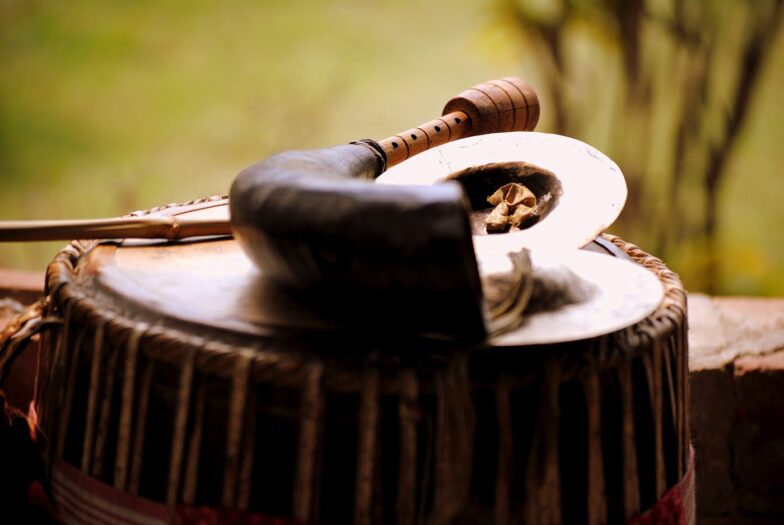
Bihu music is associated with Assam, particularly the celebrations surrounding Rongali Bihu in spring. Songs and dance are closely connected, with themes that can include courtship, youth, and everyday life.
Listen for lively singing, the Assamese dhol, and the distinctive reed sound of the pepa, traditionally made using a buffalo horn. Other local instruments add rhythmic and melodic detail. In a dance performance, the interaction between the singing, percussion, and dancers is part of the experience.
Look for a live Bihu ensemble as well as recorded Bihu songs by Assamese singers such as Khagen Mahanta. Assam has its own languages, performance settings, and musical history, beyond the folk traditions most commonly borrowed by Bollywood.
7. Qawwali
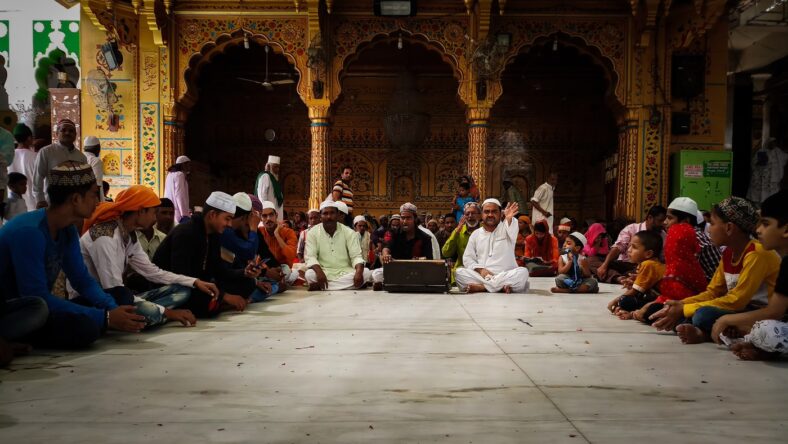
Qawwali is a Sufi devotional music tradition found in India, Pakistan, and other parts of South Asia. It is associated with gatherings at shrines as well as concert performances, and its poetry often explores devotion and spiritual longing.
A group commonly includes a lead singer, supporting singers, harmonium, percussion, and handclaps. A phrase can return many times, with changing vocal ornamentation and increasing intensity. As the phrase returns, the musicians develop its meaning and musical possibilities.
The Indian duo Sabri Brothers, Aftab and Hashim Sabri, offers one starting point; Pakistani singer Nusrat Fateh Ali Khan provides another widely recorded perspective. Performances differ in length and arrangement, so try a full ensemble recording as well as the shorter versions adapted for films or crossover albums.
8. Ghazal
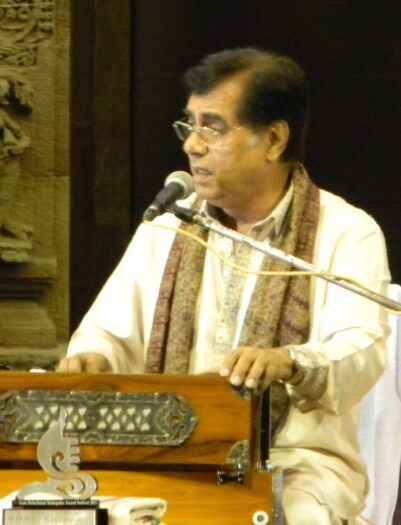
A ghazal is a poetic form that also has an important tradition of sung performance. In Indian music, ghazal singing is closely associated with Urdu poetry, although the form exists in several languages and countries.
Listen for expressive phrasing and the singer’s attention to individual words. Accompaniment might include harmonium, tabla, strings, guitar, or other instruments, depending on the recording. Some performances use substantial classical ornamentation; others favor a restrained, accessible arrangement that keeps the poetry in the foreground.
Begum Akhtar and Jagjit Singh make useful contrasting introductions. Jagjit Singh’s work with Chitra Singh on The Unforgettables is one place to start. Read a translation alongside the recording to follow the poetry’s ambiguity, humor, and emotional shifts, which the musical mood alone cannot convey.
9. Bhajan and Kirtan
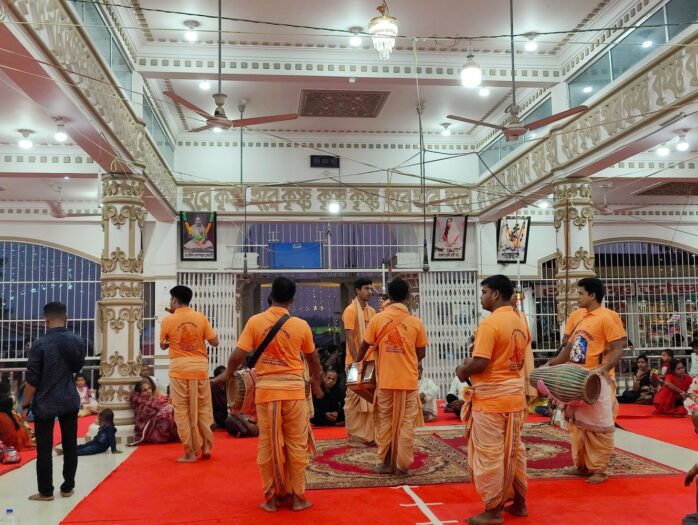
Bhajan and kirtan are related devotional practices, although the terms are used differently across communities. A bhajan is commonly a devotional song, while kirtan often involves singing or recitation that encourages participation and repetition.
Arrangements range from a single voice to large groups, sometimes accompanied by harmonium, drums, and small cymbals. Hindu bhajans can use accessible melodies, while Sikh shabad kirtan gives musical expression to sacred texts from the Sikh tradition. These practices should not be treated as identical simply because some instruments overlap.
Try a bhajan recording by M. S. Subbulakshmi, then listen to shabad kirtan performed by Bhai Harjinder Singh. Pay attention to how the setting changes the experience: congregational singing has a different purpose and feel from a polished devotional recording intended for home listening.
10. Rabindra Sangeet
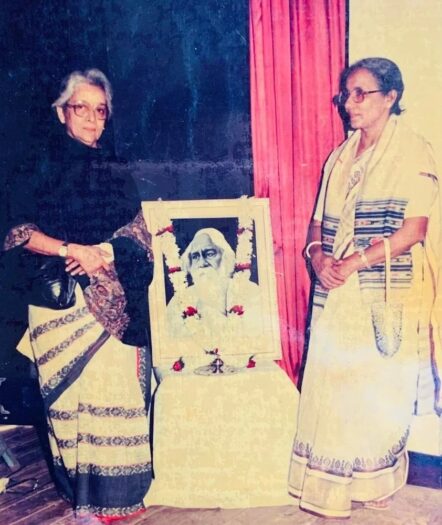
Rabindra Sangeet is the repertoire of songs composed by Rabindranath Tagore. It holds an important place in Bengali cultural life in both India and Bangladesh, with songs addressing love, nature, spirituality, and other subjects.
The repertoire draws on several musical influences, including Indian classical and Bengali folk traditions. Listen for the close fit between the words and melody. Singers may use ornamentation, but the interpretation of the text and the shape of the composition remain central to the performance.
Recordings by Suchitra Mitra, Kanika Banerjee, and Hemanta Mukherjee are good places to start. Try “Amaro Porano Jaha Chay” in different versions to hear how a singer changes the emotional weight of a familiar composition. Rabindra Sangeet is a defined body of songs, rather than a catch-all name for Bengali music.
11. Indian Film Music
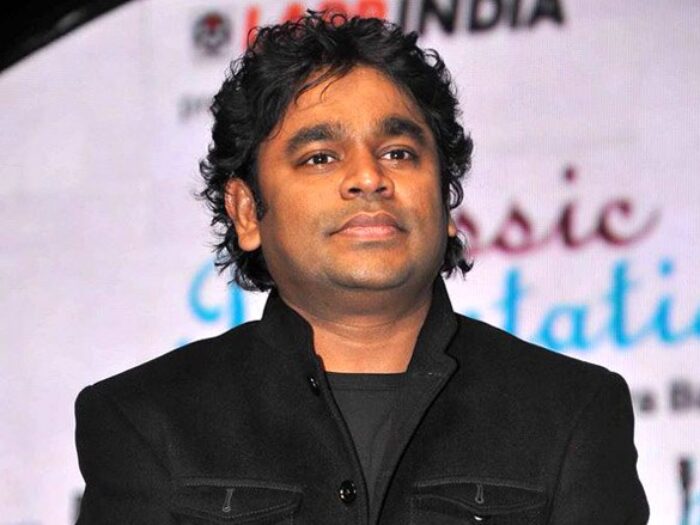
Film music is one of the most widely heard forms of Indian music. Bollywood refers to the Hindi-language film industry, but India also has substantial Tamil, Telugu, Malayalam, Bengali, and other film industries with their own musical histories.
A soundtrack can include a classical-based melody, a regional folk influence, orchestral writing, electronic dance production, or rock instruments. Playback singers record songs that actors perform on screen, and a song’s arrangement often supports a scene, character, or dramatic situation.
For contrasting approaches, explore work by composers S. D. Burman, Ilaiyaraaja, and A. R. Rahman. Listen to more than one song from each: film music is a production context, not one fixed genre. A single soundtrack can contain several markedly different musical styles.
12. Indian Independent Pop and Rock
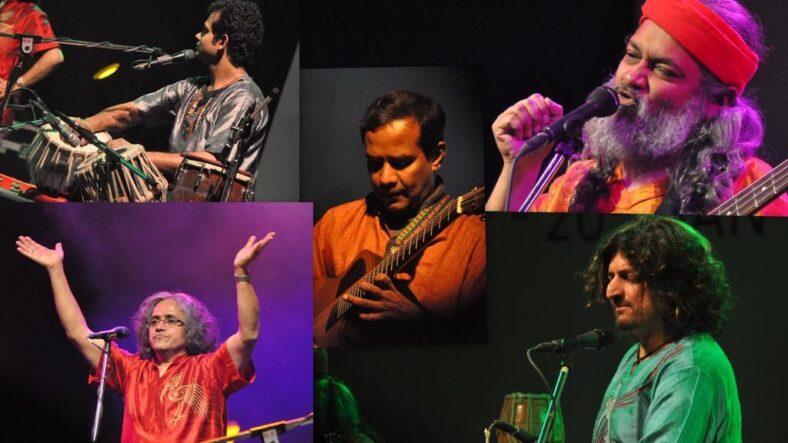
India also has a large music scene outside film soundtracks. Independent artists work in pop, rock, metal, hip-hop, electronic music, and many other styles, using English and a wide range of Indian languages.
Listen for the same band and studio possibilities found in international pop and rock: guitars, drum kits, synthesizers, and layered vocals. Artists may also draw on regional melodies or instruments, but a recording does not need traditional instrumentation to belong to Indian musical life.
Indian Ocean’s “Kandisa” offers one route into folk-influenced rock, while Alisha Chinai’s Made in India provides a familiar non-film pop reference. The two recordings show different approaches to non-film music, which spans several genres. Exploring independent artists alongside film soundtracks gives a fuller picture of the country’s popular music.
Summary
Indian music is easier to explore when you follow individual traditions. Start with Hindustani or Carnatic performances for raga-based classical music, bhangra or Bihu for dance-related sounds, and Baul or Rajasthani ensembles for contrasting folk traditions. Ghazal, qawwali, and devotional singing reveal different relationships between music and words.
Film songs and independent artists add many more possibilities. If an unfamiliar instrumental sound catches your attention, our guide to popular Indian musical instruments can help you identify it. A few recordings from each category will tell you more than trying to reduce Indian music to one characteristic sound.
Ravi Shankar Image by: Markgoff2972, CC BY-SA 4.0
M. S. Subbulakshmi Image by: Saregama Carnatic, CC BY 3.0
Red Baraat Image by: Schorle, CC BY-SA 4.0
Ektara player Image by: Md. Saiful Aziz Shamseer; derivative work by StefanWesthoff, CC BY-SA 3.0
Manganiyar musicians Image by: Idontsaycheese, CC BY-SA 4.0
Bihu instruments Image by: Kangkan.it2004, CC BY-SA 3.0
Qawwali ensemble Image by: Saswat swarup mishra, CC BY-SA 4.0
Jagjit Singh Image by: Krupasindhu Muduli, CC BY-SA 3.0
Kirtan musicians Image by: ArpitaTithi Roy, CC BY-SA 4.0
Suchitra Mitra Image by: Anurekhac7, CC BY-SA 4.0
A. R. Rahman Image by: Bollywood Hungama, CC BY 3.0
Indian Ocean Image by: Moghesiddharth, CC BY-SA 3.0