The 10 Best DAWs for Chromebook (2026)

You can make music on a Chromebook with a browser DAW or a compatible Android music app. Start with a browser studio for the fewest installation hurdles; choose an Android app when you want a more conventional mobile recording workflow.
Soundtrap is my first choice here for recording and collaborating online. BandLab is the strongest free starting point for putting vocals, MIDI instruments and beats into a complete arrangement. Both run in Chrome without a desktop DAW installer.
The list also includes a notation editor and two simpler composition tools, with their limits explained. For more options, see the best DAWs and the best online DAWs.
Contents
- 1. Soundtrap
- 2. BandLab
- 3. Cubasis 3
- 4. FL Studio Mobile
- 5. Soundation
- 6. Amped Studio
- 7. Flat.io
- 8. Audiotool
- 9. BeepBox
- 10. Chrome Music Lab: Song Maker
- Notable Mentions
- Are Chromebooks good for music production?
- Can you run industry-standard DAWs on a Chromebook?
- Can you record vocals on a Chromebook?
- Conclusion
1. Soundtrap
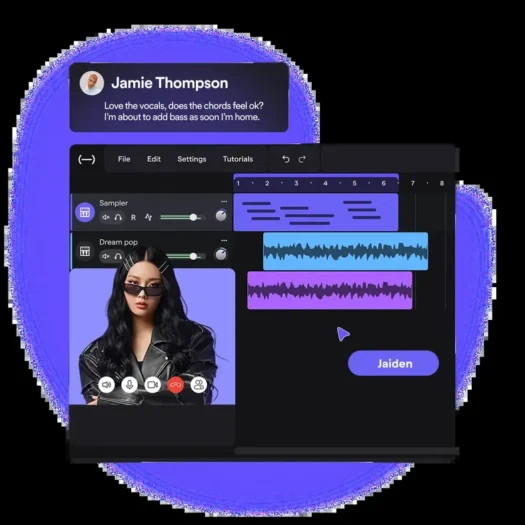
Soundtrap is the strongest starting point here for recording songs with other people in a browser. You can arrange loops, play virtual instruments, edit MIDI and record vocals without installing a desktop DAW. Its cloud projects also make it easy to return to a song from another computer.
The free account includes a selection of loops, instruments and effects. Paid plans expand the library and add features such as automation and vocal tuning; those extras are not all part of Soundtrap Free. This makes it worth starting with the free studio before committing to a subscription.
Use the latest Chrome browser on your Chromebook and allow microphone access when recording. Desktop plugin support does not mean a Chromebook can run Windows or Mac VST/AU files. Soundtrap’s built-in instruments and effects are the practical starting point on ChromeOS.
2. BandLab
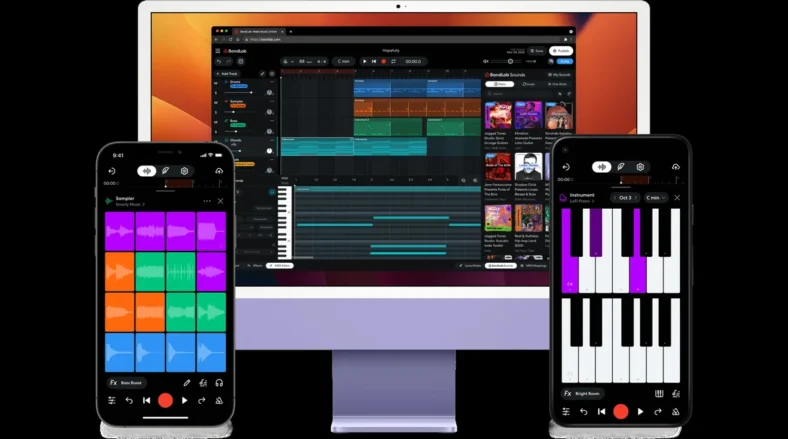
BandLab is the best free starting point for recording and arranging a complete song on a Chromebook. Its browser Studio combines audio tracks, MIDI instruments, a piano roll, effects and cloud projects. The arrangement view and mixer should feel familiar if you have used another DAW.
The core Studio is free, but that does not make every BandLab feature or sound free. Membership adds premium sounds, effects and production tools. Start with the free instruments and sounds, or import your own recordings, rather than assuming the entire library is included.
BandLab also offers online mastering and collaboration. These are useful companions to the recorder, but mastering presets cannot fix a poor recording or an unbalanced mix. For a beginner working with vocals, beats and a few instrument parts, the free Studio covers the essentials.
3. Cubasis 3
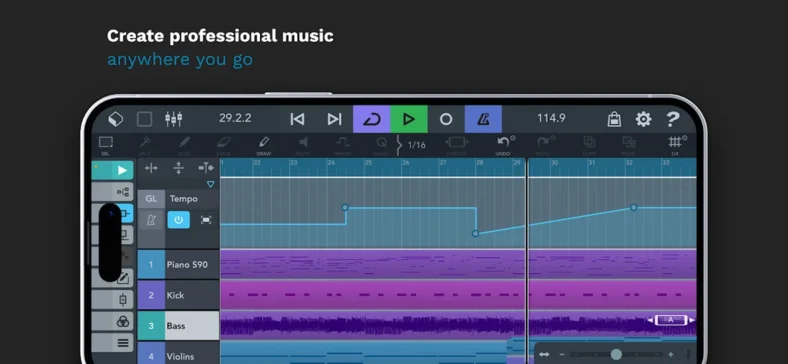
Cubasis 3 is the paid Android option for Chromebook users who want a conventional audio and MIDI workstation. Steinberg explicitly supports ChromeOS, and the app includes a timeline, audio and MIDI editors, automation, instruments and a mixer.
The MiniSampler lets you build playable instruments from your own samples, while real-time time-stretching helps fit audio loops to the song. It is a much closer fit for recording and editing full arrangements than a simple loop game.
Install the Android edition through Google Play on a compatible Chromebook. Cubasis 3 is a separate purchase from desktop Cubase, and optional instruments and effects are sold in the app. Google Play compatibility and audio/MIDI hardware support still depend on the device; iOS AUv3 plugins do not run on the Android edition.
4. FL Studio Mobile
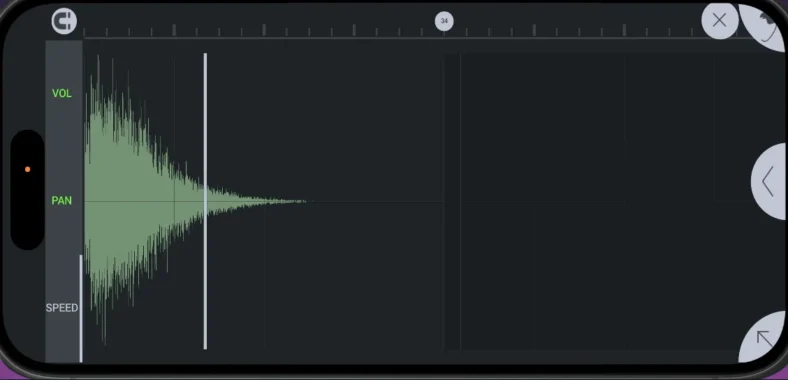
FL Studio Mobile 5 is a separate mobile music studio, rather than the full desktop FL Studio running on ChromeOS. Image-Line supports the Android app on compatible Chromebooks. It provides a piano roll, audio recording, built-in instruments, effects, automation and a mixer.
This is a useful choice for beatmakers who want to sequence drums, write melodies and record a vocal in one app. DirectWave plays sampled instruments, and Slicer turns loops into parts you can trigger from the piano roll. Included instruments and effects belong to the purchased app; additional sound packs and presets can be separate purchases.
Buy the Android app through its official store route. A desktop FL Studio licence does not automatically buy the mobile app, and a mobile purchase does not unlock desktop FL Studio. Mobile 5 supports FLP export for continuing work in a separately licensed desktop copy. Its FL Cloud browser includes free sounds, with the larger catalogue requiring a separate FL Cloud plan.
5. Soundation
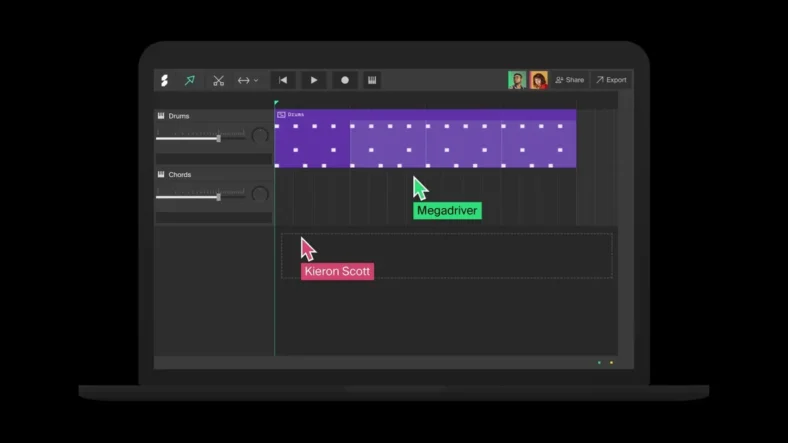
Soundation suits loop-based electronic production and working on a project with collaborators online. It runs in the browser, with an arrangement view, MIDI recording, virtual instruments and audio effects. There is no Windows installer to run on your Chromebook.
A free account lets you try the studio. Paid plans expand the sound library, storage and export options: Starter includes MP3 export, while Creator and Pro include WAV export. Choose the plan around the files you need to deliver, rather than treating every advertised feature as free.
Use its built-in devices for Chromebook production. Browser technology can make editing responsive, but a large project still depends on your processor, memory and audio setup. No browser DAW can promise low latency on every Chromebook.
6. Amped Studio
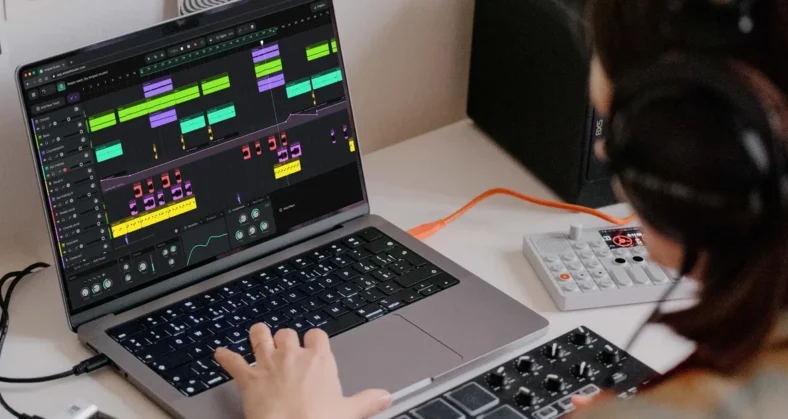
Amped Studio is a browser DAW with audio recording, MIDI editing, instruments and effects. Its sequencer lets you combine recorded parts and programmed notes, while sharing tools let another musician contribute to a project.
The free Starter plan includes a limited instrument/effect selection, 16 tracks and MP3 audio export. Premium and Pro add more instruments, WAV export, external-audio storage and project-file export. Exporting a finished MP3 is different from downloading an editable project; the free plan does not include project-file export.
The advertised VST support needs special care on a Chromebook. VST Remote requires a separate host application for Windows or Mac, and the current manual limits it to one VST per project. It does not turn ChromeOS into a native VST host. Choose Amped for its browser instruments unless you also have the supported desktop setup.
7. Flat.io
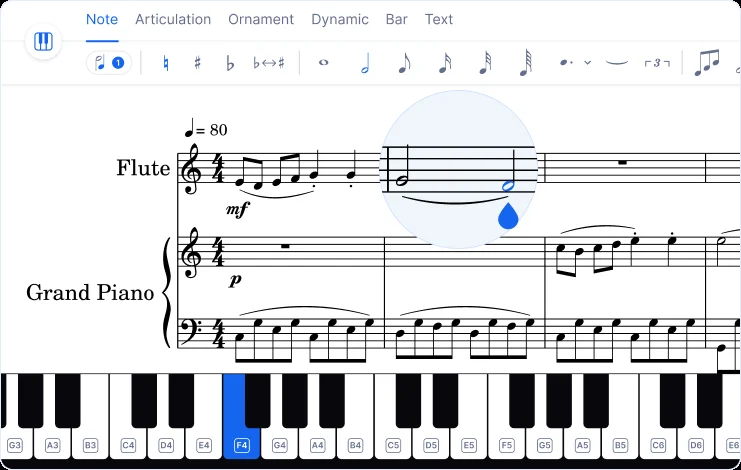
Flat.io is for writing notation and collaborating on scores, rather than recording and mixing audio tracks. If your priority is composing on a staff, it is a useful Chromebook companion to a DAW. You can hear the score play back and work with another musician in real time.
The free Basic plan supports a limited number of scores and a smaller instrument library. Flat Power adds unlimited scores, more instruments and advanced export and layout features. MIDI/MusicXML import and export entitlements differ by plan, so do not assume a free account includes every exchange format.
Use the web editor on ChromeOS. Flat’s separate Mac and Windows desktop app is not a Chromebook download. For a beat or a multitrack vocal recording, choose one of the recording DAWs above; for a readable arrangement to share with players, Flat makes more sense.
8. Audiotool
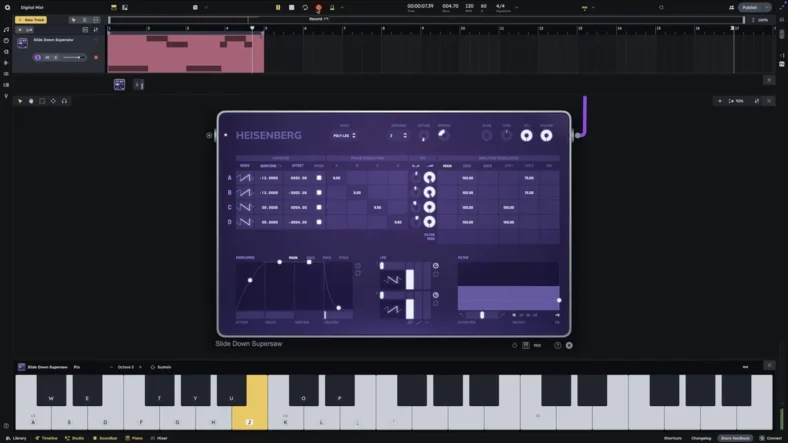
Audiotool is a free browser studio for electronic production, sound design and collaboration. Its modular approach lets you connect instruments and effects into signal chains instead of relying only on a conventional mixer layout.
You can program drum patterns, edit MIDI, record audio and build arrangements with its own synths and effects. The community and project-sharing features make it useful if you enjoy remixing and learning how other producers build a track.
Audiotool now also advertises VST3 support through a desktop bridge. Those plugins still run locally on a supported computer; the bridge is not native Chromebook plugin support. Use Audiotool’s built-in devices on ChromeOS, and pay attention to the usage terms of any samples you import or share.
9. BeepBox
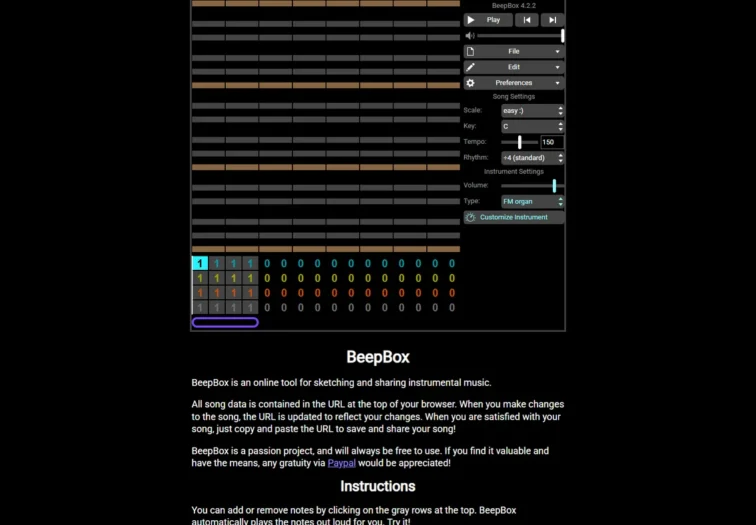
BeepBox is a free browser sequencer for writing instrumental patterns and chiptune-style music. Click notes into a pattern, choose an instrument and arrange patterns into a song. You can save and share the composition through its URL without creating an account.
BeepBox 4.2.2 includes several synthesis types, scale and rhythm settings, and song export. It is a good fit for learning how melody, bass and drums work together, or for sketching a game-music idea on a modest Chromebook.
It does not replace a multitrack audio recorder. Choose it for programmed notes and sound design; use BandLab, Soundtrap or Cubasis when you need to record vocals and instruments.
10. Chrome Music Lab: Song Maker
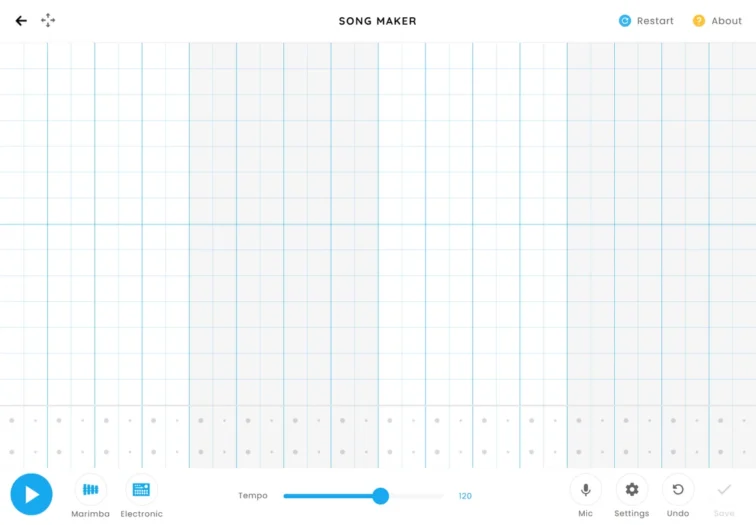
Song Maker is the simplest starting point on this list for trying melody and rhythm in a browser. Google’s Chrome Music Lab experiment gives you a coloured note grid, a drum row, instrument choices and a tempo control. It is free and does not require an account.
Click a few notes, add a drum pattern and listen to the result. It works well for a first composition exercise or a quick idea you want to share. Its microphone option can help enter notes, but it is not a multitrack vocal recorder.
Treat Song Maker as a musical sketchpad, rather than a full DAW. For effects chains, detailed mixing or a longer recording project, move to one of the studios earlier in the list.
Notable Mentions
REAPER
REAPER can be an option for an experienced user with a Chromebook that supports the Linux development environment. Cockos provides Linux builds, but this is not a native ChromeOS installation or a guarantee of Chromebook audio-hardware support. Google lists USB support for Android devices but says other devices are not yet supported in its Linux environment, so do not assume a USB audio interface will be available there. A school or work administrator may also disable Linux.
REAPER is paid software with an evaluation period. Match the Linux build to your processor architecture and expect more setup than with a browser DAW. For a first recording project, a supported browser or Android app is the easier route.
Are Chromebooks good for music production?
Chromebooks can handle songwriting, beatmaking and audio recording with suitable software. The limits are software availability, processor and memory, storage, and audio latency. A browser DAW cannot load a Windows or Mac plugin simply because you own its licence.
For more detail, see our guide to producing music on a Chromebook.
Can you run industry-standard DAWs on a Chromebook?
Ableton Live, Pro Tools, Logic Pro and desktop FL Studio do not have native ChromeOS editions. FL Studio Mobile and Cubasis 3 are separate mobile apps. Browser studios run in Chrome, while Linux software requires a supported and enabled Linux environment.
Can you record vocals on a Chromebook?
Yes. Use a DAW with audio recording, allow microphone access and check that ChromeOS recognises your microphone or audio interface. Wired headphones help avoid the extra delay of Bluetooth. Recording and live monitoring latency depend on your device, browser and interface; test a short take before a longer session.
Conclusion
For a first Chromebook recording, start with BandLab or Soundtrap in Chrome. Choose Cubasis or FL Studio Mobile for a compatible Android app workflow, Audiotool for modular sound design, and Flat for notation. Keep BeepBox and Song Maker in mind when you want to sketch notes quickly rather than record a full session.