The 10 Best Audio Interfaces for Mac (2026)
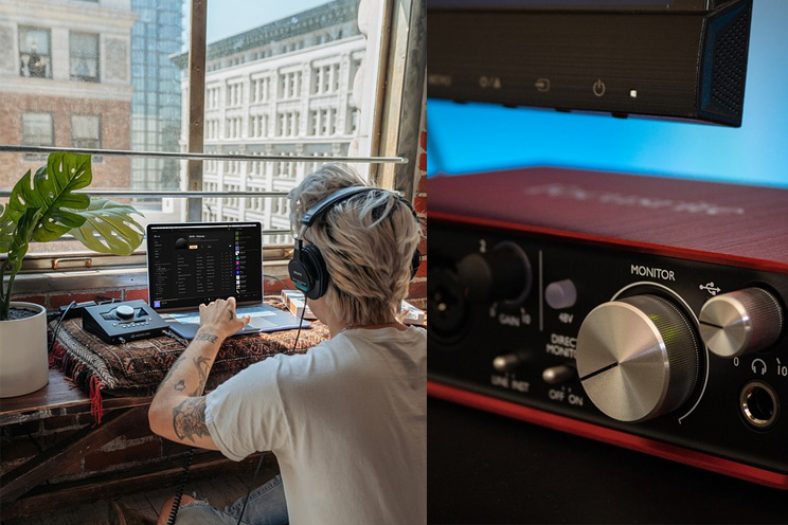
Are you looking for an audio interface for your Mac? You can get high-quality audio recording and monitoring thanks to these external devices with either USB or Thunderbolt connectivity.
They have microphone preamps, inputs for connecting instruments, headphone preamplifiers, MIDI signal management, etc. In short, it’s the nerve center of your home studio! But which one do you choose?
My top pick is the Universal Audio Apollo Twin X DUO Gen 2. This is one of the best audio interfaces available on the market, featuring high-quality audio conversion and Thunderbolt 3 connection, excellent for Mac users.
My budget pick is the M-Audio M-Track Solo, which offers clear audio recordings for creating music, streaming, and podcasting. This user-friendly interface features switchable phantom power for condenser microphones and direct monitoring.
For this guide on the 10 best audio interfaces for Mac, I delved deeper into the specifications of each interface. I analyzed the number of inputs and outputs, preamp quality, resolution, latency, and compatibility with Mac operating systems. I also considered the sound quality, ease of use, and overall functionality.
Contents
- The Best Audio Interfaces for Mac (2026) – At a Glance
- 1. Universal Audio Apollo Twin X DUO Gen 2
- 2. M-Audio M-Track Solo
- 3. Focusrite Scarlett 4i4 4th Gen
- 4. Arturia MiniFuse 2 Black
- 5. Behringer U-Phoria UMC202HD
- 6. MOTU M2
- 7. Universal Audio Volt 276
- 8. Audient iD4 MKII
- 9. Focusrite Scarlett Solo 4th Gen
- 10. Solid State Logic SSL 2 MKII
- Key Features and Specs to Look For in Audio Interfaces for Mac
- Buyers Guide
- FAQs
- Conclusion
The Best Audio Interfaces for Mac (2026) – At a Glance


Now let’s move on to the full list:
1. Universal Audio Apollo Twin X DUO Gen 2
The Apollo Twin X DUO Gen 2 is a compact Thunderbolt 3 interface for Mac users who want to record through UAD plug-ins. It pairs two Unison microphone preamps with onboard DUO processing and detailed conversion.
Pros
- Two Unison microphone preamps with onboard UAD processing
- Thunderbolt 3 connection and 10 x 6 total I/O
- Auto-Gain, talkback, and useful monitor controls
- Strong conversion and a sturdy desktop design
Cons
- Pricey
- Needs a Thunderbolt connection and a separate Thunderbolt cable
The Twin X still gives you a small desktop unit rather than a rack full of inputs. Its two mic preamps suit vocals, instruments, and compact recording sessions. You can also add inputs through its optical connection when your setup grows.
Auto-Gain helps set input levels, while talkback and speaker controls make monitoring easier. The onboard DSP is the reason to choose it over a simpler USB interface: you can monitor through compatible UAD plug-ins as you record. Check your Mac’s Thunderbolt port and current UA system requirements before buying.
The Apollo is best for a compact studio that values real-time UAD tracking and monitoring more than a long row of built-in mic inputs. Its optical input can bring in additional channels from a compatible external preamp. The hardware uses an external power supply; the Thunderbolt cable is sold separately. Its Analog Classics bundle differs from the old MkII Heritage software package, so check the current included plug-ins before relying on a particular title.
Specs
- Simultaneous I/O: 10 x 6
- A/D Resolution: 24-bit/192kHz
- Number of Preamps: 2 mic preamps; 1 Hi-Z instrument input
- Phantom Power: Yes
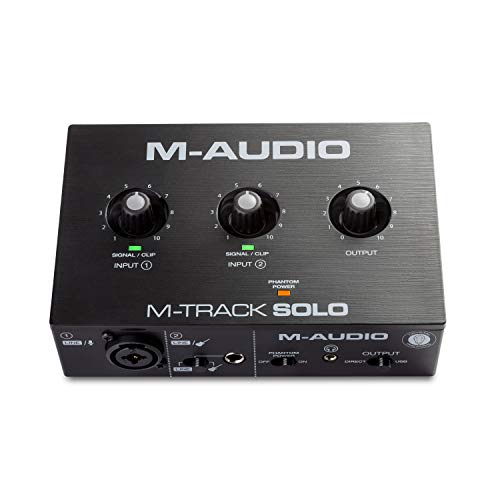
2. M-Audio M-Track Solo
With a 48 kHz audio resolution, the M-Track Solo is a desktop-friendly yet powerful device that offers fantastic audio clarity for recording and streaming purposes. It’s perfect for musicians and podcasters like me who want professional-quality content without sacrificing sound quality.
Pros
- Affordable and portable interface
- Works well for basic recording and audio production
- Includes a range of supported software
- Zero-latency monitoring for easy recording
- Works with a variety of devices and instruments
- Crystal preamps for low-noise sound capture
Cons
- Possible distortion issues at higher volumes
- Plastic construction may feel cheap and not very durable
- Touchy gain controls; jumps fairly quickly to clipping
The compact and portable design of this device makes it great for musicians and producers who are constantly on the move. It saves space in the studio and is also a dependable partner when traveling or setting up a recording session quickly. This level of convenience and portability is a standout feature of this interface.
This music production device is USB-powered, eliminating the need for another power source and making it a great companion for musicians. With easy adaptability and compatibility with both Mac and Windows systems, this versatile device allows you to create anytime, anywhere.
Specs
- Simultaneous I/O: 2 x 2
- A/D Resolution: 16-bit/48kHz
- Number Of Preamps: 1
- Phantom Power: Yes
3. Focusrite Scarlett 4i4 4th Gen
Focusrite is very well-known for creating very decent audio interfaces for affordable prices. Like its predecessors, this one offers good sound quality, ease of use, and great portability. To these are added a greater number of outputs, connectivity, more efficient preamps, and good software.
Pros
- High-quality sound and performance
- 4 inputs and 4 outputs for versatile recording
- Easy setup and user-friendly software
- Sturdy build and aesthetic design
- Compatible with various operating systems
- 4th gen mic preamps provide ultra-low-noise recording
Cons
- No on/off switch
- Requires a computer for power supply
- Only two microphone preamps, despite the four-input layout
The 4th generation Focusrite interfaces are a great upgrade from the previous generations. The Scarlett 4i4 has four analog inputs and four analog outputs, with two microphone preamps. This makes it the extended successor to the Scarlett 2i4 (2nd Gen), which only has two inputs.
The “Air” function allows you to enter details, especially when recording vocals or acoustic instruments. A Loopback function is intended for podcast creators and streaming users. The audio interface is good for a beginner and can be used directly to record guitar in the home studio.
Specs
- Simultaneous I/O: 4 x 4
- A/D Resolution: 24-bit/192kHz
- Number of Preamps: 2 x mic, 2 x instrument
- Phantom Power: Yes

4. Arturia MiniFuse 2 Black
The Arturia MiniFuse 2 is a compact USB-C interface with two microphone inputs, MIDI connections, and enough flexibility for recording at home or on the move. Its simple controls make it easy to set up without taking over your desk.
Pros
- Two mic, line, or instrument inputs
- MIDI input and output for keyboards and controllers
- Bus-powered design with direct monitoring
- Loopback and included music software
Cons
- Only two analog recording channels
- The USB-A hub has limited power for connected devices
The two combo inputs let you record a pair of microphones or instruments. There is also a headphone output, balanced monitor outputs, and five-pin MIDI I/O. That makes it useful for a small Mac setup built around a keyboard or hardware synth.
MiniFuse 2 runs from USB power and supports up to 24-bit/192kHz recording. Its loopback channel is handy for streaming or capturing computer audio. The included Arturia instruments and Ableton Live Lite give beginners something to work with right away.
That combination works well for a portable keyboard-and-vocal setup: the five-pin MIDI ports take a synth or controller without using another computer port, while the two analog inputs can capture a stereo source. The extra USB-A hub is convenient for a low-power peripheral, but check its 250mA limit. If you are comparing smaller travel setups, see our portable audio interfaces guide.
Specs
- Simultaneous I/O: 2 x 2
- A/D Resolution: 24-bit/192kHz
- Number of Preamps: 2
- Phantom Power: Yes

5. Behringer U-Phoria UMC202HD
Although this is a 2-channel USB interface, just like the U-Phoria UM2, you immediately have the feeling of having a much higher quality piece of hardware in your hand. The housing is made of powder-coated metal and has rounded corners. Only the front panel is made of plastic.
Pros
- Ideal for beginners
- Decent microphone preamps for the price
- Compatible with common recording software
- Impact-resistant metal housing
- Low-noise mic preamps in MIDAS design
- Can also be used under Windows without a driver
Cons
- No RCA port/aux input
- The phantom power switch is on the rear panel
- The direct monitor is split into left and right channels
- Audio quality is not on par with higher-end pro audio interface
The Behringer U-Phoria UMC202HD is supplied with electricity via a USB connection. The UMC202HD uses the same converters and MIDAS-Design mic preamps as the U-Phoria UMC404HD. These two interfaces are automatically recognized on the Mac.
This audio interface is easy to use and is compatible with all professional production software (Steinberg Cubase, Ableton Live, Avid Pro Tools, etc.). This interface delivers great quality with 24-bit/192kHz resolution and all this is available for a very affordable price.
Specs
- Simultaneous I/O: 2 x 2
- A/D Resolution: 24-bit/192kHz
- Number of Preamps: 2
- Phantom Power: Yes

6. MOTU M2
The MOTU M2 Audio Interface has a low-latency design thanks to its 2.5ms round-trip speed. This highly-rated device ensures smooth monitoring of live inputs and very low delay at 96kHz with a 32-sample buffer. It delivers a clear sound and low-delay performance, providing a truly smooth recording experience.
Pros
- Audiophile quality at a reasonable cost
- Easy setup with various operating systems
- Low latency for live monitoring
- Full-color LCD with detailed meters
- Solid build quality and sleek design
- High-quality preamps with a quiet noise floor
Cons
- Windows driver issues for some
- The headphone preamp volume is a bit low
The recording process with this interface is made easy with the full-color LCD display, featuring detailed level meters for all input and output channels. Easily adjust your volume control and get precise feedback with this high-resolution display.
The MOTU M2 even has very useful loopback channels. You can easily send your computer signals back to the host, making your audio transfer process simple. With its stylish design, lightweight portability, and easy USB connectivity, this audio interface allows for efficient and hassle-free recording.
Specs
- Simultaneous I/O: 2 x 2
- A/D Resolution: 24-bit/192kHz
- Number of Preamps: 2
- Phantom Power: Yes

7. Universal Audio Volt 276
The Universal Audio Volt 276 is a two-input USB-C interface with plenty for a new Mac studio: two mic preamps, a built-in 76 compressor, vintage preamp mode, MIDI, and a substantial recording software bundle. Unlike the Apollo Twin X, it runs from USB power and does not need a Thunderbolt port.
Pros
- Two microphone, line, or instrument inputs
- Built-in 76 compressor and switchable vintage preamp mode
- MIDI input and output, direct monitoring, and USB power
- LUNA and a useful selection of included instruments and effects
Cons
- Only two analog recording channels
- Compressor offers preset modes rather than detailed controls
The vintage mode and analog compressor give vocals or guitar some character before they reach your recording software. You can leave both off when a clean take is preferable. The direct monitor switch lets you hear yourself while recording without waiting for a round trip through the Mac.
Its included LUNA workstation, UA instruments and effects, and partner software make this a good starting point for producers. Bundles can change, so check the current registration offer for the exact software. For extra line outputs choose the Scarlett 4i4; for an extra USB hub port choose the MiniFuse 2.
This is a sensible choice if you want to record a vocal and instrument together, then build the rest of the song with virtual instruments. The compressor has quick modes for vocal, guitar and fast transients, which makes it approachable, although a producer wanting detailed ratio and timing controls will still use a plug-in. The MIDI ports also make it easier to add a hardware keyboard or drum machine later.
Specs
- Simultaneous I/O: 2 x 2
- A/D Resolution: 24-bit/192kHz
- Number of Preamps: 2
- Phantom Power: Yes

8. Audient iD4 MKII
Small yet powerful, the Audient iD4 MKII offers USB-C 2-in/2-out connections for smooth recording and playback between instruments, mics, and your computer. Its light and portable design makes it easy to carry, great for recording ideas on the move. The sturdy metal construction is a major plus, naturally.
Pros
- Decent audio quality
- Professional preamps
- Portable and compact design
- Durable metal construction
- USB-C and USB 3.0 compatibility
- Comes with a software bundle
Cons
- One-knob design can be limiting
- No power button
- Software quality could be improved
The Audient Console Microphone Preamp delivers good audio quality which is an excellent component from the famous Audient recording console. Combined with top-notch audio converters, you can capture every detail. This interface has a 24-bit/96kHz audio quality resolution which is less than most competitors, sadly.
Great for podcasters, content creators, and live streamers, the innovative audio loop-back feature allows for recording computer playback and mic input at the same time. This ensures a good final result. Additionally, its compatibility with Mac, PC, and iOS devices (iPad, iPhone) makes it suitable for various users and setups.
Specs
- Simultaneous I/O: 2 x 2
- A/D Resolution: 24-bit/96kHz
- Number of Preamps: 1
- Phantom Power: Yes

9. Focusrite Scarlett Solo 4th Gen
Focusrite’s Scarlett Solo (4th gen) is a good-quality entry-level USB audio interface. It is recommended to anyone looking for an interface to record their voice or instrument at home. It delivers good sound quality with its 24-bit/192kHz converters.
Pros
- Reasonable price
- Good portability
- Digital Audio Workstation (DAW) and additional plugins included
- High-quality preamps with Air mode for improved vocals
- High-headroom instrument input avoids clipping/distortion
- Compatible with popular recording software
Cons
- Only one mic and one line input
- No MIDI support on the Scarlett Solo model
- Volume may be lower than expected
The built-in 4th gen Scarlett ultra-low-noise microphone preamp has a switchable air feature that adds more life to your vocals, making them stand out. Also, a welcome innovation on the Scarlett Solo can be found on the back. Instead of cinch sockets, there are now symmetrical jack outputs for connecting studio monitors.
Best of all, this external sound card connects directly to your Mac or PC via the supplied USB cable. No external power is required. Just plug your sound card into your computer and start recording. In summary, this audio interface will be perfect for amateur producers concerned about their mobility.
Specs
- Simultaneous I/O: 2 x 2
- A/D Resolution: 24-bit/192kHz
- Number of Preamps: 1 x mic, 1 x instrument
- Phantom Power: Yes

10. Solid State Logic SSL 2 MKII
The SSL 2 MKII is a compact USB-C interface for Mac musicians who want two microphone inputs and SSL’s distinctive Legacy 4K color. The update adds 32-bit/192kHz conversion, dedicated high-pass filters, automatic instrument detection, and two front headphone outputs.
Pros
- Two SSL microphone preamps and Legacy 4K mode
- 32-bit/192kHz conversion and two headphone outputs
- Direct monitoring, high-pass filters, and bus power
- Works with Mac without a separate driver
Cons
- No MIDI connection or digital input
- Only two analog recording channels
Each rear combo input takes a microphone or line source, and the interface detects when an instrument is plugged in. You can turn on the Legacy 4K circuit when you want more presence, or leave it off for a clean recording. The separate high-pass switches help tame low-frequency rumble before it reaches your session.
The two front headphone jacks are useful when recording with another musician. USB power and a direct monitor blend keep the setup simple. If you need MIDI or more than two recording inputs, look at the MiniFuse 2 or Scarlett 4i4 instead.
The MKII keeps the original SSL 2’s straightforward recording role while making monitoring more flexible. Its second headphone output is practical when the singer and engineer both need to listen; the original model had only one. The Legacy 4K circuit is a creative option, so choose by how its character works with your source rather than expecting it to replace a full analog console.
Specs
- Simultaneous I/O: 2 x 2
- A/D Resolution: 32-bit/192kHz
- Number of Preamps: 2
- Phantom Power: Yes
Key Features and Specs to Look For in Audio Interfaces for Mac
When it comes to committing to an audio interface for your Mac, compatibility, audio quality, included software, and the number of inputs and outputs are just a few of the things you need to consider.
Compatibility with Mac OS
When considering compatibility with Mac OS for an audio interface, it’s crucial to ensure that the chosen device is fully functional and seamlessly integrated with your Mac computer and its operating system version.
Some audio interfaces, such as the MOTU M2 and the Focusrite Scarlett 4i4 4th Gen, have been specifically designed with compatibility in mind for Mac as well as Windows systems, ensuring that users can smoothly connect the device to their computer via USB and enjoy a hassle-free installation process.
Number and types of input-output connections
When considering an audio interface for your Mac, it’s very important to take into account the number and types of input-output connections available, as this will determine the various instruments, vocals, and other audio sources you can record concurrently.
Audio interfaces, such as the M-Audio M-Track Solo and the Focusrite Scarlett 4i4 4th Gen, offer different input-output options, such as a single combo Crystal Preamp for the M-Track Solo or four inputs and four outputs for the Scarlett 4i4. These types of connections, which may include XLR, Line, MIDI, or DI inputs, as well as line, headphone, or monitor outputs, ensure compatibility with a wide variety of audio equipment.
Audio quality and bitrate
When considering an audio interface for your Mac, audio quality and bitrate are essential factors to keep in mind. High-resolution audio with 24-bit depth and 192 kHz sample rate ensures that the interface captures every nuance, resulting in professional-grade recordings. Products like the Arturia MiniFuse 2 and the Focusrite Scarlett 4i4 4th Gen boast such high-quality audio capabilities, allowing for a satisfying final output.
Ease of use and software integration
When choosing an audio interface for Mac, it is crucial to consider ease of use and seamless software integration. For example, the M-Audio 2 M-Track Solo offers a user-friendly interface compatible with both Mac and PC, featuring class-compliant recording and zero-latency monitoring, while the Focusrite Scarlett 4i4 provides a versatile tool that includes Focusrite Control 2, Ableton Live Lite, and a 3-month Avid Pro Tools Artist.
Budget and overall value
When considering budget and overall value, it’s also essential to strike a balance between affordability and the quality and variety of features offered. A cost-effective option like the M-Track Solo offers an affordable yet versatile single combination input that’s perfect for minimalistic setups, whereas products like the Focusrite Scarlett 4i4 or the Arturia MiniFuse 2 offer a more comprehensive range of inputs and capabilities for a slightly higher price.
Buyers Guide
For those looking to record, edit, and produce music and audio content on their Mac, choosing the right audio interface is a must. This comprehensive guide will cover all essential factors to consider, top recommendations, budget options, and other key information to help Mac users make an informed decision on the best audio interface for their needs.
Understanding the Audio Interface for Mac
An audio interface is a critical component in the music production process, allowing users to convert analog signals from instruments and microphones into digital signals that can be processed, edited, and recorded on a Mac. A high-quality audio interface is necessary for achieving professional sound quality and ensuring seamless integration with various audio software and hardware.
Connectivity and Compatibility with Mac Devices
When using an audio interface with your Mac, consider USB and Thunderbolt connections, as well as compatibility concerns with your particular device and accessories. Always ensure to check your Mac’s device specifications and choose an interface that supports your device, such as the USB-C compatible Arturia MiniFuse 2.
Matching Audio Interfaces with Your Audio Production Goals
Understanding your audio production goals is essential when selecting an audio interface. For example, Audient iD4 MKII might be an ideal choice for singer-songwriters and instrumentalists in need of an interface with an Audient Console Mic Preamp, while the Universal Audio Volt 276 suits beat makers and producers who want analog compression and bundled software.
Future-Proofing Your Audio Interface Investment
To ensure that your audio interface remains relevant and compatible with future updates and expansions in Mac devices and software, consider investing in an interface that supports the latest connection types (such as USB-C) and one that is known for regular updates and good support, like Focusrite Scarlett Solo 4th Gen or Solid State Logic SSL 2 MKII.
FAQs
1. What is an audio interface and why do I need it for my Mac?
An audio interface is a device that connects to your computer and allows you to record and play back high-quality audio using professional-grade equipment. If you are using a Mac for music production, an audio interface is essential for ensuring accurate sound capture and playback.
2. How many input/output channels do I need?
The number of input/output channels you need depends on your specific recording needs. If you record solo, a single-channel interface may suffice, but if you need to record multiple instruments simultaneously, you’ll need an interface with more channels.
3. What is the best connection type for my Mac?
For Mac computers, Thunderbolt and USB-C are the preferred connection types. Thunderbolt allows for high-speed data transfer, while USB-C is widely available and compatible with most modern Macs.
4. Do I need a preamp with my audio interface?
An audio interface with built-in preamps will provide better sound quality than one without. If you plan on recording vocals or acoustic instruments, a preamp will ensure that the signal is properly amplified and clean for recording.
5. What is the best budget option for a Mac audio interface?
The Focusrite Scarlett 2i2 is a popular option that provides excellent sound quality for a reasonable price. It has two input channels, and preamps, and is compatible with both Mac and PC computers. However, the most budget-friendly option is the M-Track Solo.
Conclusion
I hope this list helps you find the perfect match for all your music recording and streaming needs. Ultimately the choice is yours, but whichever audio interface you choose, make sure it works for you and your unique music needs, and ALWAYS make sure that it is compatible with your Mac OS before you purchase one.
My top pick is the Universal Audio Apollo Twin X DUO Gen 2, a pro-grade choice featuring high-quality audio conversion and Thunderbolt 3 connection, excellent for Mac users.
My budget pick is the M-Audio M-Track Solo. This affordable interface offers clear audio recording for creating music, streaming, and podcasting.