Can You Run Ableton on an iPad? (2026)

Ableton Live does not run natively on an iPad. Live is a macOS and Windows application. You can use your iPad as an extra Mac display with Apple’s Sidecar, control Live with a remote app, or make music independently with Ableton Note and other iPad music apps.
Ableton Live is one of the best DAWs (Digital Audio Workstations) around, but it continues to be a desktop-oriented program. You need a supported computer to run Live and its plug-ins. Your iPad can still play a useful part in that setup.
Here’s how Apple’s Sidecar and software controller apps fit into an Ableton workflow, plus the options for making music when you want to leave the computer behind.
Can an iPad Pro run Ableton Live?
No iPad Pro can install the desktop version of Ableton Live, including models with Apple silicon. The 2021 M1 iPad Pro is an earlier example: sharing a processor family with a Mac does not give an iPad the macOS operating system Live requires.
Live 12 supports Apple silicon on compatible Macs. As with choosing a CPU for music production, processor performance is only part of the picture; the operating system and software support matter too. Buying a faster iPad does not change Live’s platform requirements.

Contents
How to Use Ableton Live on an iPad with Apple Sidecar
Apple’s Sidecar functionality lets you use your iPad’s screen as an extra display for your Mac. Live continues to run on the Mac; the iPad extends or mirrors its desktop.
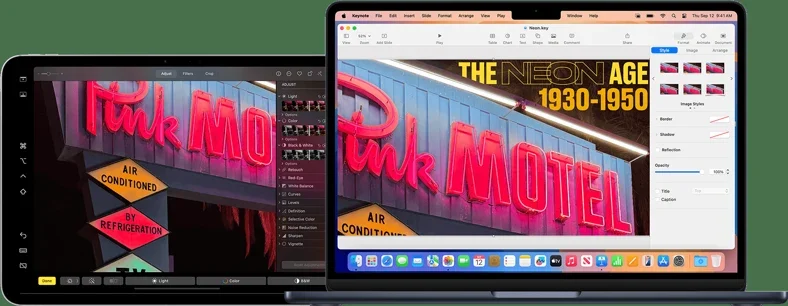
Both devices must support Sidecar and be signed in to the same Apple Account with two-factor authentication. For a wireless connection, keep them within 10 metres with Wi-Fi, Bluetooth, and Handoff enabled. You can also connect the iPad by USB and trust the Mac when prompted.
On your Mac, choose the iPad from Screen Mirroring, or move the pointer over a window’s full-screen button and choose the option to move it to the iPad. You can put a Live window on that display and use your Mac’s mouse or trackpad, a keyboard, or Apple Pencil to interact with it. Finger gestures and supported touch controls depend on the operating-system versions; Sidecar does not turn Live into a native iPad app.
Audio is still handled by the Mac and the output device selected in Live. That could be its speakers, connected headphones, or an audio interface. Sidecar is a display connection, so plan your monitoring around the computer rather than assuming your mix will play through the iPad.
This works well when your Mac is nearby and you want more screen space. It does not let you take only the iPad to the park and continue editing a desktop Live Set.
How to use Ableton Live on an iPad with software controller apps
Software controller apps give your iPad a different job: they send performance and mixing commands to Live. Ableton maintains a list of controller apps. The computer still runs the Set, instruments, effects, and audio output.
These three options suit different tasks. LK is the most direct choice here for a Session View clip grid; TouchOSC offers a customisable surface; DAW Control provides a conventional mixer and transport.
1. TouchOSC
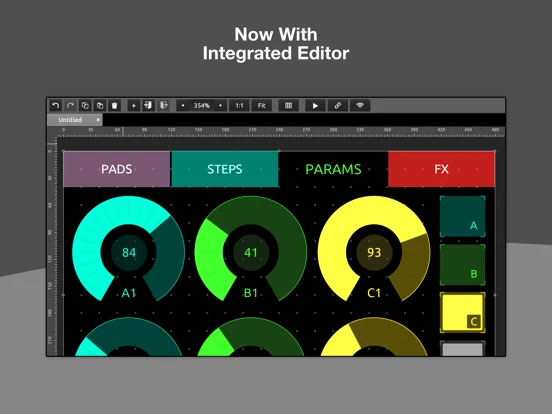
Start with a layout, establish a MIDI connection, and assign controls using Live's MIDI Map mode. Hexler provides a Live setup tutorial and the free TouchOSC Bridge utility for network MIDI. Custom layouts take more setup than a dedicated Session View controller. The current iPad app requires iPadOS 13 or later.
2. LK
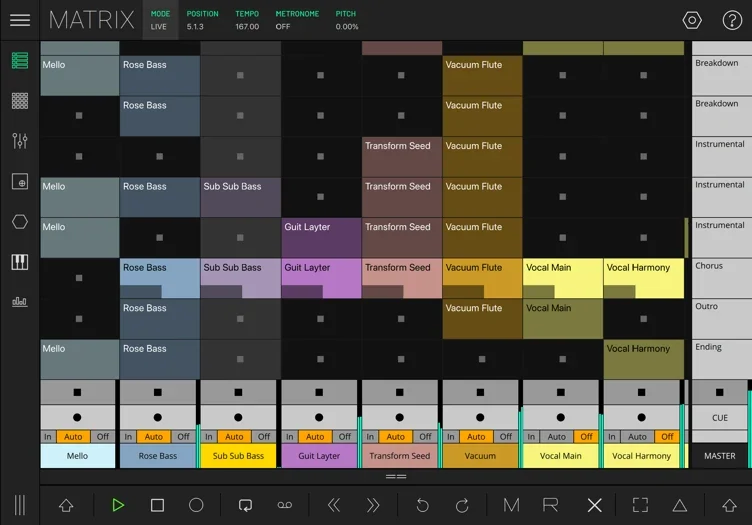
Live integration requires the free UBRIDGE helper on the Mac or Windows computer running Live; connect over Wi-Fi or a supported USB connection. LK is free to download, with modules unlocked through in-app purchases. It also works as a MIDI sequencer and iOS AUv3 MIDI plug-in for other instruments, rather than a standalone audio DAW. The current iPad version requires iPadOS 17 or later.
3. DAW Control
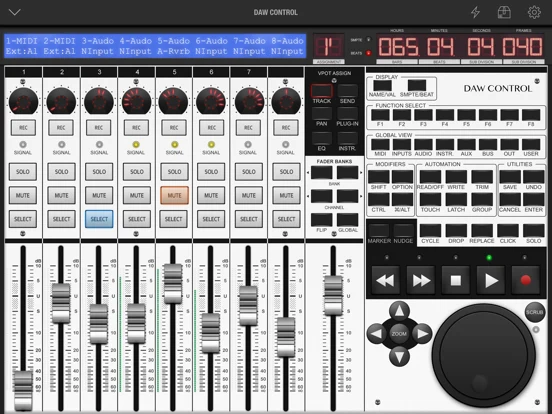
The app communicates with the computer over network MIDI. On a Mac, configure a MIDI network session; Windows setups can use an appropriate network-MIDI driver. Select the matching control-surface and MIDI ports in Live. This is an older control-surface app with a conventional mixer layout, so LK is a better fit if your main goal is launching Session View clips. Live still runs on the computer.
Alternatives to Ableton Live for iPad
If you want to make music on the iPad itself, use an iPad music app. Ableton Note is the closest starting point for moving ideas into Live, while FL Studio Mobile and GarageBand offer their own recording and arranging workflows.
Ableton Note is Ableton’s paid iPhone and iPad app for building beats, melodies, and sampled ideas. Note 2 includes a MIDI editor and audio recording, with up to eight tracks and eight clips per track. It runs independently on iPadOS 15 or later and includes a Live Lite licence for a supported computer.
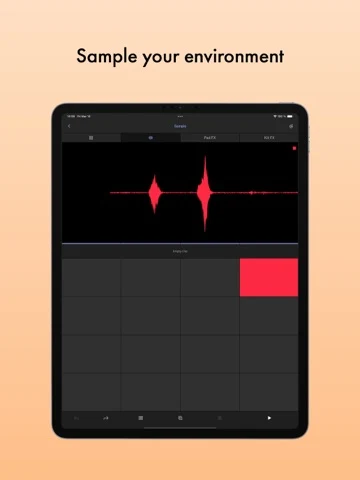
You can send Note Sets to Live through Ableton Cloud, using your Ableton account, or export audio. Cloud also connects supported Note, Move, and Push workflows. Note cannot open desktop Live Sets, so it is a way to start ideas away from the computer, rather than carry an existing Live project and all its plug-ins onto the iPad.
FL Studio Mobile is a separate paid mobile DAW for recording, sequencing, arranging, and mixing. The current iPad app requires iPadOS 15 or later. Its instruments and effects are included; optional sound packs expand the library. A mobile purchase is separate from the desktop FL Studio licence.
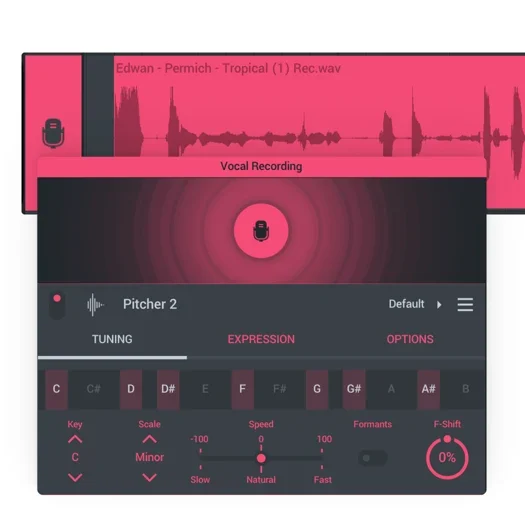
FL Studio Mobile is useful when you want to build a more complete arrangement on your tablet. Export audio or MIDI to bring material into another DAW, including Live. Its own projects and desktop FL Studio integration should not be confused with native Ableton Live Set support.
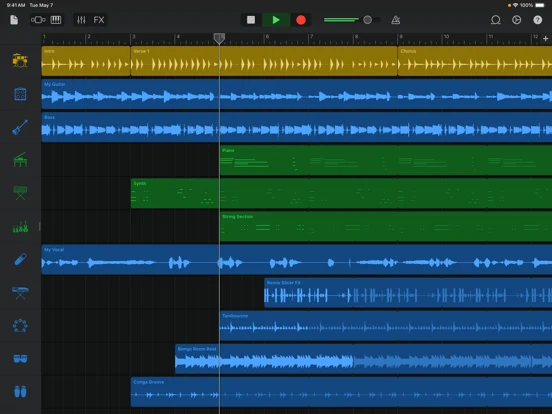
GarageBand for iOS is free and designed around touch instruments, audio recording, and arranging. Live Loops offers a clip-style grid, while Tracks view supports recording and arranging up to 32 tracks. It also hosts compatible iOS Audio Unit Extensions. The current GarageBand release requires iPadOS 26, so an older iPad may not be able to install the latest version.
Summary
Use Sidecar when you want an extra display for a nearby Mac. Choose LK, TouchOSC, or DAW Control when you want your iPad to control a Live session running on your computer.
For making music with only the iPad, choose an independent app. Note makes sense if you want to develop new ideas in Live later; FL Studio Mobile and GarageBand provide other recording and arranging options.
Ableton Live itself remains a desktop application. A controller, an extra display, and a mobile sketching app can each help your workflow, but they serve different purposes.