The 8 Best External Microphones for iPad & iPhone (iOS) (2026)

iPhones and iPads have become very advanced. However, built-in microphones from almost every phone and tablet have relatively low quality because of their design and size constraints. If you want to do some professional recording, it’s worth using an external microphone.
If you’re looking to use your iPhone or iPad for video production, vlogging, or filmmaking, or if you simply want a more professional sound for your audiovisual needs, then check out these great external microphones. From low-budget to high-end options, you’ll probably find what you’re looking for on this list.
My top pick is the Shure MV88+ Video Kit. It includes a phone clamp and tripod, supports compatible USB-C and Lightning devices, and has a headphone output for monitoring.
My budget pick is the Sennheiser XS Lav USB-C for a simple wired speech setup on a USB-C iPhone or iPad.
Contents
- The Best External Microphones for iPad & iPhone (iOS) (2026)
- 1. Shure MV88+ Video Kit
- 2. Sennheiser XS Lav USB-C
- 3. Sennheiser MKE 400 Mobile Kit
- 4. Shure MV88 USB-C
- 5. Shure MVL Mobile Lavalier Microphone
- 6. Rode iXY-L Stereo Microphone
- 7. Rode VideoMic Me-L
- 8. IK Multimedia iRig Mic Cast HD iOS Microphone
- Why should you use an external iOS microphone?
- How to set up and connect multiple microphones to your iOS devices?
- What are microphone windshields?
- Conclusion
The Best External Microphones for iPad & iPhone (iOS) (2026)



And now onto the full list:
1. Shure MV88+ Video Kit
Pros
- Tripod, clamp and USB-C/Lightning cables included
- Direct headphone monitoring
- Adjustable stereo width
Cons
- Bulkier than a small plug-in microphone
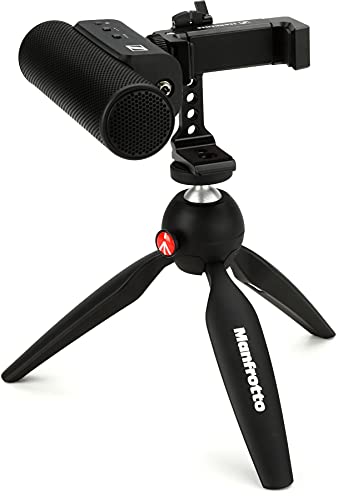
The Shure MV88+ Video Kit is a well-rounded choice for filming and recording music on a phone. The Video Kit includes the smartphone clamp, Manfrotto PIXI tripod and connection cables, so it is a better fit here than the microphone-only package.
The MV88+ has a sturdy construction made of metal with a stereo and directional pickup. Its movable head makes for better adjustment settings and provides more comfort and ease of use.
The free Shure MOTIV apps let you adjust gain, stereo width and recording presets. The kit includes USB-C and Lightning cables; check Shure’s device and app compatibility for your particular iPhone or iPad.
The kit takes up more room than a plug-in mic, but the separate mount and headphone output are useful when you want to frame a shot and monitor the recording.
2. Sennheiser XS Lav USB-C
The Sennheiser XS Lav USB-C is an affordable lavalier mic: the small type you clip to your clothes to keep the capsule near your voice. It suits interviews, video calls and spoken recordings when you want the phone farther away for a better camera angle.
Pros
- USB-C connection without a separate interface
- 2 m cable for flexible phone placement
- Clip, foam windscreen and pouch included
Cons
- Wired connection limits movement
- No direct headphone monitoring
Its omnidirectional capsule does not require exact aiming, but placement still matters. Clip it clear of jewellery and loose fabric so clothing does not rub against the mic. The 2 m cable leaves room between you and the phone without needing a wireless system.
The USB-C version connects directly to a compatible USB-C iPhone or iPad. It does not plug straight into a Lightning port, so owners of older Apple devices should consider the Shure MVL with a suitable input adapter instead. This is the microphone-only package, with clip, foam windscreen and storage pouch; it does not include a phone tripod.
There is no battery to recharge and no separate receiver to pair. The trade-off is that you remain tethered to the phone, with no headphone socket on the microphone for direct monitoring. For a simple USB-C speech setup on a tighter budget, that is a reasonable compromise.
3. Sennheiser MKE 400 Mobile Kit
The Sennheiser MKE 400 Mobile Kit is a compact video and audio recording kit, much like the top pick on this list. It pairs the second-generation MKE 400 shotgun mic with a smartphone clamp and Manfrotto PIXI Mini Tripod, giving you a stable handheld or desktop setup.
Pros
- Phone clamp and Manfrotto PIXI tripod included
- Headphone monitoring and sensitivity control
- Built-in wind protection plus furry windshield
Cons
- Requires AAA batteries
- USB-C and Lightning phones need a suitable mic-input adapter
Choose the Mobile Kit when you need those accessories. The microphone is also sold separately, and its 3.5 mm connection does not plug directly into current USB-C or Lightning iPhones. Use the included TRRS cable with a suitable microphone-input adapter for your Apple device.
The supercardioid pickup is useful for speech in front of the camera. Integrated wind protection and a shock mount reduce some wind and handling noise, while the supplied furry windshield helps outdoors. It still needs to be close enough to the speaker; a shotgun mic cannot isolate a distant voice from every surrounding sound.
Compared with the smaller MKE 200, you gain a three-step sensitivity switch, a low-cut filter and a headphone output with volume control. Those are worthwhile controls when filming in changing conditions and make it easier to check the actual audio instead of discovering a problem after the shoot.
The trade-off is battery use: the MKE 400 runs on two AAA cells, so this is no longer a battery-free kit. For filmmakers who want a directional mic, a useful monitoring connection and a complete phone support package, the extra controls justify its place here.
4. Shure MV88 USB-C
The Shure MV88 USB-C is a compact way for musicians to record rehearsals, acoustic performances or location sound on a current iPhone or iPad. It plugs directly into a USB-C port, avoiding the Lightning-only connection of the Zoom iQ7 that previously occupied this role.
Pros
- Adjustable stereo width and mono pickup options
- Direct USB-C connection
- MOTIV app controls and automatic level option
Cons
- No direct headphone output
- No direct Lightning connection
Its mid-side capsule arrangement gives you an adjustable stereo image, with stereo width from 60 to 135 degrees. You can also select mono cardioid, mono bidirectional or raw mid-side recording. That makes it useful for both a single voice and a broader musical performance without adding a separate recorder.
The free Shure MOTIV apps provide recording controls, presets and processing, including Auto Level and a real-time denoiser. For music, start with a setting that preserves the performance rather than assuming speech-oriented noise processing will improve every take.
The mic rotates and tilts so you can aim it with the phone in portrait or landscape orientation. It comes with a foam windscreen and carrying pouch. This is the small plug-in mic, not the MV88+ Video Kit, so it does not include a phone clamp or tripod.
There is no headphone output for direct monitoring, and it does not plug directly into Lightning devices. If you need to monitor while filming or use both connector types, the MV88+ Video Kit remains the more complete option. For a compact USB-C stereo recording setup, this one is easier to carry.

5. Shure MVL Mobile Lavalier Microphone
Pros
- Compact omnidirectional lavalier
- No receiver or battery to charge
Cons
- Current phones need an adapter with microphone input
Another Lavalier Microphone on this list, the Shure MVL is a microphone for people who are ready to pay a bit more to get a better-quality microphone.
This is a standard Lavalier microphone that comes with a 1/8” jack and 50” cable. It’s omnidirectional, so all you need to do is plug it into your phone and tuck it onto your shirt, and voila! You’re live.
Current iPhones and iPads need a suitable USB-C or Lightning adapter with a microphone input. A headphone-only adapter will not work, and Android compatibility also depends on its input or adapter. This is a great-quality microphone that’s perfect for video recording.
If you have a YouTube channel or just want to produce great quality material for not a lot of money, then this is your choice.
6. Rode iXY-L Stereo Microphone
Pros
- Compact XY stereo recording
- Protective case and windscreen included
Cons
- Lightning connection limits device choice
- Highest resolution depends on compatible recording software
Moving onto the high-end part of the list. Rode is a world-famous microphone manufacturer, so it’s no wonder they have their say with high-quality microphones for iOS.
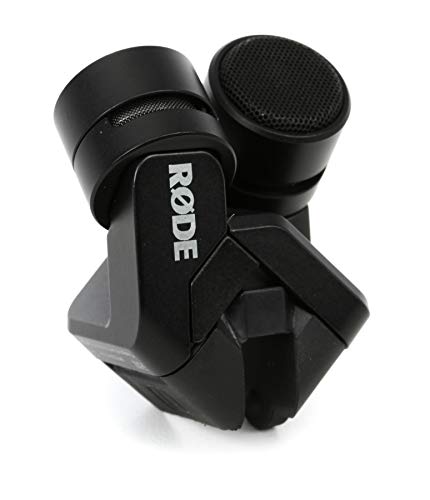
The iXY-L is a stereo microphone with two cardioid capsules arranged at 90 degrees in an XY configuration. It records a stereo image in front of the microphone, rather than capturing every direction equally.
It connects to compatible Lightning devices and comes with a protective case and foam windscreen. It does not plug directly into a USB-C iPhone or iPad. Rode’s quickstart specifies the Rode Rec app for 24-bit/96 kHz capture, so check current app compatibility before choosing it for that recording mode.

7. Rode VideoMic Me-L
Pros
- Compact directional Lightning microphone
- Headphone output for monitoring
Cons
- Does not plug directly into USB-C devices
If you’re looking for a small mic that will allow you to record in noisy areas but catch just what’s being told in front of the mic, then Rode VideoMic Me-L is a perfect pick for you.
This electret cardioid condenser mic is a perfect fit for anyone looking to record vlogs or do some location shooting. Because it is a cardioid condenser it favours sounds in front of it, but will still pick up some background noise. Point it towards the source and keep the recording distance sensible.
This is a great, lightweight, mid-range microphone that can be used by both professionals and amateurs who just want to have a nice, clean sound without having to spend a fortune.

8. IK Multimedia iRig Mic Cast HD iOS Microphone
Pros
- Front, rear and bidirectional pickup
- Connection cables for several device types
- Direct headphone monitoring
Cons
- Magnetic mounting needs an included plate on some cases
This is a great little microphone from IK Multimedia. The iRig Mic Cast HD is a 24-bit/96 kHz microphone that’s compact, light, and extremely easy to use.
It can connect through the Lightning port, USB-C, and Micro-USB connection with your device and it works with compatible iOS and Android devices. It also comes with a 1/8” jack for headphones or any other output device.
You can attach it to your phone and through a slider on it, you can choose whether you want the mic to record front, back, or bi-directional, making it easy to set everything up. Also, you’ll get a windscreen for outdoor use if need be.
All in all, this is a great low-end mic for everyday use if you need good-quality sound recorded for smartphones or other iOS devices.
Why should you use an external iOS microphone?
First and foremost, the audio quality of an external iOS microphone is far better than the built-in microphone. This is the biggest and best reason behind the use of these handy devices. Although your iPhone’s mic is probably decent quality, you would be amazed at how far beyond an external mic is, especially for vocals.
The best external microphones out there are very easy to use and comfortable, to say the least. They are convenient as an addition to your device accessories. They provide a whole new meaning to frequency range and frequency response as opposed to conventional mics.
In the age where iPhones are dominating, iPhone microphones are made all the better with these lovely little additions.
How to set up and connect multiple microphones to your iOS devices?
The setup for external microphones is fairly straightforward and requires little to no knowledge as it is simply an attach-and-use kind of deal mostly. You have standard TRS, TRRS cables (usually). They can connect to most DSLRs but the bigger question is whether multiple mics can be connected to one device.
To record two lavalier mics, use an adapter, mixer or interface designed for two microphone inputs. An ordinary headphone splitter does not combine two mic signals correctly. For separate tracks, choose a multichannel interface supported by your iOS recording app.
Some external mics come with wireless connections so that’s also a possibility that makes the easiest use of all. You also have USB options if you have a USB to lightning adapter. Some can even connect to a DSLR camera. The more options the better in any case!
What are microphone windshields?
Many microphones come with various types of windscreens because mics that don’t have windscreens are not that good for recording vocals. The purpose of these windscreens or windshields is to absorb wind and heavy breaths to allow for more clarity while recording vocals.
You might have seen a furry windshield every once in a while, which is even better and can absorb more wind than usual. It is important to know these things, especially if you’re considering an external microphone, or more so if you’re planning a podcast or something similar, windshields can help you immensely!
Conclusion
I hope that this list has helped you learn more about external iOS microphones and the different options that are out there on the market. From small, bug microphones, to somewhat complex microphones which can get more serious and record better sound quality, there’s something out there for anyone, in any price range.
My top external iOS microphone pick is Shure MV88+ Video Kit. It’s an excellent-quality microphone video kit and a very popular option with a well-rounded base.
My budget external iOS microphone pick is Sennheiser XS Lav USB-C. Its USB-C plug and included clip keep a basic speech-recording setup simple; choose a different connection for a Lightning device.
Featured Image By Gaby03032018 / CC BY-SA