11 Instruments Used in Salsa Music
Salsa bands build their sound from interlocking percussion, syncopated piano and bass, and punchy brass. Congas, bongos and timbales are especially recognizable, but the smaller instruments often make just as much difference to the groove.
A salsa lineup might have a single horn player or several trumpets and trombones. These eleven instruments cover the main roles in the band, with a few details to listen for in each part.
Contents
1. Congas

Congas are tall, single-headed drums played with the hands – they’re also very fun to play! You will also hear them called tumbadoras. A player often uses two or three drums with different pitches, making it possible to move between deep tones, ringing open tones and sharp slaps without changing instruments.
In salsa, the conga part usually supplies a repeating rhythmic foundation rather than a constant stream of fills. A familiar pattern is the marcha, commonly called a conga tumbao. Its combination of muted strokes and open tones often help the music move forward while leaving room for the other percussionists.
The quieter heel-and-tip hand movements connect the pattern, while open tones often stand out near the end of the phrase. In a solo, these contrasting sounds become the building blocks of more varied phrases.
2. Bongos
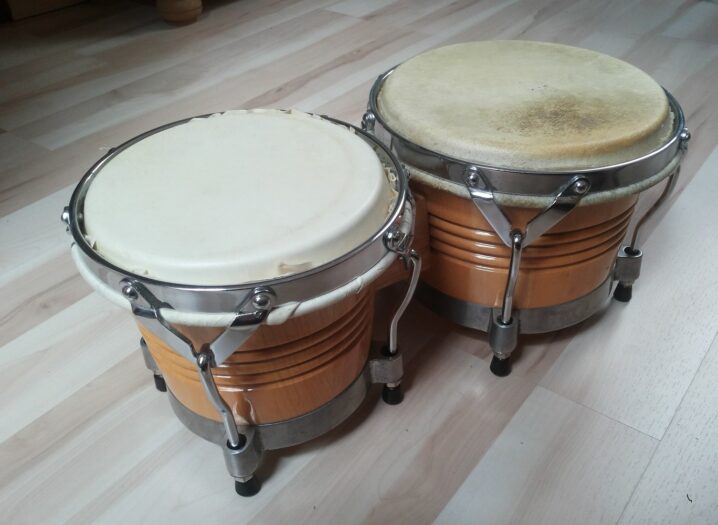
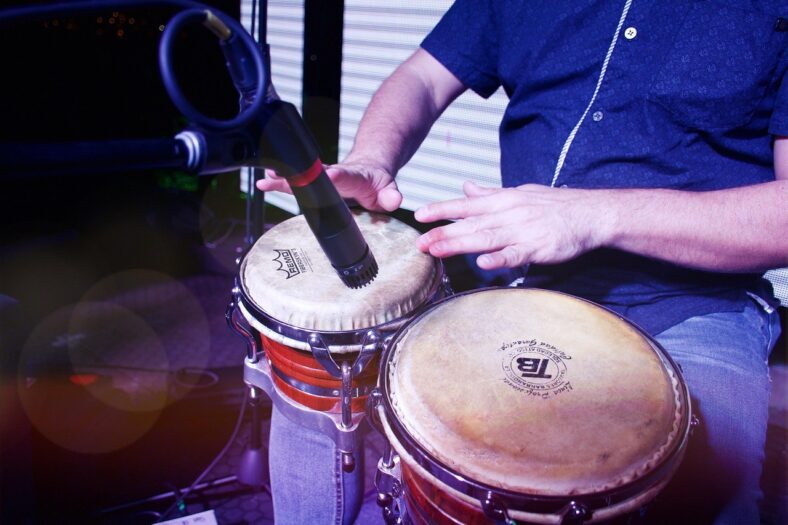
Bongos are two small drums joined together and usually played with the hands. Their higher, more focused sound sits above the congas, which makes them easier to pick out when the arrangement is relatively sparse.
The basic bongo pattern is often called martillo, meaning hammer. It is a repeated figure that gives the groove a light, busy top layer. The player can vary the pattern and add short fills, particularly around a vocal phrase, without taking over the conga player’s part.
In many salsa arrangements, the bongocero changes from bongos to a handheld cowbell when the music reaches a more energetic section. Listen for that switch between the quieter opening and the later, driving sections. The band may suddenly feel bigger even though the same percussionist is still playing.
3. Timbales
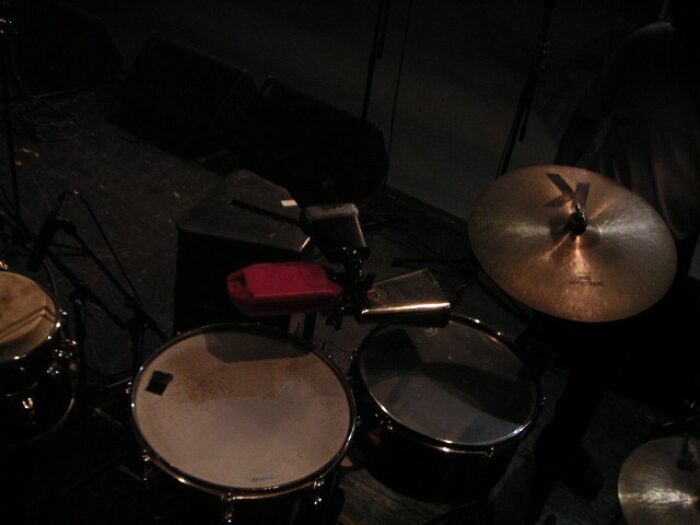
Timbales are a pair of shallow, metal-shelled drums played with sticks. They are usually mounted on a stand, often with cowbells or a woodblock nearby. Unlike congas and bongos, they produce a bright, cutting sound that can reach across a large band.
The timbalero plays the drumheads and the metal shells. Rhythmic patterns on the shells, known as cáscara, give a lighter sound that works beneath the singer. Moving onto a bell or adding accents on the heads can lift the energy without changing the tempo.
Timbales also help organize the arrangement. Short rolls and fills can announce an entrance, a break or a return to the chorus. Listen for a fill immediately before the horns land together. The fill often cues the band to play the next accent together.
4. Claves
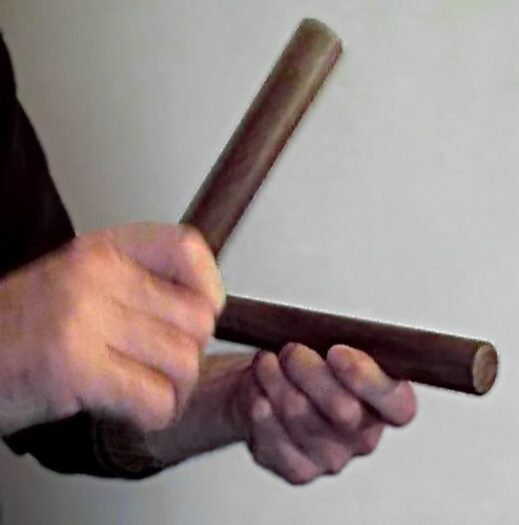
Claves are a pair of wooden sticks, but the word clave also describes the rhythmic pattern around which much salsa music is organized. Keeping those two meanings separate makes the instrument’s role much easier to understand.
One stick is struck against the other to create a clear, short click. The supporting hand can form a small resonating space, helping the sound carry. The familiar son clave has five strokes spread across two measures, arranged in either a three-two or two-three orientation.
You will not hear the sticks on every salsa recording. Even when the clave is not played aloud, the arrangement can still be built around its shape. Think of it as a shared reference for the band, rather than a click track that strikes every beat. The piano, percussion and horn phrases fit around that reference in different ways.
5. Cowbell
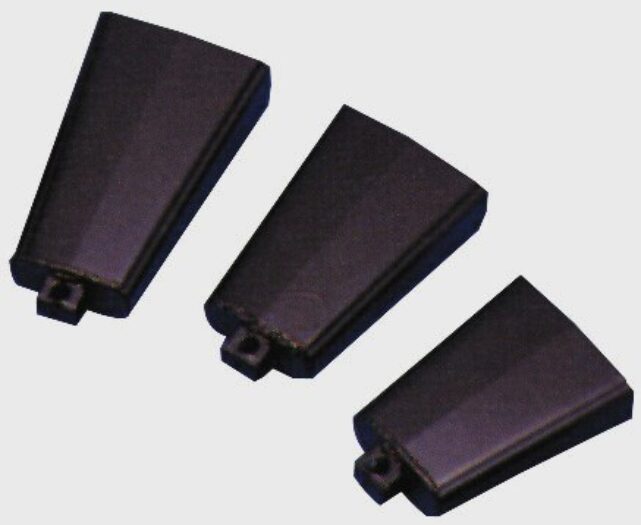
The salsa cowbell is a percussion instrument with no clapper inside. It is struck with a stick, either held in the hand or mounted alongside the timbales. Different bells have different pitches and timbres, and striking the mouth or the body changes the sound.
The bell often becomes more noticeable in a song’s more intense sections. A bongocero’s handheld bell and a timbalero’s mounted bell can play different patterns at the same time, so a large band’s bell sound is not necessarily one person playing one instrument.
Its strong attack helps dancers and musicians feel the groove through the rest of the ensemble. A good bell part varies its accents and lighter strokes instead of simply repeating quarter notes. Listen for the relationship between those accents and the bass rather than assuming every loud bell hit marks the start of a bar.
6. Güiro
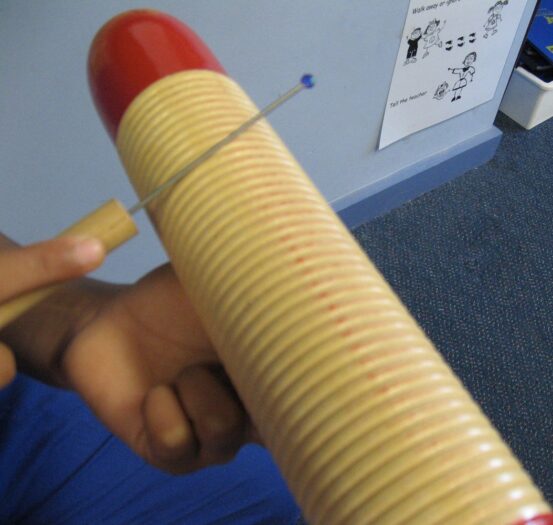
The güiro is a scraped percussion instrument. A traditional version is made from a hollow gourd with ridges cut into its surface, although manufactured versions use other materials. A stick drawn across the ridges creates its recognizable rasp.
Long and short scrapes combine into a repeated pattern. Compared with the impact of the congas or the ring of a bell, the güiro adds a more continuous texture. It can be easy to overlook until you listen specifically for that dry scraping sound underneath the voices.
Because it does not need a large setup, the güiro is sometimes played by a singer. The güiro keeps a consistent layer moving through the arrangement without duplicating every accent from the other percussionists. A steady scraping part can make the groove feel connected while the drums leave spaces, change patterns or introduce fills.
7. Maracas
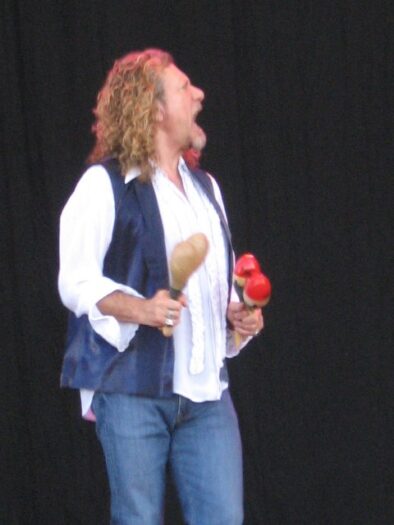
Maracas are handheld shakers containing small loose objects inside a hollow body. Moving the body makes the contents hit its inner surface. The resulting sound is softer and less pitched than a cowbell, but it can contribute a very clear rhythmic edge.
They often appear as a pair, with the player coordinating the hands to make a flowing pattern. Traditional instruments use gourds, while modern versions may use wood, plastic or other materials. Their weight and construction affect how quickly the sound responds to a movement.
In salsa, maracas support the percussion texture without crowding the hand drums. A singer may play them while leading the chorus. The shaker’s repeated motion helps the band retain its momentum between the more obvious accents.
8. Piano
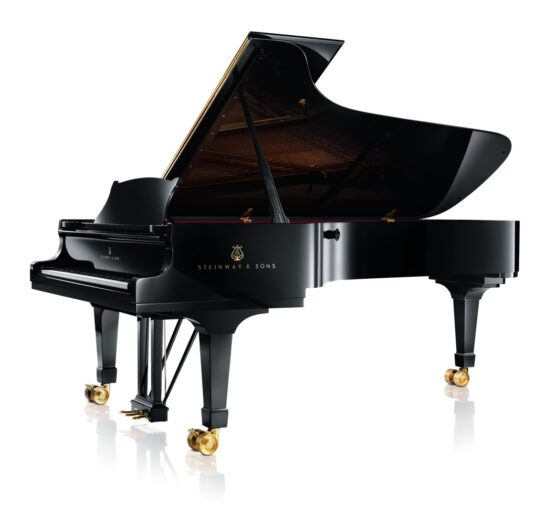
The salsa piano often plays a repeated, syncopated chord pattern called a montuno or guajeo. Instead of simply placing a chord on every beat, the pianist distributes notes around the rhythm and repeats a recognizable figure.
This gives the instrument two jobs at once: it outlines the harmony and adds another rhythmic layer. The pattern can change with the chords, respond to the singer, or become more open when another musician solos. A strong piano part leaves enough room for the bass and percussion to remain audible.
Try following the highest notes of the pattern for a few bars. You may hear a small melodic shape repeating while the underlying chords change. The repeating melodic shape makes the busy piano part easy to follow. Pianists also play introductions, fills and solos, but the repeating accompaniment is often what ties the middle of the arrangement together.
9. Bass
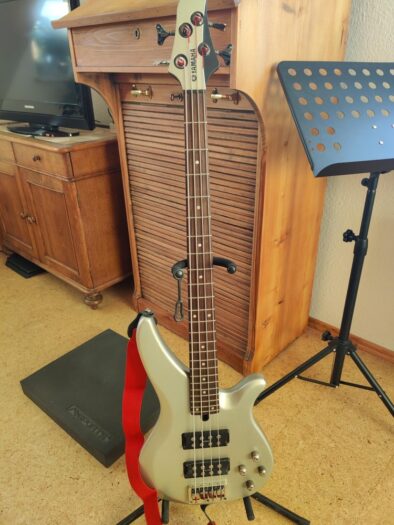
Salsa bands use both upright bass and electric bass. Either can provide the low notes that identify the harmony, but the part usually has a strong rhythmic identity of its own. It does not simply copy the kick drum or strike every downbeat.
Many salsa bass lines use a syncopated tumbao. Notes can anticipate the next chord or sustain across a strong beat, giving the groove a forward pull. The exact pattern varies with the arrangement, so one fixed rhythm will not explain every recording.
The bass and piano parts fit together. The piano may leave a gap where the bass enters, and the bass may hold a note while the piano continues its pattern. A well-balanced band keeps the low line clear beneath the horns.
10. Trumpet
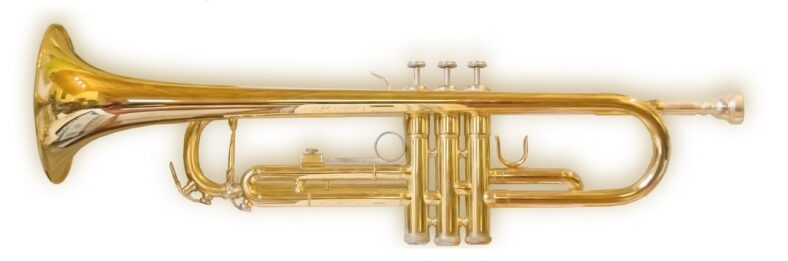
Trumpets bring brightness and a sharp attack to a salsa band. They can carry a melody, answer the singer, play an improvised solo or join the rest of the horn section for a short, repeated riff.
In a larger ensemble, several trumpets may play harmonized lines. Volume contributes to the impact, but matching note lengths, entrances and accents makes the section sound like a single unit. A brief brass phrase can be powerful because the players release the note together and leave a clean space afterward.
A trumpet line often fits into the gap after a sung phrase. Some arrangements favor a high, brilliant trumpet sound; others use the instrument more sparingly. The number of trumpets and their register make a noticeable difference to the band’s character.
11. Trombone
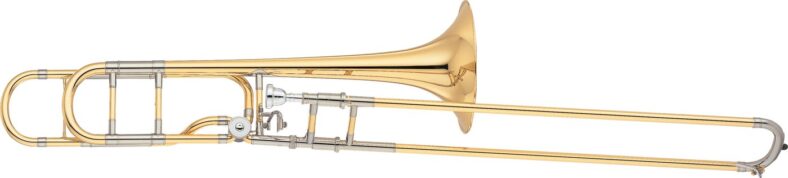
Trombones give salsa brass a lower, broader sound. Their slide changes the length of the tubing, and a player can move smoothly between pitches as well as articulate clean, separated notes. Both sounds can become part of an arrangement.
Some bands combine trombones with trumpets, while others build their horn sound mainly around trombones. The latter can feel particularly weighty and direct. Short phrases in the middle and lower register provide a different color from a high trumpet line without losing their rhythmic punch.
Trombones can play melodies and solos, but they are also effective in repeated section riffs. Listen for a low brass response that follows the singer or reinforces a break. The notes may look simple on paper, yet precise placement and matching articulation are what make them work with the percussion. A horn section’s role is as rhythmic as it is melodic.
Summary
The easiest way to hear a salsa band is to follow one layer at a time. Start with the congas, then find the bass and piano patterns, and finally notice how the horns and smaller percussion instruments fit around them.
These eleven instruments cover many familiar salsa lineups, but every band does not need all of them. Flute, violin, tres and other instruments also appear in particular ensembles. Each musician contributes a different sound and rhythmic shape to the same groove.
Congas Image by: Stephan Czuratis (Jazz-face), CC BY-SA 3.0, via Wikimedia Commons
Bongos Image by: Rodriguez4444, CC BY-SA 4.0, via Wikimedia Commons
Timbales Image by: Stokki at Dutch Wikipedia, Public domain, via Wikimedia Commons
Claves Image by: Freddythehat at English Wikipedia, Public domain, via Wikimedia Commons
Cowbell Image by: Secret Saturdays, Public domain, via Wikimedia Commons
Güiro Image by: g_kat26, CC BY-SA 2.0, via Wikimedia Commons
Maracas Image by: Patricia H., CC BY 2.0, via Wikimedia Commons
Piano Image by: Steinway & Sons, CC BY-SA 3.0, via Wikimedia Commons
Bass Image by: Elmschrat, CC BY-SA 4.0, via Wikimedia Commons
Trumpet Image by: PJ, CC BY-SA 3.0, via Wikimedia Commons
Trombone Image by: Yamaha Corporation, CC BY-SA 4.0, via Wikimedia Commons