The 7 Best Octave Fuzz Pedals (2026)

An Octave Fuzz pedal combines aggressive fuzz distortion with an octave effect that can greatly thicken the sound. It gives you the most aggressive type of distortion you can get. It has been around for decades and it is still the #1 choice for all players who need lots of screaming notes.
The trick with Octave Fuzz pedals is that the fuzz effect sounds amazing when combined with the signal that’s one octave up or down. In that case, this super-aggressive type of distortion gets a completely different flavor, which goes in a wide range from vintage guitar screams to modern synth-like tones.
That’s why octave fuzz pedals are such amazing tools, which are versatile enough to cover a wide plethora of music styles. Of course, that’s the main reason why many guitar players prefer the octave fuzz pedal over a standard fuzz pedal, so the number of these 2-in-1 pedals is growing every day.
My top recommended Octave Fuzz pedal is the Electro-Harmonix Lizard King. A perfect mix of classic and modern design that is easy to use.
My second recommended Octave Fuzz pedal is the MXR M103 Blue Box Octave, an affordable and compact pedal that delivers great sound for the price.
Contents
The 7 Best Octave Fuzz Pedals (2026)



Let’s compare these in more detail.

1. Electro-Harmonix Lizard King
The Electro-Harmonix Lizard King is my top pick for an uncomplicated octave-up fuzz that can work on guitar as well as bass. Its clean Blend control is particularly useful when a thick fuzz tone starts to bury the original note: mix some dry signal back in rather than losing the part in a wall of distortion.
Tone adjusts the fuzz brightness, while the Sun/Shadow switch changes the character of the octave sound. There is no conventional gain knob. Use your instrument volume and the blend to shape how aggressive the result feels.
I would choose it for riffs and single-note leads rather than clean chord tracking. Its bass-oriented voicing is a welcome option for players who share a pedal between instruments; guitarists after a very specific vintage octave-fuzz sound may prefer the Danelectro below.
Pros
- Clean blend helps preserve the note
- Simple tone and voicing controls
- Works for guitar and bass
Cons
- No dedicated gain control
- Not intended for clean polyphonic pitch shifting
Specifications: Analog octave-up fuzz; Volume, Tone and Blend; Sun/Shadow switch; 9V battery or DC power.
2. MXR M103 Blue Box Octave
A good octave fuzz pedal doesn’t need to be expensive. You can find some pretty amazing units with a pretty good price tag.
Among them, the MXR M103 is my favorite. This affordable pedal delivers impressive tonal characteristics and at the same time, it is super easy to use.
The first thing you will notice about this pedal is that it features a typical MXR layout. It is compact and fits every pedalboard, and also features just a couple of controls. There are just two knobs, which will certainly make your life easier.
The first one is the Output control, which lets you set the amount of fuzz you want. The second one, the Blend knob, is the one that controls how much of the two-octave down tone you want to hear. Both knobs are sensitive and offer a lot of tweaking options. At the same time, dialing fantastic tones is super easy and convenient.
Other than these two knobs, you won’t find anything but input and output. The pedal runs either on a power supply or batteries.
3. Danelectro 3699 Fuzz / Octaver
The owner of Danelectro is Steve Ridinger, the same guy who designed the legendary Fox Tone Machine from the ‘70s.
These days, original Tone Machines cost a real fortune, so Steve has decided to launch the reissued version of the pedal. However, the new unit comes with a couple of significant upgrades, which makes everything even better.
The new Danelectro 3699 Fuzz / Octaver features the same circuit as the original unit but also comes with several upgrades.
For example, the octave effect is more transparent now and also comes with a footswitch, which makes everything super-convenient. The tone is warmer compared to the original, while there is also a small toggle switch if you want to add a little bit of mid-boost.
The rest of the pedal includes pretty typical controls. You may count on three more knobs – Volume, Fuzz, and Tone, which offer a lot of tonal tweaking options. The tone is warm, as I already mentioned. Therefore, if you’re looking for a vintage fuzz pedal with added flexibility, search no more.

4. Walrus Audio Kangra Filter Fuzz
Tone seekers will definitely like this pedal, as it offers an impressive range of sound options.
It is a versatile and super functional pedal, which besides a classic fuzz octave effect also comes with a vintage FX filter, for even more impressive tonal flexibility.
Soundwise, this pedal covers pretty much everything, so you can use it for both vintage and modern fuzz tones. The Walrus Audio Kangra features more knobs and switches than a typical fuzz pedal, but that doesn’t mean it’s too complicated to use.
The front row of three knobs is reserved for the filter FX, which you can combine with the fuzz effect, or use on its own if you want to get some vintage funky tones. A great thing is that the filter is foot-switchable, which makes everything super convenient.
When it comes to the fuzz effect, I like that small toggle switch, which lets you choose between modern and vintage fuzz. Both sound great and while the vintage mode delivers sharper sound, the modern offers more flexibility and suits more genres.
Also, I like the fact that the pedal features a true bypass, which means your amp tone will remain intact when Kangra is on standby.
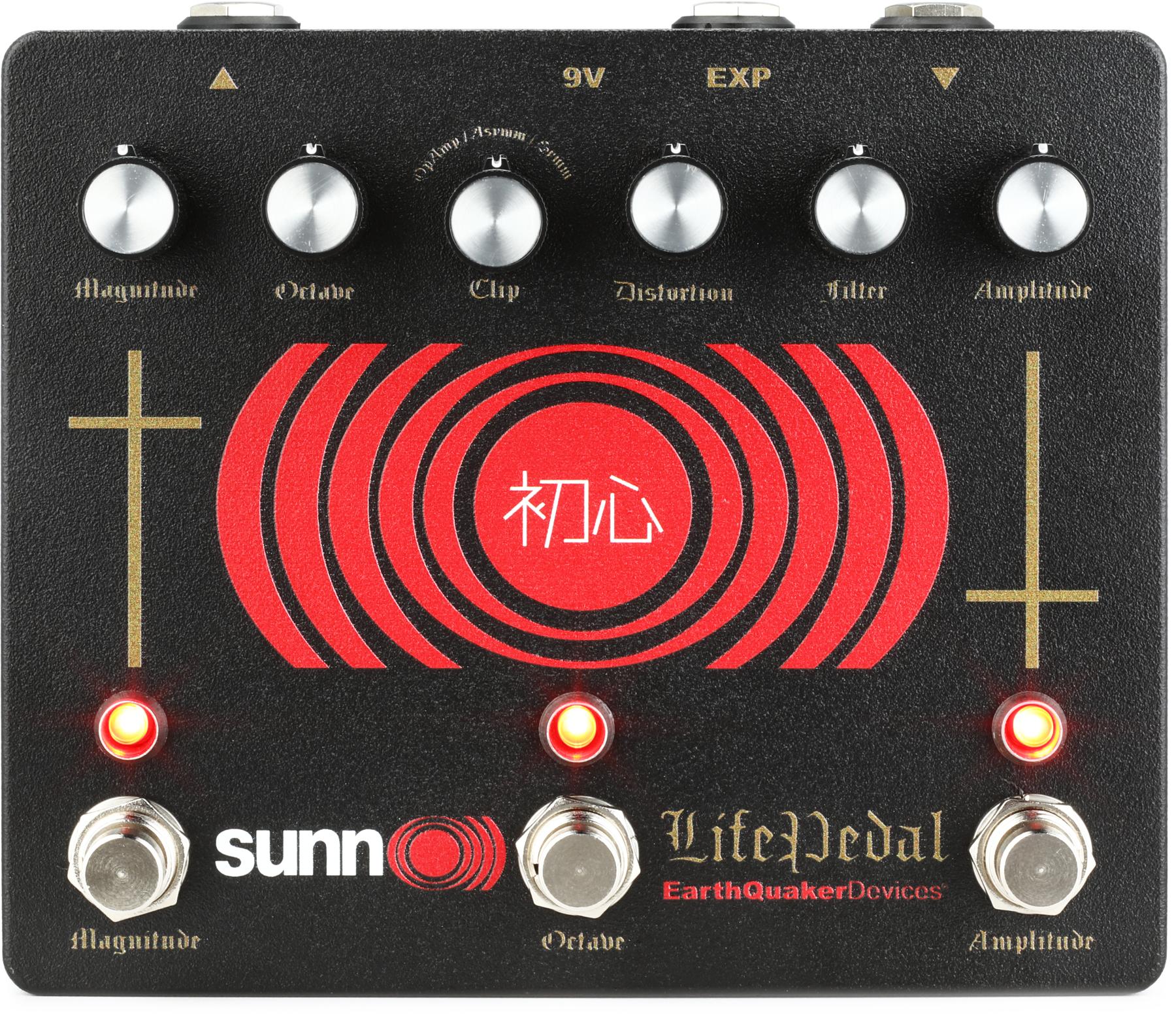
5. EarthQuaker Devices Sunn O))) Life Pedal V3
The EarthQuaker Devices Sunn O))) Life Pedal V3 is the pick for heavy riffs and dense, sustained sounds. It combines an analog octave-up voice with distortion and a separate boost. That is a different layout from a two-fuzz pedal: choose it for its heavy distortion range, rather than expecting two independent vintage fuzz circuits.
Blend the octave into the distorted signal for an abrasive edge, or leave it lower for a more direct riff sound. Three clipping options offer different responses, and the separately switched boost is useful for pushing an amplifier or bringing a part forward.
The trade-off is space and complexity. Three footswitches suit players who want control while playing, but this is more pedal than a small board or a simple octave-fuzz setup needs.
Pros
- Separate octave and boost switching
- Blendable octave and three clipping choices
- Strong fit for heavy distortion textures
Cons
- Large enclosure
- Distortion-focused rather than a dual-fuzz design
Specifications: Analog octave-up distortion and boost; three clipping modes; three footswitches; 9V DC power.
6. MXR Poly Blue Octave
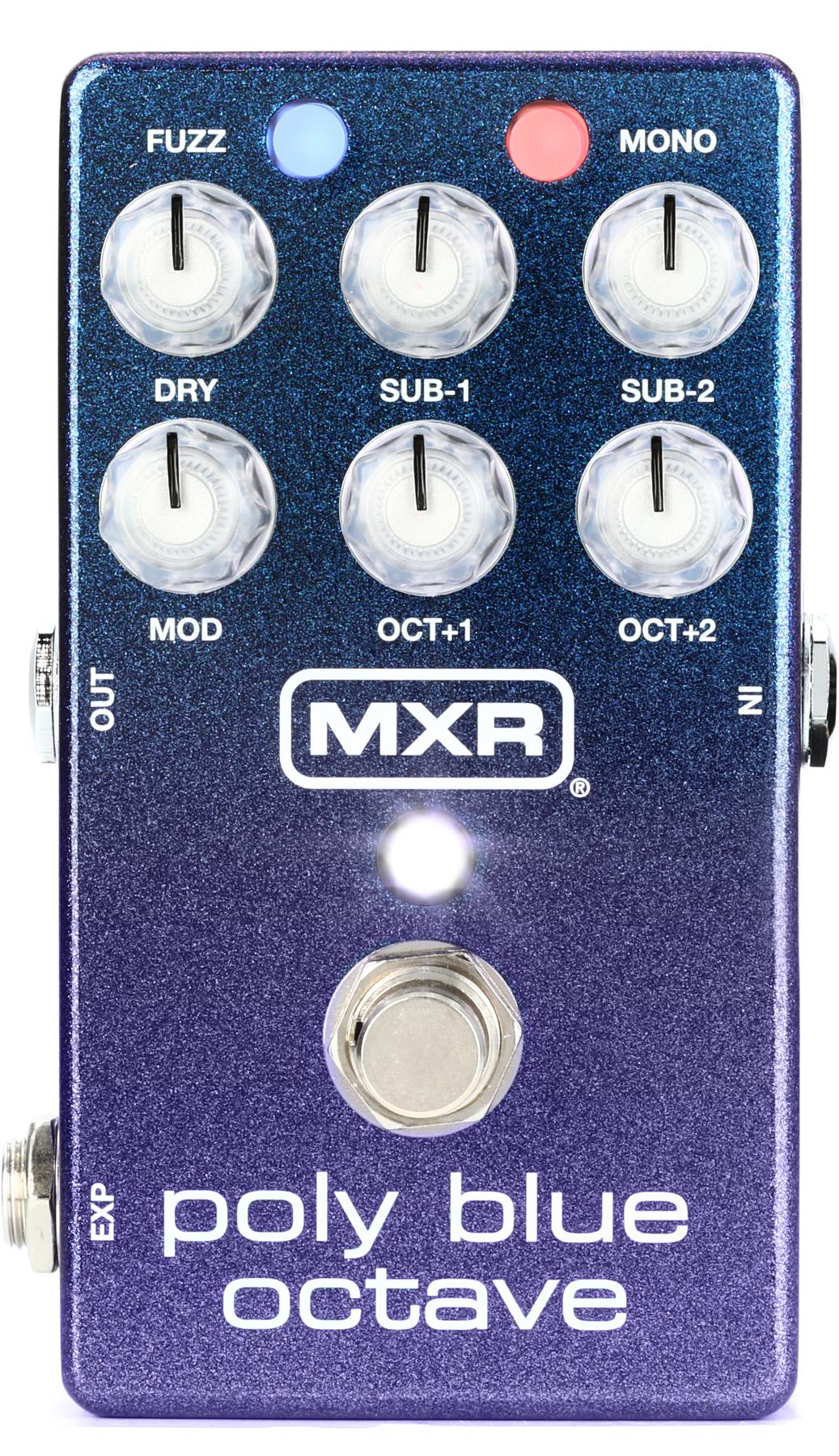
The MXR Poly Blue Octave is my choice for experimenters who want more than a single octave-up voice. It blends one and two octaves above and below the input, with an onboard fuzz and modulation. Use its polyphonic mode for chord work, or mono mode when a less tidy, more traditional octave response suits the part.
The fuzz can turn those voices into a broad, synth-like texture. Modulation adds another moving layer, and an optional expression pedal provides hands-free control. This flexibility is the reason to buy it; a player who just wants one unmistakable octave-fuzz sound may find the Blue Box or 3699 quicker to use.
It needs external 9V power and has more settings to learn than the simple fuzzes on this list. Build a few useful sounds before taking it to a gig instead of trying to use every voice at once.
Pros
- Four independently blended octave voices
- Fuzz, modulation and mono/poly modes
- Expression input
Cons
- More setup than a simple octave fuzz
- External power required
Specifications: One and two octaves up/down; fuzz and modulation; mono/poly modes; expression input; 9V DC, no battery.
7. MXR Slash Octave Fuzz Pedal
A cool-looking fuzz/octave pedal designed in collaboration with guitar icon Slash and lives up to the name of the great guitarist!
The MXR Slash combines a main fuzz, a sub-octave voice, and an octave-up fuzz. The interface includes 5 dials and 3 switches for different effects and parameters.
You have the volume dial for managing volume levels, the tone dial for tweaking the tone, and the fuzz dial for shaping the fuzz effect to your liking. Next, you have the Sub Octave control which implements thunderous low-end to your sound, and the Octave Up control for high-frequencies.
In terms of switches, you have the Sub Into Fuzz switch which toggles between your dry sound and the main fuzz voice. The ON footswitch engages the pedal, while UP switches in the octave-up fuzz. The small SUB INTO FUZZ switch activates the main fuzz; with it disengaged, Volume sets the dry level.
The pedal is incredibly well-built with sturdy construction and heavy-duty housing, equipped with Slash’s “Skully” logo to make it stand out. As far as pedal companions go, this is a high-quality pedal at a very good price point that will get the job done.
Check out our guide on how to set up a guitar pedalboard.
Summary
I hope this list has helped you determine the best octave fuzz pedal for you. A fuzz effect has been combined with an octave for a long in the form of octave fuzz pedals, long time but sound enthusiasts are still discovering new spectrums of tones.
Some designers are chasing these new tone colors, while others are pretty confident in their sound quality and work mostly on improving flexibility. In any case, the choice is pretty big these days and it’s quite hard to go wrong with any of these pedals.
My top Octave Fuzz pedal pick is the Electro-Harmonix Lizard King. Its clean blend and octave voicing switch make it a practical choice for shaping guitar or bass riffs.
My budget Octave Fuzz pedal pick is the MXR M103 Blue Box Octave. If you want something affordable and compact, this quality-sounding pedal will do the trick.
Featured image (Left) of MXR M103 Blue box by Roadside Guitars / CC BY-SA