10 Great Free GarageBand Plugins & How to Install Them

Today we explore some great free plugins to enhance your sound using GarageBand. We have also included an easy guide on how to install them later in the article.
GarageBand has been a go-to app for many music producers and singers. This list is for GarageBand on Mac. Install the macOS Audio Units (AU) versions below; Mac plugin downloads do not install in GarageBand for iPhone or iPad, which uses compatible iOS Audio Unit extensions.
Contents
- VSTs for GarageBand?
- 10 Best Free GarageBand Plugins
- 1. TAL-Reverb-4 by TAL Software
- 2. MFreeFXBundle by MeldaProduction
- 3. Surge XT
- 4. Vinyl by iZotope
- 5. Vocal Doubler by iZotope
- 6. TDR NOVA
- 7. ValhallaFreqEcho by Valhalla DSP
- 8. TyrellN6 Beta by u-he
- 9. Saturation Knob by Softube
- 10. OTT by Xfer Records
- How to Install Plugins for GarageBand
- Conclusion
VSTs for GarageBand?
VST plugins are not compatible with GarageBand. When looking for GarageBand plugins, you need to look for AU plugins (Audio Units).
Many popular music plugins are available in both VST and AU formats, as well as others.
10 Best Free GarageBand Plugins
For a free synth, start with Surge XT for sound design or TyrellN6 for a virtual-analog layout. TDR NOVA handles dynamic EQ, TAL-Reverb-4 adds a stereo reverb, and Vinyl provides a lo-fi texture. All ten recommendations below have a free plugin or free bundle; account requirements and optional upgrades are explained beside the relevant entry.
1. TAL-Reverb-4 by TAL Software
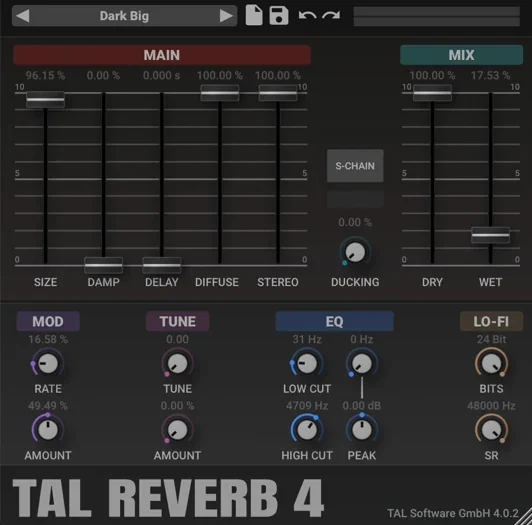
Version 4.0.4 includes controls for damping, delay, stereo spread, and the balance between the original signal and reverb. Start with a short tail on a vocal, then increase the size and wet level when you want the effect to become part of the arrangement. This is a stereo effect, so use a stereo channel configuration.
Download the macOS package and install the AU version for GarageBand. TAL supplies a Universal Binary with native Intel and Apple silicon support, and lists macOS 10.9 or later with a 64-bit host. This free reverb is separate from TAL's paid instruments and effects; you do not need to buy TAL-Sampler to use it.
2. MFreeFXBundle by MeldaProduction
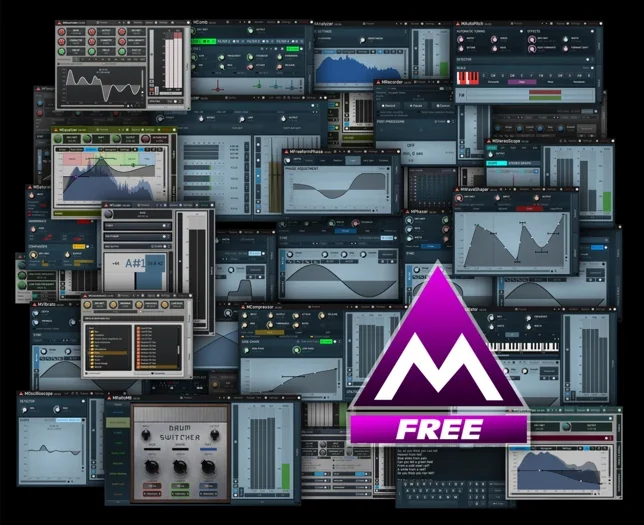
The free plugins remain usable without buying the optional upgrade. That upgrade adds features such as preset management, upsampling, additional display options, and removal of the reminder panel; it is not a requirement to use the free effects.
MCompressor handles compression with an adjustable processing shape. MAutopan moves the sound across the stereo field, while MAutoPitch provides automatic pitch correction for vocals and other monophonic material. Those are good places to start before exploring the rest of the bundle.
For the current version 17 family, install MeldaProduction's MPluginManager, select the free bundle, and install the macOS AU plugins. Use your Melda account with the manager and check its system requirements against your Mac. Avoid installing paid demos when you only want the free tools.
3. Surge XT
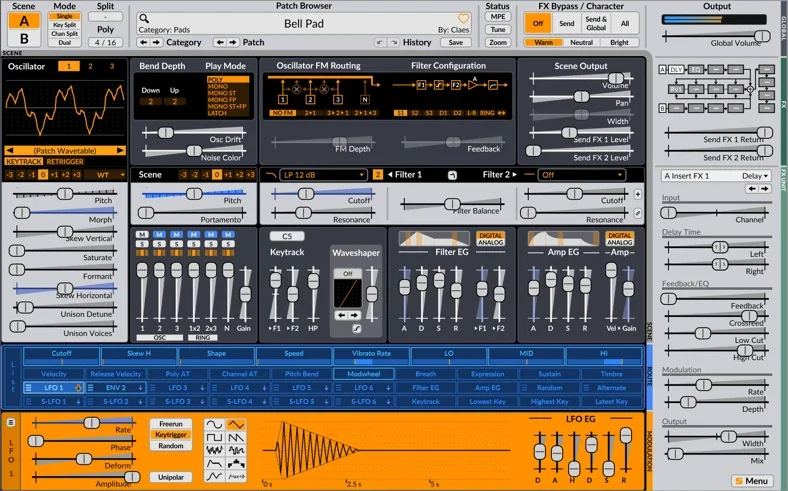
You can build sounds with different oscillator types, shape them with filters, and add movement through modulation. That makes Surge XT a useful choice for basses, leads, pads, and more experimental electronic sounds. Its detailed interface gives you plenty to explore, although beginners may prefer starting with a preset and changing one section at a time.
Use the stable 1.3.4 macOS Intel/ARM Universal installer and select the AU instrument for GarageBand. The developer lists at least 4 GB of RAM and macOS 10.11 or later for Intel Macs; Apple silicon is supported natively. A standalone app is also included, but you load the AU inside GarageBand to use it on a software instrument track. There is no paid full edition or subscription needed to unlock the synth.
4. Vinyl by iZotope
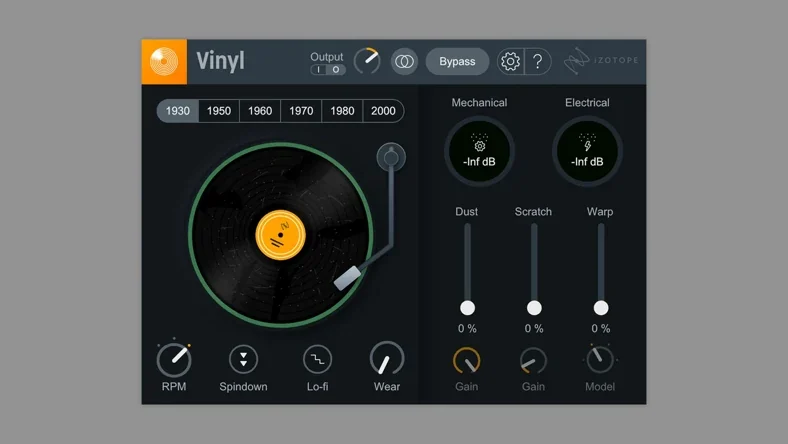
The simple interface remains a plus point: choose the character you want, then adjust how much of the wear and noise reaches the mix. A little can add a soft vintage feel; heavier settings make the effect more obvious.
Vinyl 1.13.0 is still a free full plugin, rather than a time-limited paid-product demo. Obtain and authorize the free licence through iZotope's account/download process. Use its 64-bit AU on a Mac. The current product page lists Sonoma 14.7.x, Sequoia 15.7.x, and Tahoe 26.1.x, with Intel and native Apple silicon support; check that list before downloading for an older Mac. GarageBand is not in iZotope's current tested-host list, so AU support should not be read as a separate GarageBand certification.
5. Vocal Doubler by iZotope
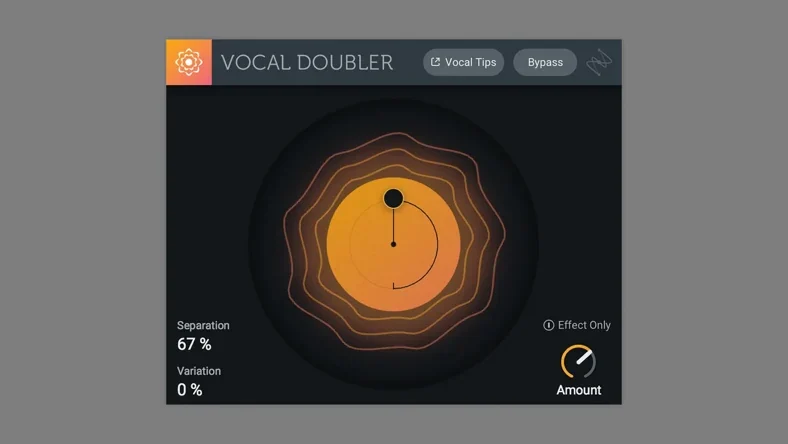
The simple display keeps the main adjustments close at hand. Move vertically to change stereo separation and horizontally to change the variation between the original and doubled sound. Blend the effect into the track rather than assuming that a wider setting will suit every vocal.
Version 1.4.0 remains a free full plugin. Follow iZotope's free account, download, and authorization process; a paid subscription is not required for this recommendation. Install the 64-bit AU for Mac. Its current supported macOS list is Sonoma 14.7.x, Sequoia 15.7.x, and Tahoe 26.1.x, with Intel and native Apple silicon support. GarageBand is not named in the current tested-host list, so check the AU on your own system before relying on it in an existing project.
6. TDR NOVA
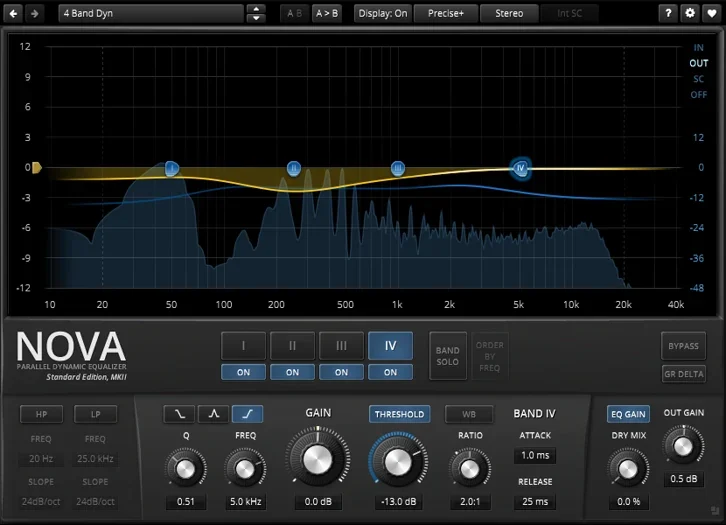
The free edition has four dynamic EQ bands plus high-pass and low-pass filters. You can work with the graphical display or use the knobs for more precise adjustments. It also covers ordinary parametric EQ, multiband compression, and wideband compression, so you can start with a simple tonal adjustment and enable dynamics where needed.
Download the free NOVA 2.2.3 macOS package and choose AU for GarageBand. Tokyo Dawn also offers its TDR Collector manager, but the product page supplies a direct package. The paid Gentleman's Edition adds features and is a separate purchase; neither that upgrade nor its extra bands are included in this free recommendation. The developer lists macOS 10.9 or later. NOVA is a hosted effect, not a standalone audio editor.
7. ValhallaFreqEcho by Valhalla DSP
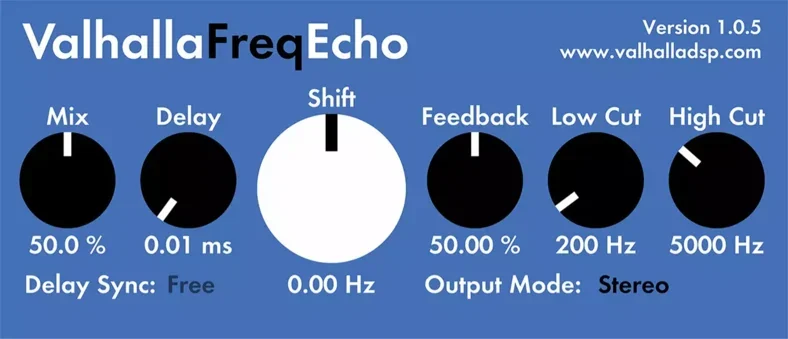
The knob-based interface is easy to understand, and you can play with the delay and shift settings until you like what you hear. The low-cut and high-cut filters help you shape the repeats so they sit around the original instrument rather than covering it.
Valhalla's current Mac download is version 1.2.8, with native Intel and Apple silicon builds. Use its 64-bit AU in GarageBand; it is a plugin that needs a host, rather than a standalone app. FreqEcho remains free and the developer provides its free downloads directly.
8. TyrellN6 Beta by u-he
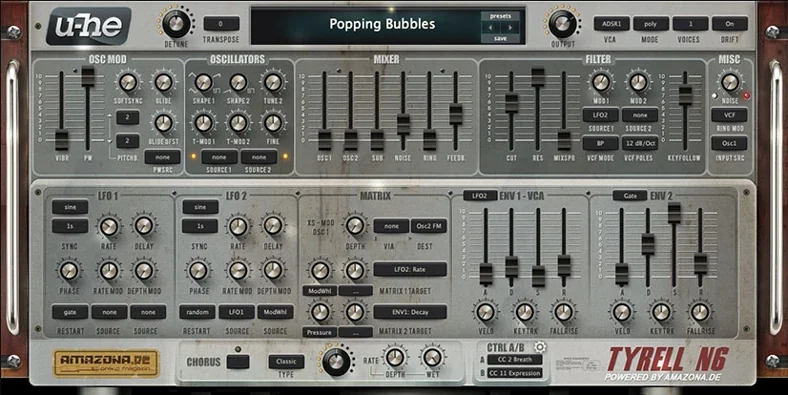
The single-panel workflow remains one of its strengths. You can start with the factory presets, then change an oscillator, envelope, or filter to hear how that part of the sound works.
Download u-he's free 2025 beta, version 3.0.0 revision 16976, for the updated preset browser and native Apple silicon support. It still carries the version 3 name, but includes changes beyond the older build. The Mac package includes a 64-bit AUv2 plugin for a host such as GarageBand, not a standalone synth. No serial number is required. The developer lists macOS 10.7 or later, while Apple silicon requires an M1 or newer Mac. This remains a beta, so keep a copy of important projects before updating an existing installation.
9. Saturation Knob by Softube
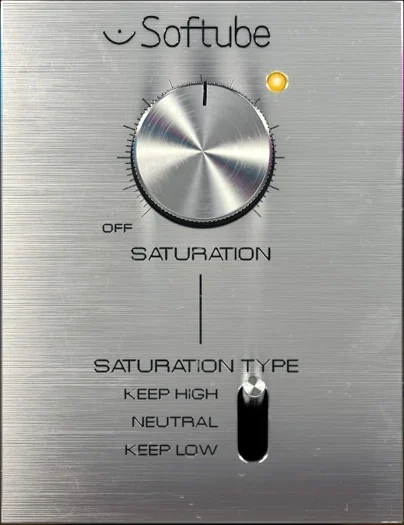
Use it to make drums more aggressive, add harmonics to a bass, or give a vocal a warmer edge. Keep Low is useful when you want some grit while leaving the low end relatively intact. As in the original recommendation, the appeal is how quickly you can hear and adjust the effect.
The native Saturation Knob plugin is free through Softube Central. You need a Softube account, an iLok account, and internet access to download and manage the licence; a physical iLok is not required. Install the AU for GarageBand. Softube currently lists macOS Sonoma 14, Sequoia 15, and Tahoe 26. The separate Modular and Amp Room integrations do not mean those host products are included free, and they are not needed to use the native plugin here.
10. OTT by Xfer Records
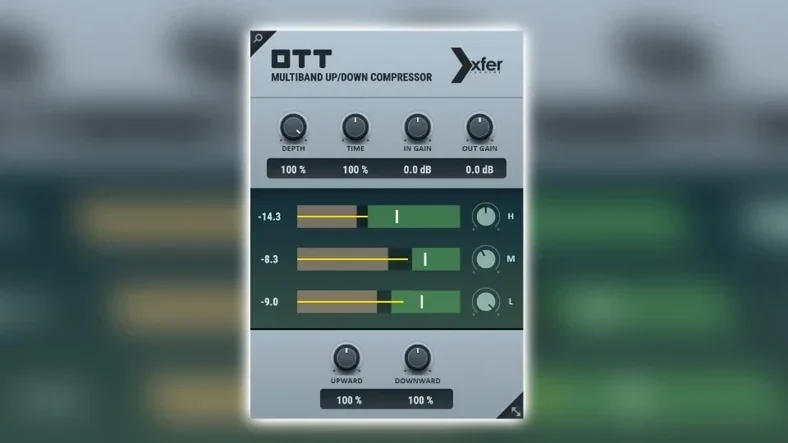
The input and output gain controls help you manage the level, while Depth sets how strongly the processing affects the sound. Start with a low depth if you want to keep the original dynamics; heavy settings can make quiet details and noise much more noticeable.
Download the current 1.37 macOS installer from Xfer's freeware page and select AU for GarageBand. It includes native ARM support and the updated resizable interface introduced in version 1.33. This is the free OTT plugin, not a Serum licence, a paid upgrade, or an Ableton-only preset. Use the developer's freeware page for the full free download.
How to Install Plugins for GarageBand
GarageBand is a great audio production and recording app that allows you to add third-party plugins to add interesting sounds, effects, and instruments. GarageBand is compatible with Audio Units (AU) format instead of VSTs. Audio Units are broadly categorized as,
- Effects Plugins: This allows you to add different sound effects such as compression, equalizing, and reverbs.
- Instrument Plugins: This allows you to add any number and variety of instruments to your digital audio workstation.
You can add Audio Unit plugins in GarageBand through various internet resources, online marketplaces, and third-party vendors. All you need to know now is how to install your desired plugins for GarageBand. Just follow the few steps below and you are good to go.
- Choose the plugin that you would like to download or install. The plugins can be free or paid.
- Select the macOS AU version to download since GarageBand supports the AU format only. If the plugin is not available in AU format, then you will need to search for an alternative plugin.
- Once your desired plugin is downloaded, begin the installation process.
- Open the download plugin file and select the plugin installer to install the plugin on your computer.
- Restart GarageBand after installation. Open GarageBand Settings (called Preferences in older versions).
- Go to Audio/MIDI and enable Audio Units if the option is off.
- Load the track that you want to apply and open the smart control panel by clicking on the icon at the top.
- In Smart Controls, open a Plug-ins slot and choose Audio Units, then the manufacturer and effect. For Surge XT or TyrellN6, use a software instrument track and select the AU instrument in its instrument slot.
Conclusion
GarageBand is incredibly useful music software and the addition of the right plugins not only enhances the functionality as a DAW but also makes up for any limitation that you might face as a user. Now that you are equipped and aware of the easy plugin installation process for GarageBand, the possibilities to play with sounds are endless. Find the plugins that match your desired requirements and add them to your plugin library today!